Printed Malaysian Cotton Voile Hijab






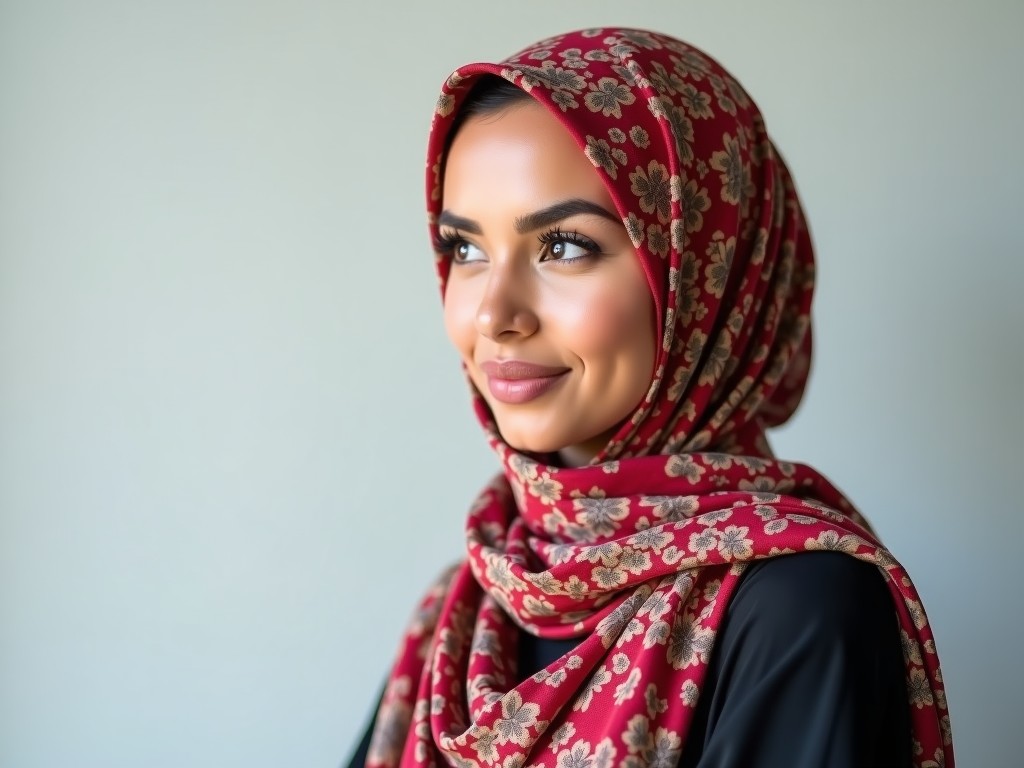
Printed Malaysian Cotton Voile Hijab
This product page details the technical specifications, material properties, and manufacturing considerations for printed Malaysian cotton voile hijabs intended for industrial procurement. The
Printed Malaysian Cotton Voile Hijab
This product page details the technical specifications, material properties, and manufacturing considerations for printed Malaysian cotton voile hijabs intended for industrial procurement. The information focuses on measurable characteristics to support informed purchasing decisions.
Material Composition and Fabric Properties
The base fabric is 100% combed Malaysian cotton voile, selected for its balance of breathability, drape, and print compatibility. Voile construction uses a plain weave with yarn counts typically ranging from 40s to 60s Ne in both warp and weft, resulting in a fabric weight between 60 and 85 GSM.
Thread density averages 120 ends per inch (EPI) and 90 picks per inch (PPI), providing sufficient opacity for hijab use while maintaining lightweight comfort. The cotton undergoes mercerization to improve tensile strength by approximately 15% and enhance dye affinity for consistent print results.
Shrinkage is controlled through sanforization, limiting residual shrinkage to less than 2% after five home launderings at 40°C. Colorfastness to washing, light, and rubbing meets or exceeds ISO 105-B02, ISO 105-B02, and ISO 105-X12 standards respectively, with ratings of 4 or higher on the grey scale.
Printing Process and Ink Technology
Designs are applied using reactive dye digital printing, which chemically bonds the dye to the cotton cellulose molecules. This method ensures prints become part of the fiber rather than sitting on the surface, preserving the voile’s natural hand and drape.
Print resolution is a minimum of 300 dpi, with color reproduction calibrated to Pantone+ standards. Ink penetration exceeds 90% through the fabric thickness, eliminating stiffness and maintaining airflow characteristics essential for comfort in warm climates.
Post-print fixation involves steam curing at 102–105°C for 8–10 minutes, followed by thorough washing to remove unfixed dye and auxiliaries. This process ensures crocking resistance (wet and dry) of grade 4 or better, critical for long-term wearability and skin safety.
Dimensional Specifications and Tolerances
Standard finished dimensions are 180 cm in length and 70 cm in width, with a tolerance of ±2% in both directions. These dimensions are measured under relaxed conditions after conditioning at 20°C and 65% RH for 24 hours.
Hemming is performed with a 3mm double-fold stitch using polyester-covered cotton thread, providing a clean edge that resists fraying. Stitch density is maintained at 8–10 stitches per cm to ensure durability without adding rigidity to the fabric edge.
For bulk orders, dimensional stability is verified across production lots using statistical process control. Measurements are taken at five points per hijab (corners and midpoints) to detect any skew or distortion introduced during printing or finishing.
Quality Control and Inspection Protocol
Each production batch undergoes 100% visual inspection under 500 lux daylight simulation (D65) to detect print defects such as misregistration, ink starvation, or staining. Acceptable quality limit (AQL) is set at 1.0 for major defects and 4.0 for minor defects per ISO 2859-1.
Dimensional checks are performed on 10% of the lot using calibrated gauges. Color consistency is verified using a spectrophotometer with ΔE tolerance of ≤3.0 between batches and against approved lab dips.
Additional tests include pilling resistance (ISO 12945-2, minimum 3.5 after 5000 cycles), abrasion resistance (Martindale, minimum 15,000 cycles), and dimensional change after washing (AATCC 135). Reports are available upon request.
Packaging and Logistics Considerations
Hijabs are folded to a uniform size of 20 cm × 15 cm and packed in groups of 10 units per inner polybag (50µm LDPE, anti-static treated). Inner bags are then placed into master cartons sized 40 cm × 30 cm × 25 cm, holding 100 units.
Cartons are constructed from single-wall corrugated cardboard (120 GSM kraft liner, 100 GSM fluting) with edge crush test (ECT) rating of 32 kN/m. Each carton includes a humidity indicator card and is sealed with pressure-sensitive tape (minimum adhesion 8 N/cm).
For export shipments, cartons are stacked on ISO-standard pallets (120 cm × 100 cm) and secured with stretch wrap (17µm, 50% elongation). Container loading maximizes cubic utilization while maintaining stack stability according to CSC guidelines.
Customization Options and Order Requirements
Fabric weight can be adjusted between 60–100 GSM by altering yarn count or weave density, subject to minimum order quantities (MOQ) of 3000 units per variant. Width and length dimensions are customizable in 5 cm increments, with tolerances remaining ±2%.
Print area can be full-body, border-only, or corner-focused, with repeat patterns scalable from 5 cm to 30 cm. Custom color matching requires a physical sample or Pantone reference; lab dip approval is standard before bulk production.
Private labeling options include woven labels (100% polyester, 40 mm width) or heat-transfer tags, placed at the side seam. Lead time for standard orders is 25–35 days after sample approval and deposit; custom specifications may extend this timeline.
Typical Applications and End-Use Performance
These hijabs are designed for daily wear in hot and humid climates, where air permeability and moisture management are critical. The voile structure provides an air permeability rate of approximately 180–220 mm/s (ASTM D737), significantly higher than heavier fabrics like poplin or twill.
Moisture vapor transmission rate (MVTR) averages 2500–3000 g/m²/24h (ASTM E96), enabling effective sweat dissipation. Combined with low thermal conductivity (0.04–0.05 W/m·K), this helps maintain skin comfort during prolonged use.
The lightweight nature reduces neck and shoulder strain compared to heavier alternatives, making it suitable for extended wear in professional, educational, or active settings. Durability testing shows minimal loss of tensile strength after 30 wash cycles, supporting long-term value.
| Property | Typical Value | Test Standard |
|---|---|---|
| Fabric Weight | 60–85 GSM | ASTM D3776 |
| Thread Count (EPI × PPI) | 120 × 90 | ASTM D3775 |
| Air Permeability | 180–220 mm/s | ASTM D737 |
| MVTR | 2500–3000 g/m²/24h | ASTM E96 |
| Colorfastness to Washing | Grade 4+ | ISO 105-C06 |
| Shrinkage (5 washes) | <2% | AATCC 135 |
For technical inquiries, sample requests, or quotation details, please contact our industrial sales team. Provide your required specifications including dimensions, print design, quantity, and delivery timeline to receive a detailed response.
Request Technical Specification SheetProducts
Related Products
News
Related News

2026-11-02
Cotton Voile Scarf Manufacturing and Performance Analysis how to make a cotton voile scarfCreating a professional-grade cotton voile scarf requires a precise balance of textile engineering and artisanal finishing. Unlike standard cotton weaves, voile is defined by its p···

2026-10-28
chiffon hijab Technical Production and Performance AnalysisSelecting the right fabric for a hijab involves a delicate balance between modesty, breathability, and aesthetic drape. For many women in Southeast Asia and the Middle East, the ma···

2026-10-26
custom silk scarf textile manufacturing and performance analysisSelecting a high-quality scarf is no longer just about color matching; it is an exercise in understanding how textile weight, drape, and print scale interact with individual facial···
