custom silk scarf textile manufacturing and performance analysis

Latest Articles
chiffon hijab Technical Production and Performance Analysis
2026-10-28
custom silk scarf textile manufacturing and performance analysis
2026-10-26
Scarf Manufacturers Technical Production Analysis
2026-10-22
Voile Valance how to hang valance scarf swag voile Installation Analysis
2026-10-20
Voile Window Scarf Technical Manufacturing and how to make a voile window scarf
2026-09-21
2026-10-26
custom silk scarf textile manufacturing and performance analysis
Selecting a high-quality scarf is no longer just about color matching; it is an exercise in understanding how textile weight, drape, and print scale interact with individual facial structures and occasion-specific requirements. For professional buyers and fashion enthusiasts, the shift toward personalized textile solutions reflects a broader demand for garments that serve as both functional accessories and identity markers.
The current market landscape in the textile industry—specifically within cotton printing and finishing—has evolved to prioritize precision customization. From the technical application of digital printing to the structural integrity of laser-cut edges, the ability to tailor a fabric's properties to a specific aesthetic goal has become a critical competitive advantage for manufacturers.
Whether you are sourcing for a retail line or designing a corporate collection, understanding the nuances of a custom silk scarf or a breathable cotton voile alternative is essential for ensuring product satisfaction and brand alignment.
The Evolution of Custom Textile Printing
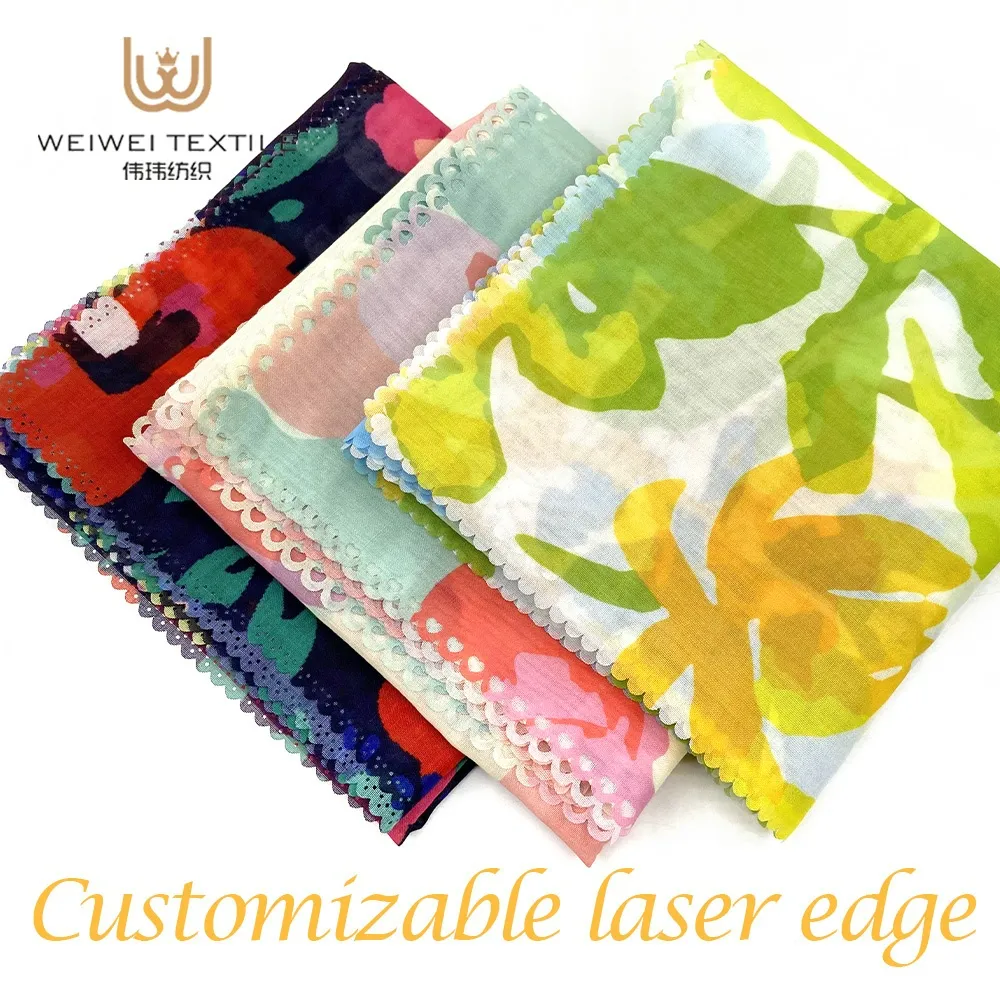
Historically, scarf production relied on screen printing, which limited the number of colors and required high minimum order quantities. The transition to digital printing has revolutionized the industry, enabling a high degree of personalization. This shift allows for the creation of a custom silk scarf with photographic precision, where gradients and intricate floral motifs can be rendered flawlessly.
In the context of modern manufacturing, such as the operations at Xinji Weiwei Textile, the integration of weaving and printing workshops allows for a seamless transition from raw fabric to finished garment. This vertical integration ensures that the base material—whether it be silk, chiffon, or cotton voile—is optimized for the specific printing method used, reducing ink bleeding and enhancing color vibrancy.
Technical Parameters of Modern Scarf Production
The quality of a custom accessory is determined by several critical technical factors. First is the material selection; cotton voile provides breathability and structure, while satin offers a luxurious sheen and fluid drape. The choice of material directly influences how digital prints are absorbed and displayed, with silk providing the highest luminosity and cotton offering a more matte, natural finish.
Edge finishing is another vital parameter. Traditional hemming is being complemented by laser-cutting technology, which provides a clean, precise edge that prevents fraying without adding the bulk of a stitched seam. This is particularly important for lightweight fabrics like chiffon, where a heavy hem can distort the natural fall of the fabric.
Furthermore, OEM and ODM services now encompass a full spectrum of customization, including personalized labels, specific sizing, and bespoke packaging. This holistic approach to production allows businesses to maintain brand consistency from the tactile feel of the fabric to the final presentation of the product.
Geometric Harmony: Matching Prints to Face Shapes
The visual impact of a printed scarf is heavily dependent on the relationship between the print's scale and the wearer's facial geometry. An incorrectly scaled print can overwhelm features or accentuate angles in an unflattering way.
Effective scarf styling relies on visual counterbalance: round faces benefit from verticality and asymmetric designs, while square faces require organic, curving prints to soften strong jawlines.
For instance, individuals with heart-shaped faces should focus patterns below the cheeks to add volume to the chin area, whereas those with oblong faces benefit from horizontal stripes or wide border prints that add lateral width. This strategic application of design ensures that the accessory enhances the wearer's natural features.
Performance Indices Across Fabric Types
Different fabrics serve distinct functional and aesthetic purposes. When evaluating materials for a collection, designers must weigh factors such as breathability, sheen, and structural rigidity. Cotton voile is prized for its lightness and ability to hold a fold, making it ideal for daily wear and hijabs, while satin is reserved for formal applications due to its reflective properties.
To provide a qualitative assessment, we can look at a relative performance index across the most common materials. This model evaluates how different fabrics perform across key categories: breathability, luxury feel, ease of styling, and durability.
Figure 2. Relative Material Suitability Index
Application Scenarios and Styling Logic
The utility of a scarf varies significantly by occasion. For professional office settings, a structured one-sided drape using a crisp shawl cotton voile or a printed silk hijab creates a polished edge. In contrast, casual outings favor a loose draped shawl style, where lightweight breathable fabrics allow for effortless movement and comfort.
Formal events demand high-impact materials such as floral chiffon or silk with a luxe finish, often styled in asymmetric cascades. For active or inclement weather, the industry has introduced waterproof cotton voile options that combine traditional aesthetics with functional stain-resistance and quick-dry capabilities, ensuring style is not compromised by utility.
Future Directions in Sustainable Finishing
The textile industry is currently navigating a transition toward more sustainable finishing processes. The focus is shifting from traditional chemical dyes to digital printing methods that reduce water consumption and minimize waste. This evolution is driven by both regulatory pressures and a growing consumer preference for environmentally conscious luxury.
Technological advancements are also exploring the integration of "smart" finishes, such as antimicrobial coatings and enhanced fragrance-retention treatments. These additives are being integrated into the finishing stage of production to add value beyond the visual, creating a multi-sensory product experience.
As the market moves toward "slow fashion," the emphasis on durability and timeless design is increasing. Manufacturers are focusing on higher thread counts and superior quality control systems to ensure that a custom silk scarf remains a long-term investment for the wearer rather than a disposable accessory.
Comparative Framework for Fabric Selection
Choosing the right fabric requires a balance between the desired aesthetic and the practical environment. A common error in sourcing is prioritizing the print over the fabric's inherent properties, which can lead to products that are visually appealing but functionally unsuitable for the target climate or occasion.
When comparing options, buyers should evaluate the "drape factor"—how the fabric falls—against the intended styling method. For example, a turban style requires a fabric with more grip and structure, like cotton voile, whereas a flowing shawl requires the ethereal drape of chiffon.
The following framework provides a relative assessment of different fabric types based on common buyer requirements, facilitating a more informed decision-making process.
| Fabric Type | Ideal Scenario | Print Clarity | Structural Rigidity |
|---|---|---|---|
| Cotton Voile | Daily/Casual Wear | High (Matte) | Medium-High |
| Silk Satin | Formal/Evening | Very High (Luxe) | Low (Fluid) |
| Chiffon | Ethereal/Layering | Medium (Sheer) | Low |
| Waterproof Voile | Outdoor/Active | High | Medium |
| Satin Scarf | Professional/Chic | High | Medium-Low |
| Sudan Toub | Cultural/Traditional | High (Bold) | High |
Questions & Answers
Digital printing acts like an inkjet printer for fabric, allowing for an unlimited range of colors, complex gradients, and a significantly lower minimum order quantity. Screen printing requires a separate screen for every color used, making it more cost-effective for massive, simple runs but restrictive for high-detail, personalized designs. Digital printing is the preferred choice for a custom silk scarf where artistic precision and color depth are paramount.
Selection depends on the desired volume and grip. For styles that require sharp folds or a structured look, cotton voile is ideal due to its breathability and rigidity. For a more fluid, cascading appearance, chiffon or silk is recommended. If the scarf is intended for active use or unpredictable weather, a waterproof cotton voile provides the necessary functional protection while maintaining a traditional look.
Laser-cutting uses a concentrated beam of light to seal the edges of the fabric as it cuts, effectively preventing fraying without the need for a sewn hem. This results in a cleaner, more modern aesthetic and eliminates the bulk associated with folded edges. It is particularly advantageous for ultra-lightweight fabrics where traditional stitching might cause the fabric to pucker or pull.
The goal is visual balance. Round faces should avoid circular motifs and instead opt for vertical stripes or elongated florals to create the illusion of length. Square faces benefit from swirling, organic shapes that soften the jawline. Oval faces are the most flexible but should avoid oversized prints that overwhelm the facial symmetry, sticking instead to medium-scale abstract or floral patterns.
Yes, through OEM and ODM services, every aspect of the product can be branded. This includes integrating corporate logos into the digital print design, selecting specific brand colors, and customizing the labels, size, and packaging. Professional production lines allow for these customizations to be scaled from small specialized batches to large-scale mass production while maintaining strict quality control.
Digitally printed silk requires gentle care to preserve the vibrancy of the ink and the integrity of the fibers. Hand washing with pH-neutral detergents and avoiding direct sunlight during drying are essential. High-quality digital prints are generally more resistant to fading than low-end dyes, but the use of steam instead of high-heat ironing is recommended to prevent scorching the delicate silk proteins.
Final Thoughts
The intersection of traditional textile artistry and modern digital precision has transformed the custom scarf into a sophisticated tool for personal and brand expression. By aligning material properties, print geometry, and finishing techniques with the wearer's specific needs, manufacturers can move beyond simple garment production toward creating true value-added accessories.
As the industry continues to integrate sustainable practices and functional finishes, the ability to provide highly customized, high-quality solutions will remain the benchmark for success in the global textile market.
Products
Related Products
News
Related News
2026-10-28
chiffon hijab Technical Production and Performance AnalysisSelecting the right fabric for a hijab involves a delicate balance between modesty, breathability, and aesthetic drape. For many women in Southeast Asia and the Middle East, the ma···
2026-10-26
custom silk scarf textile manufacturing and performance analysisSelecting a high-quality scarf is no longer just about color matching; it is an exercise in understanding how textile weight, drape, and print scale interact with individual facial···
2026-10-22
Scarf Manufacturers Technical Production AnalysisSelecting a manufacturing partner for textile accessories often comes down to a delicate balance between material precision and design flexibility. In the specialized world of head···