Premium Cotton Voile Scarf Top Factory






Premium Cotton Voile Scarf Top Factory
Cotton voile scarf tops are lightweight, sheer fabrics used in apparel for draping, layering, and decorative finishes. Made from finely spun cotton yarns with a plain weave structure, they offer
Premium Cotton Voile Scarf Top Factory
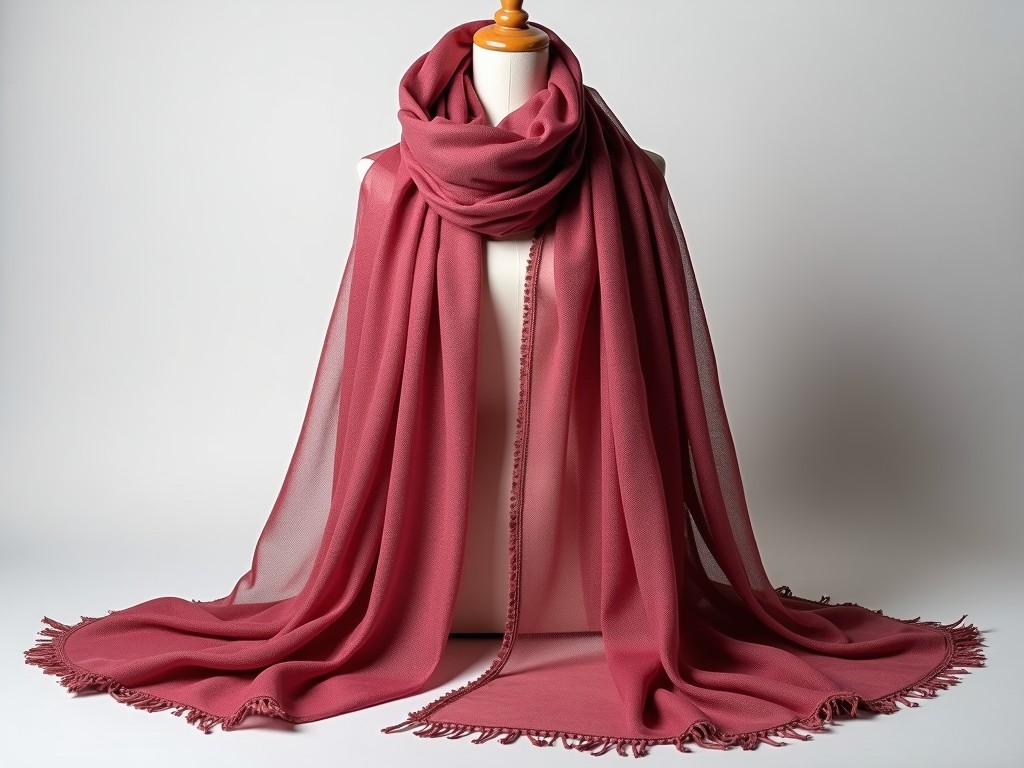
Cotton voile scarf tops are lightweight, sheer fabrics used in apparel for draping, layering, and decorative finishes. Made from finely spun cotton yarns with a plain weave structure, they offer breathability, soft hand feel, and controlled translucency. Industrial buyers source these materials for garment production where aesthetic drape and comfort are critical, such as in women’s fashion, bridal wear, and high-end casual lines.
Material Construction and Specifications
The fabric is constructed using combed or ring-spun cotton yarns typically ranging from 60s to 120s Ne count, woven in a balanced plain weave at densities between 80x60 and 120x80 ends per inch. This construction yields a nominal weight of 40–70 gsm, with air permeability exceeding 150 cm³/cm²/s and tensile strength between 8–15 N in warp and weft directions. The voile effect is achieved through low twist yarns and minimal finishing, preserving natural fiber softness while maintaining dimensional stability under light tension.
Unlike heavier cotton voiles used in curtains or linings, scarf tops require higher yarn purity and tighter twist control to prevent snagging during cutting and sewing. Surface smoothness is measured via profilometry, with target Ra values under 3.2 μm to ensure comfort against skin. Dye uptake uniformity is critical for solid-color applications, requiring scouring and bleaching to achieve whiteness indices above 85% (CIE) before pigment or reactive dye application.
Customization Options for Industrial Clients
Customization begins with yarn selection—options include organic combed cotton, mercerized finishes for enhanced luster, or blended constructions with up to 5% modal or Tencel for improved drape and moisture management. Widths are available from 115 cm to 160 cm, with edge treatments ranging from raw cut to hemmed or selvedge finishes. Color matching follows Pantone or CIELAB standards, with lab dips provided for approval before bulk production.
Functional finishes can be applied without compromising hand feel, including antimicrobial treatments (zinc pyrithione-based), UV stabilizers, or lightweight resin coatings for wrinkle resistance—all tested to maintain air permeability above 120 cm³/cm²/s. Shrinkage is controlled via sanforization or relaxation drying, limiting residual shrinkage to under 2% after 5 home launderings per AATCC 135.
Quality Control and Inspection Protocol
Every roll undergoes 100% visual inspection under 6500K daylight simulation for defects such as thick/thin places, neps, or staining, following 4-point system grading. Width consistency is monitored via laser sensors with tolerance ±3 mm. End-use performance is validated through burst strength (ASTM D3786), tear resistance (ASTM D1424), and colorfastness to washing (AATCC 61), light (AATCC 16), and perspiration (AATCC 15), with reports available upon request.
Batch traceability is maintained from yarn lot to final roll, with RFID or barcode labeling enabling full traceability in case of non-conformance. Factory audits follow ISO 9001 principles, and environmental compliance includes OEKO-TEX® Standard 100 certification for harmful substances, verified annually. No fabric is released without a complete test pack covering dimensional stability, pH (5.5–8.0), and formaldehyde content (<75 ppm).
Applications in Apparel Manufacturing
Cotton voile scarf tops are selected for garments where lightweight layering adds visual depth without bulk—such as overlay panels in blouses, detachable scarves in dresses, or flowing sleeves in summer wear. Their breathability (air permeability >120 cm³/cm²/s) and moisture regain (~8.5%) make them suitable for warm-climate collections, while the soft hand reduces irritation in skin-contact zones like necklines and inner linings.
Unlike synthetic sheers, cotton voile offers biodegradability and superior comfort in humid conditions due to its hygroscopic nature. Designers use it to create soft gradients or shadow effects when layered over opaque fabrics, a technique common in resort and occasion wear. The fabric’s low bending rigidity allows for natural draping over curves, reducing the need for excessive pleating or gathering during assembly.
Packaging and Logistics Considerations
Fabric is rolled on 38mm or 50mm diameter cores with internal polyethylene liners to prevent moisture ingress, then wrapped in polyethylene film and placed in corrugated cartons. Standard roll lengths range from 50 to 100 linear meters, labeled with lot number, width, GSM, and care symbols. For export, cartons are palletized and stretch-wrapped, with corner boards and edge protectors to prevent deformation during transit—critical for maintaining roll geometry and preventing edge damage.
Humidity indicators are included in each carton to monitor exposure during shipping, especially for long-haul routes. Delivery terms are typically FOB or CIF, with lead times averaging 3–5 weeks after sample approval, depending on dye complexity and finish requirements. Clients receive digital copies of test reports and certification before shipment release.
| Parameter | Typical Range | Test Standard |
|---|---|---|
| Weight (gsm) | 40–70 | ASTM D3776 |
| Air Permeability (cm³/cm²/s) | >120 | ASTM D737 |
| Tensile Strength (N) | 8–15 (warp/weft) | ASTM D5034 |
| Shrinkage (%) | <2 (after 5 washes) | AATCC 135 |
| Whiteness Index (CIE) | >85 (pre-dye) | ASTM E313 |
| Formaldehyde (ppm) | <75 | AATCC 112 |
For technical inquiries, sample requests, or to discuss custom specifications including organic yarns, special finishes, or width tolerances, contact our engineering team. We provide full documentation and support throughout the development cycle to ensure your garment production meets performance and aesthetic targets.
Request Technical Specification SheetProducts
Related Products
News
Related News

2026-11-02
Cotton Voile Scarf Manufacturing and Performance Analysis how to make a cotton voile scarfCreating a professional-grade cotton voile scarf requires a precise balance of textile engineering and artisanal finishing. Unlike standard cotton weaves, voile is defined by its p···

2026-10-28
chiffon hijab Technical Production and Performance AnalysisSelecting the right fabric for a hijab involves a delicate balance between modesty, breathability, and aesthetic drape. For many women in Southeast Asia and the Middle East, the ma···

2026-10-26
custom silk scarf textile manufacturing and performance analysisSelecting a high-quality scarf is no longer just about color matching; it is an exercise in understanding how textile weight, drape, and print scale interact with individual facial···
