Oem Bawal Cotton Voile Printed






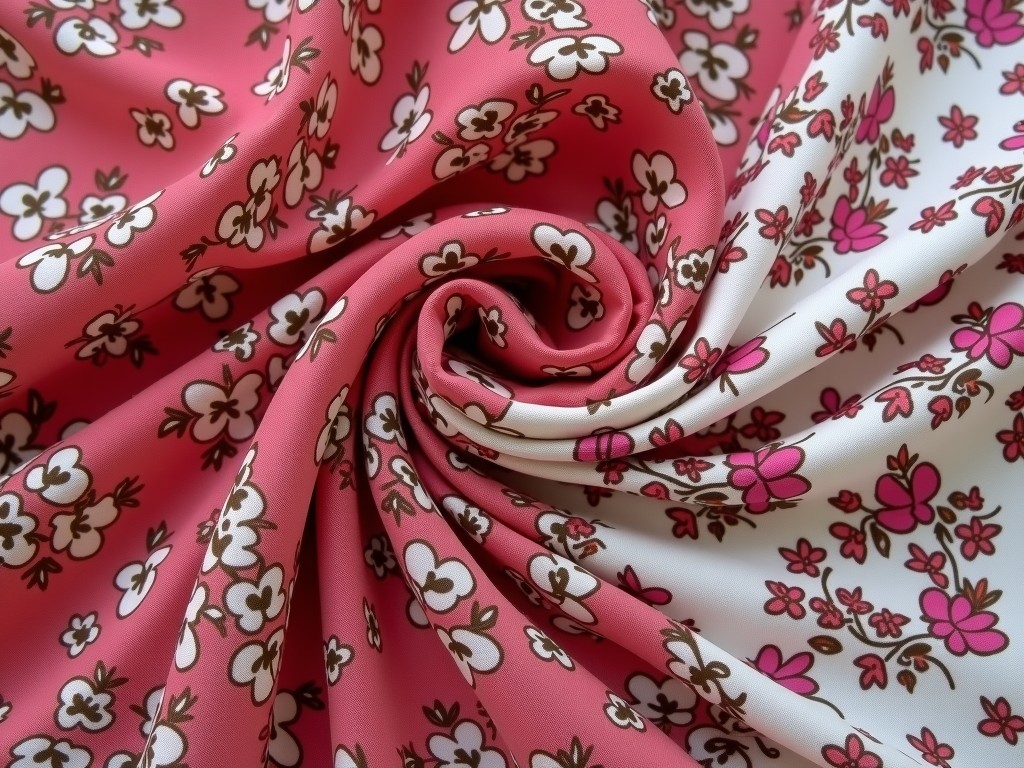
Oem Bawal Cotton Voile Printed
Bawal cotton voile is a lightweight, semi-sheer fabric traditionally used in Southeast Asian headscarves, valued for its drape, breathability, and soft hand feel. When produced as an OEM product, it
OEM Bawal Cotton Voile Printed
Bawal cotton voile is a lightweight, semi-sheer fabric traditionally used in Southeast Asian headscarves, valued for its drape, breathability, and soft hand feel. When produced as an OEM product, it allows brands and distributors to specify exact yarn counts, weave density, and print patterns while maintaining consistent quality across large production runs. The base fabric is typically constructed from combed cotton yarns in a plain weave, resulting in a smooth surface suitable for high-resolution printing.
For industrial buyers, the key considerations include fiber purity, dimensional stability after washing, and colorfastness of printed designs. Unlike retail-grade voile, OEM bawal cotton voile is manufactured to tighter tolerances in thread count (commonly 80s-100s Ne) and picks per inch, ensuring uniform performance in apparel applications. The printing process—whether reactive, pigment, or discharge—must align with the fabric’s absorbency and pH sensitivity to avoid bleeding or fading.
Material Construction and Specifications
The foundation of OEM bawal cotton voile lies in its yarn selection and weave structure. Combed cotton fibers remove short staples and impurities, yielding a smoother, stronger yarn with reduced pilling tendency. Typical yarn counts range from 80s to 120s Ne (Number English), with 100s Ne being common for premium applications. Higher counts increase softness and drape but require more careful handling during weaving and finishing.
Weave density is equally critical. A standard construction might be 80s Ne warp × 80s Ne weft at 120 ends per inch (EPI) × 90 picks per inch (PPI), producing a balance of sheerness and durability. For applications requiring greater opacity—such as linings or layered garments—EPI and PPI can be increased to 140×100 or higher, though this reduces air permeability. Finishing treatments like sanforization limit shrinkage to under 3% after washing, a key metric for cut-and-sew manufacturers.
Printing Methods and Color Performance
The choice of printing technique directly affects both aesthetics and longevity. Reactive printing forms covalent bonds with cellulose fibers, offering excellent washfastness (typically 4-5 grade on the ISO 105-C06 scale) and vibrant color yield, making it ideal for dark or complex patterns. However, it requires precise pH control (4.5–5.5) during fixation and generates wastewater requiring treatment.
Pigment printing, by contrast, sits on the fiber surface using binders, resulting in a softer hand but lower rubfastness (usually 3-4 grade). It is simpler to implement and preferred for light pastel designs or when minimizing chemical usage is a priority. Discharge printing removes dye from pre-dyed fabric to create light patterns on dark grounds, yielding soft edges but requiring careful control of reducing agents to avoid fiber damage.
Color matching under D65 lighting is standard for OEM work, with spectral reflectance data provided to ensure consistency across batches. Metamerism index is typically kept below 0.8 to minimize shifts under different light sources.
Typical Applications in Apparel and Textiles
OEM bawal cotton voile is selected not merely for its appearance but for its functional properties in specific garment constructions. Its lightweight nature (typically 40–60 gsm) makes it ideal for layered designs where bulk must be minimized, such as overlays on dresses, scarves, or lightweight jackets. The semi-sheer quality allows for subtle skin visibility or layering effects without adding weight.
In modest wear markets, it serves as a primary fabric for headscarves and wraps due to its breathability and softness against skin—critical for extended wear in warm climates. The fabric’s drape allows it to conform to body contours without clinging, enhancing comfort. For manufacturers supplying regions with high humidity, the moisture regain of cotton (approximately 8.5% at 65% RH) ensures the fabric feels cool and does not trap heat.
Beyond apparel, it finds use in home textiles such as curtain linings or decorative overlays where light filtration and soft texture are desired. Its low bending rigidity allows it to fold neatly, reducing storage volume—a consideration for distributors managing inventory.
| Parameter | Typical Range | Notes |
|---|---|---|
| Yarn Count (Ne) | 80s – 120s | Higher counts increase softness and cost |
| Fabric Weight | 40 – 60 gsm | Measured per ISO 3801 |
| Shrinkage (Wash) | < 3% | After sanforization; ISO 6330 |
| Tensile Strength (Warp) | 25 – 35 N/tex | Depends on yarn twist and fineness |
| Air Permeability | 150 – 250 mm/s | Higher values indicate better breathability |
Customization and OEM Workflow
OEM production begins with technical specification alignment. Buyers provide yarn count, weave construction, target weight, width (typically 110–150 cm), and print artwork in vector or high-resolution raster format. Strike-off samples are produced for approval before bulk production, allowing validation of color, hand feel, and dimensional stability. Minimum order quantities usually start at 1,000 meters per colorway, though this varies with complexity.
Lead times depend on greige fabric availability and print method. Reactive printing typically requires 3–4 weeks after strike-off approval due to fixation and washing steps, while pigment printing may be completed in 2–3 weeks. Packaging options include rolled on tubes with poly wrapping or folded in bales, with humidity indicators included for long-distance shipments to prevent mildew.
Quality control includes 100% visual inspection for print defects, width consistency, and shade variation. AQL standards are applied, with common limits of 2.5% for major defects and 4.0% for minor. Roll length is verified via laser measurers, and each batch is labeled with batch number, production date, and care instructions.
For technical inquiries, sample requests, or to discuss specific requirements for your application, please contact our engineering team.
Request Technical Specification SheetProducts
Related Products
News
Related News

2026-11-02
Cotton Voile Scarf Manufacturing and Performance Analysis how to make a cotton voile scarfCreating a professional-grade cotton voile scarf requires a precise balance of textile engineering and artisanal finishing. Unlike standard cotton weaves, voile is defined by its p···

2026-10-28
chiffon hijab Technical Production and Performance AnalysisSelecting the right fabric for a hijab involves a delicate balance between modesty, breathability, and aesthetic drape. For many women in Southeast Asia and the Middle East, the ma···

2026-10-26
custom silk scarf textile manufacturing and performance analysisSelecting a high-quality scarf is no longer just about color matching; it is an exercise in understanding how textile weight, drape, and print scale interact with individual facial···
