Muslim Women Cotton Voile Hijab Scarf






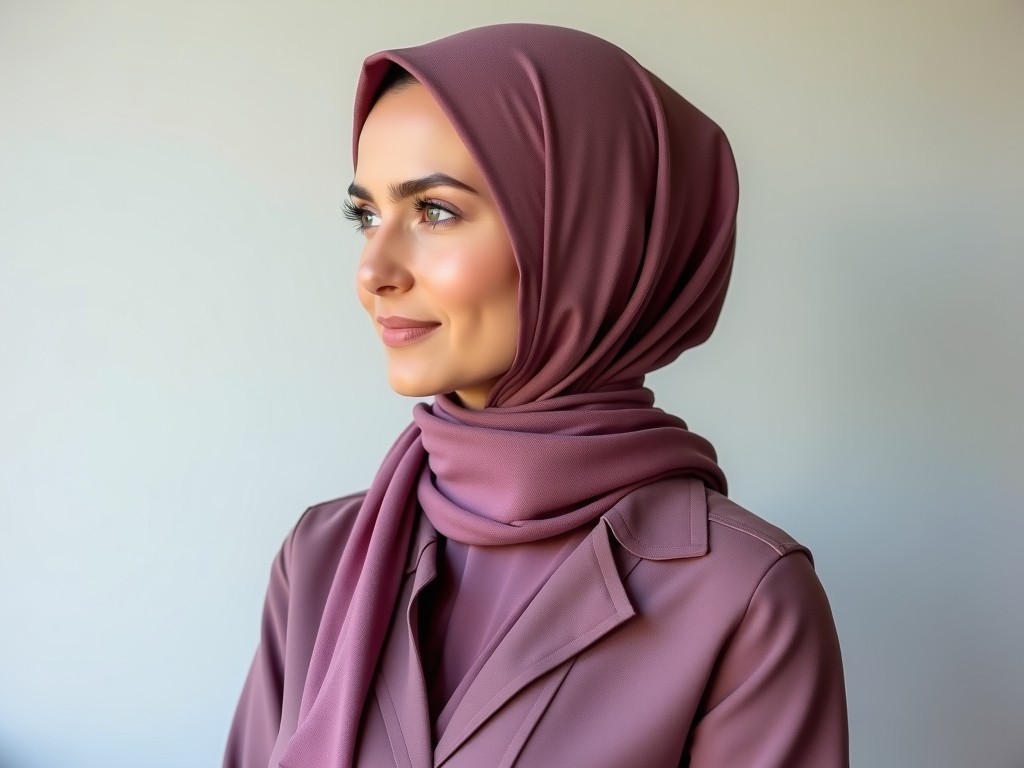
Muslim Women Cotton Voile Hijab Scarf
Cotton voile hijab scarves are engineered for daily wear in warm and humid climates, offering a balance of breathability, drape, and modesty coverage. Made from 100% combed cotton voile with a plain
Muslim Women Cotton Voile Hijab Scarf
Cotton voile hijab scarves are engineered for daily wear in warm and humid climates, offering a balance of breathability, drape, and modesty coverage. Made from 100% combed cotton voile with a plain weave structure, these scarves provide lightweight opacity while allowing air permeability to reduce heat retention. The fabric weight typically ranges from 45 to 60 GSM, ensuring sufficient coverage without excessive bulk. This construction supports extended wear comfort during prolonged use, making it suitable for professional, educational, and public environments where thermal regulation and modesty are both priorities.
Material Composition and Fabric Properties
The base material is 100% combed ring-spun cotton voile, selected for its low lint generation, smooth hand feel, and dimensional stability after repeated washing. The yarn count typically falls between 60s and 80s Ne, contributing to a fine, uniform surface with minimal snagging risk. Unlike polyester blends, cotton voile absorbs moisture at a rate of 8–10% regain under standard conditions, aiding in sweat management without clinging. The fabric undergoes a controlled bleaching and dyeing process using reactive dyes, ensuring colorfastness to washing (ISO 105-C06: grade 4 or better) and light exposure (ISO 105-B02: grade 4 or better).
Shrinkage is stabilized through sanforization, limiting residual shrinkage to less than 2% after five wash cycles at 40°C. The fabric’s tear strength averages 1.8–2.2 N in the warp and 1.5–1.8 N in the weft direction, sufficient to resist tearing during routine handling while maintaining flexibility. These mechanical properties are verified through ASTM D5034 and D1424 testing protocols, ensuring consistency across production batches. The absence of chemical finishes or resin treatments preserves the fabric’s natural breathability and hypoallergenic characteristics.
Dimensional Specifications and Design Variants
Standard dimensions for cotton voile hijab scarves are 180 cm in length and 70 cm in width, providing adequate coverage for various wrapping styles while minimizing excess fabric that could interfere with movement. Tolerances are held to ±2 cm in length and ±1.5 cm in width to ensure consistency in bulk orders. The edges are finished with a narrow double-fold hem, stitched with 100% cotton thread at 8–10 stitches per cm, preventing fraying without adding stiffness. This hem design maintains the fabric’s drape and allows for smooth folding and storage.
While solid colors remain the most common variant due to versatility and ease of coordination, subtle tonal variations and lightweight prints are available upon request, provided they do not compromise opacity or increase weight beyond 65 GSM. Custom dimensions, such as extended lengths up to 200 cm for taller individuals or reduced widths for petite frames, can be accommodated based on project requirements. All customizations are subject to minimum order quantities and fabric availability, with lead times adjusted accordingly.
Quality Control and Manufacturing Considerations
Production follows ISO 9001-aligned processes, with in-line inspections at cutting, stitching, and packing stages. Each batch undergoes random sampling for dimensional accuracy, color consistency, and seam integrity. Color matching is verified under D65 lighting conditions using spectrophotometric analysis to ensure hue deviation remains within ΔE < 2.0 from approved swatches. Stitch density and hem uniformity are checked via 10x magnification to detect skipped stitches or uneven tension that could lead to premature wear.
Packaging is designed to prevent creasing and contamination during transit. Scarves are folded uniformly and placed in polypropylene bags with desiccant packs to control moisture, then packed in corrugated cartons with burst strength of at least 275 kPa. Cartons are labeled with batch numbers, size, color code, and quantity for traceability. For export shipments, additional corner protection and stretch wrapping are applied to mitigate damage from handling and stacking. These measures ensure that the product arrives in retail-ready condition without requiring rework.
Applications and End-Use Suitability
Cotton voile hijab scarves are particularly suited for environments where thermal comfort and modesty are concurrent requirements, such as healthcare facilities, educational institutions, and service-sector workplaces in tropical or subtropical regions. The breathability of cotton voile reduces the risk of heat discomfort during extended shifts, while the opaque weave ensures consistent coverage without layering. Unlike synthetic alternatives, cotton does not generate static charge, making it appropriate for environments with sensitive electronic equipment or where lint accumulation must be minimized.
The scarf’s lightweight nature allows it to be worn under uniforms, formal attire, or protective gear without adding bulk or restricting movement. Its drape characteristics enable secure wrapping styles that remain in place during physical activity, reducing the need for frequent adjustment. These features support compliance with dress codes while maintaining wearer comfort and dignity. Institutions procuring in bulk often prioritize these attributes to enhance employee satisfaction and adherence to appearance standards.
| Property | Typical Value | Test Standard |
|---|---|---|
| Fabric Weight | 45–60 GSM | ASTM D3776 |
| Yarn Count | 60s–80s Ne | ASTM D1059 |
| Length Tolerance | ±2 cm | Internal Spec |
| Width Tolerance | ±1.5 cm | Internal Spec |
| Tear Strength (Warp) | 1.8–2.2 N | ASTM D1424 |
| Tear Strength (Weft) | 1.5–1.8 N | ASTM D1424 |
| Colorfastness to Washing | Grade 4 or better | ISO 105-C06 |
| Residual Shrinkage | <2% after 5 washes | AATCC 135 |
Customization and Procurement Options
Standard offerings include solid colors in neutral and muted tones commonly selected for professional settings, such as navy, charcoal, olive, and beige. Custom dye matching to corporate or institutional color codes is available for orders exceeding 500 units, subject to lab dip approval and minimum quantity requirements. Packaging can be tailored to include individual polybags, hanging tags, or bulk packing in layers with interleaving tissue to prevent friction damage. Private labeling options allow for the addition of woven or printed labels with logo or size information, applied during the final stitching stage.
Lead times for standard stock items typically range from 7 to 10 business days after order confirmation. Custom orders involving color matching, size changes, or special packaging require an additional 5 to 7 days for sample approval and setup. Shipping terms are flexible, with options for FOB, CIF, or EXW based on buyer preference and logistics capability. All quotations include clear breakdowns of material, labor, and packaging costs to support informed procurement decisions. Samples are available upon request, with standard samples provided free of charge and custom samples subject to a refundable fee.
Products
Related Products
News
Related News

2026-11-02
Cotton Voile Scarf Manufacturing and Performance Analysis how to make a cotton voile scarfCreating a professional-grade cotton voile scarf requires a precise balance of textile engineering and artisanal finishing. Unlike standard cotton weaves, voile is defined by its p···

2026-10-28
chiffon hijab Technical Production and Performance AnalysisSelecting the right fabric for a hijab involves a delicate balance between modesty, breathability, and aesthetic drape. For many women in Southeast Asia and the Middle East, the ma···

2026-10-26
custom silk scarf textile manufacturing and performance analysisSelecting a high-quality scarf is no longer just about color matching; it is an exercise in understanding how textile weight, drape, and print scale interact with individual facial···
