Custom Pure Cotton Voile Fabric






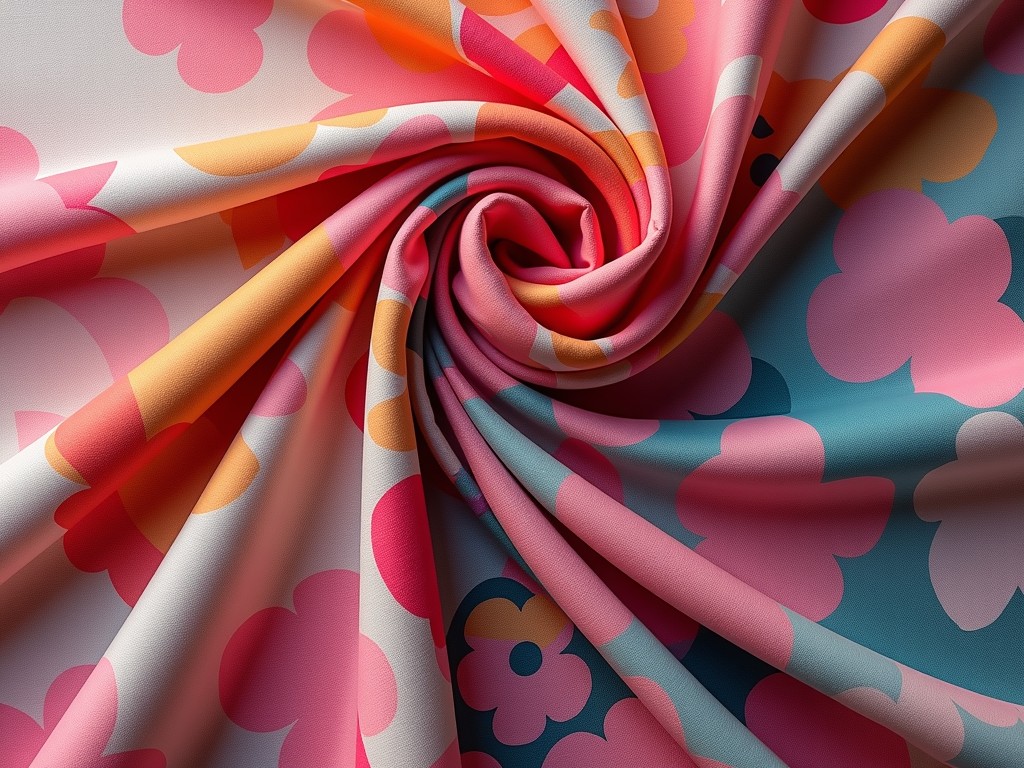
Custom Pure Cotton Voile Fabric
Pure cotton voile fabric is a lightweight, plain-weave textile made from 100% cotton fibers, characterized by its semi-sheer appearance, soft drape, and breathable structure. It is produced using
Custom Pure Cotton Voile Fabric
Pure cotton voile fabric is a lightweight, plain-weave textile made from 100% cotton fibers, characterized by its semi-sheer appearance, soft drape, and breathable structure. It is produced using fine yarns typically ranging from 40s to 80s Ne (Ne = Number English), resulting in a fabric weight between 60 and 100 gsm. The open weave construction allows for air permeability while maintaining sufficient opacity for applications requiring diffused light transmission and subtle texture. Custom manufacturing enables precise control over yarn count, weave density, finish, and dimensional stability to meet specific industrial and technical requirements.
Technical Specifications and Customization Parameters
Custom pure cotton voile fabric is engineered through adjustable parameters that directly influence performance in end-use applications. Yarn fineness (measured in Ne or tex) determines drape, strength, and transparency; higher Ne values yield finer, more translucent fabrics with reduced tensile strength. Weave density (ends per inch × picks per inch) governs air permeability, light filtration, and resistance to snagging—typical ranges span from 80×60 to 120×90 epi×ppi for voile constructions. Finishing treatments such as mercerization improve luster and dye uptake, while sanforization controls residual shrinkage to under 2% after washing. Dimensional stability is further enhanced through heat-setting or resin finishes when required for precision cutting or automated handling.
Material Properties and Performance Characteristics
The inherent properties of pure cotton voile stem from its cellulose-based fiber structure and controlled construction. Cotton fibers provide natural moisture regain of 8–8.5% at standard conditions, contributing to comfort and static dissipation in sensitive environments. Tensile strength typically ranges from 18 to 25 N/tex for 60s Ne yarn, with elongation at break between 8% and 12%, balancing durability with flexibility. The fabric exhibits a bending length of 1.5–2.5 cm, indicating soft drape suitable for fluid applications. Openness factor (ratio of open area to total area) ranges from 30% to 50%, enabling controlled airflow and light diffusion—critical for filtration, shading, and acoustic diffusion applications where precise light transmission values (typically 40–70%) must be maintained.
Industrial Applications and Functional Rationale
Custom pure cotton voile fabric serves specific technical functions where its combination of breathability, controlled transparency, and natural fiber properties outperforms synthetic alternatives. In architectural interiors, it is used as diffusion layers in skylights and glare-control systems, where its 50–65% light transmission reduces direct solar gain while maintaining visual connection to the exterior—unlike opaque shades that eliminate daylight entirely. In industrial filtration, low-air-resistance voile (pressure drop < 50 Pa at 0.5 m/s face velocity) functions as a pre-filter for coarse particulates in HVAC systems, extending the life of finer downstream filters without significant energy penalty. Its natural antistatic properties and low lint generation make it suitable for wrapping sensitive components in electronics assembly, where synthetic fabrics may attract particulates or generate static discharge during handling.
Quality Control and Manufacturing Considerations
Consistent performance in technical applications requires rigorous control over raw material and process variables. Fiber length uniformity (measured by UHML - Upper Half Mean Length) must exceed 28 mm to minimize neps and end-breaks during high-speed weaving, directly affecting fabric evenness and defect rate. Yarn twist level (typically 3.5–4.5 TPI for 60s Ne) is optimized to balance strength, smoothness, and openness—too low causes yarn spiraling; too high increases stiffness and reduces drape. Fabric width is held to ±1.5 mm tolerance through precise temple adjustment and take-up calibration, critical for automated cutting and lamination processes. Final inspection includes burst strength testing (minimum 80 kPa for 70 gsm voile), dimensional change after 5 wash cycles (ISO 6330), and spectrophotometric verification of opacity and whiteness index (WI > 85 for bleached grades).
| Parameter | Typical Range | Customizable? |
|---|---|---|
| Yarn Count (Ne) | 40s – 80s | Yes |
| Fabric Weight (gsm) | 60 – 100 | Yes |
| Weave Density (epi × ppi) | 80×60 – 120×90 | Yes |
| Opacity (%) | 35 – 60 | Yes |
| Air Permeability (cm³/cm²/s) | 80 – 150 | Yes |
| Shrinkage (%) | < 2 (sanforized) | Yes |
Customization Logic and Engineering Support
Customization of pure cotton voile fabric follows a structured engineering approach where end-use requirements dictate parameter selection. For light-diffusion applications, target opacity and transmission values are derived from solar angle analysis and illuminance goals—e.g., a north-facing skylight in temperate climates may require 55% opacity to achieve 45% diffuse transmission without glare. In filtration design, air permeability is matched to system face velocity and particle size distribution using Darcy’s law approximations to ensure adequate loading capacity without excessive pressure drop. Dimensional stability needs are addressed through finishing selection: sanforization for apparel-related uses, resin finishing for industrial lamination where zero shrinkage is critical. Clients provide functional specifications (e.g., required light transmission, burst strength, width tolerance), and our technical team maps these to achievable yarn count, weave, and finish combinations through historical process data and predictive modeling.
To initiate a custom pure cotton voile fabric inquiry, provide the following technical details: intended application (e.g., light diffusion, filtration, wrapping), required dimensions (width, length tolerance), performance criteria (opacity, air permeability, burst strength, shrinkage limit), environmental conditions (UV exposure, humidity, temperature cycling), and any regulatory or industry standards (e.g., Oeko-Tex, REACH, ISO 9001). Include preferred finish (bleached, dyed, mercerized, sanforized) and color if applicable. Sample requests require minimum 1 linear yard for evaluation; bulk orders typically start at 300 linear yards. Lead time is 3–4 weeks for standard cotton greige, 5–6 weeks for custom-dyed or finished grades, subject to raw material availability. All inquiries receive a technical response within 2 business days, including feasibility assessment and preliminary cost guidance.
Products
Related Products
News
Related News

2026-11-02
Cotton Voile Scarf Manufacturing and Performance Analysis how to make a cotton voile scarfCreating a professional-grade cotton voile scarf requires a precise balance of textile engineering and artisanal finishing. Unlike standard cotton weaves, voile is defined by its p···

2026-10-28
chiffon hijab Technical Production and Performance AnalysisSelecting the right fabric for a hijab involves a delicate balance between modesty, breathability, and aesthetic drape. For many women in Southeast Asia and the Middle East, the ma···

2026-10-26
custom silk scarf textile manufacturing and performance analysisSelecting a high-quality scarf is no longer just about color matching; it is an exercise in understanding how textile weight, drape, and print scale interact with individual facial···
