Cotton Voile Hijab For African Muslim Women






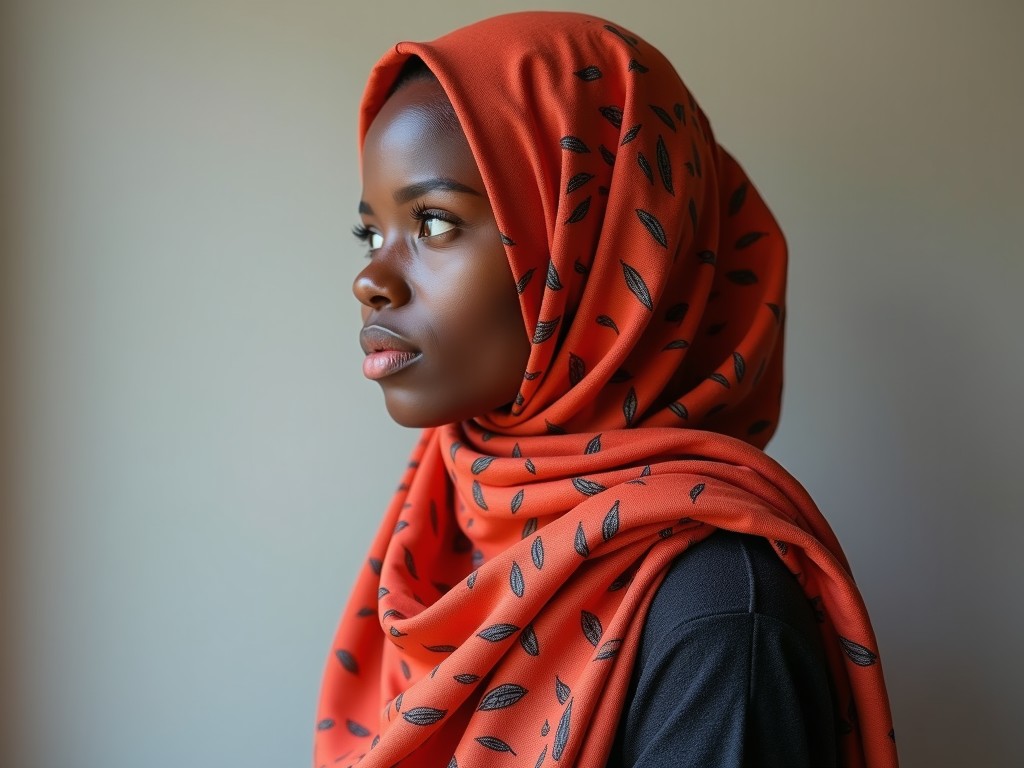
Cotton Voile Hijab For African Muslim Women
Selecting appropriate head covering materials requires balancing climate adaptability, cultural compliance, and long-term wearability. For African Muslim women, the choice of hijab fabric directly
Cotton Voile Hijab for African Muslim Women
Selecting appropriate head covering materials requires balancing climate adaptability, cultural compliance, and long-term wearability. For African Muslim women, the choice of hijab fabric directly impacts comfort during extended daily use, particularly in regions with high temperatures and variable humidity levels. Cotton voile emerges as a technically suitable option due to its specific fiber construction and performance characteristics under these environmental conditions.
This product page details the engineering considerations behind cotton voile hijabs designed for sustained use in African climates. Information focuses on measurable properties such as air permeability, moisture management, and dimensional stability—factors that influence purchasing decisions for institutional buyers, distributors, and bulk suppliers. The goal is to provide procurement teams with objective data to evaluate suitability against operational requirements.
Material Construction and Technical Specifications
Cotton voile is a plain-weave fabric characterized by low thread count and fine yarns, resulting in a lightweight structure with high open area. Typical constructions for hijab applications use 60s to 80s cotton yarns, yielding a fabric weight between 45 and 65 grams per square meter (gsm). This range ensures sufficient opacity for modesty requirements while maintaining adequate breathability.
Air permeability, measured in cubic centimeters per second per square centimeter (cc/cm²/s) under a 100 Pa pressure differential, typically falls between 150 and 250 cc/cm²/s for this specification. This level allows for effective convective heat transfer, reducing thermal buildup during prolonged wear. Moisture regain for cotton voile averages 8.5% under standard conditions (65% RH, 20°C), enabling efficient absorption and transmission of perspiration.
Dimensional stability is evaluated through shrinkage testing after repeated washing cycles. Properly pre-shrunk cotton voile exhibits less than 3% dimensional change in both warp and weft directions after five home laundering cycles at 40°C. Colorfastness to washing and light exposure meets or exceeds Grade 4 on the gray scale, minimizing fading during regular use in sunny climates.
Climate Performance Evaluation
In hot and humid environments, the primary thermal comfort metric is evaporative efficiency—the fabric’s ability to transport sweat vapor from the skin to the ambient air. Cotton voile’s hydrophilic nature and open structure support a moisture vapor transmission rate (MVTR) typically exceeding 2,000 grams per square meter per 24 hours (g/m²/24h) under standard testing conditions (38°C, 90% RH). This performance surpasses many synthetic alternatives that rely on hydrophobic treatments which can degrade over time.
Thermal resistance (Rct) of cotton voile hijabs averages 0.025 m²·K/W, significantly lower than heavier fabrics such as polyester chiffon (0.040 m²·K/W) or silk (0.035 m²·K/W). Lower Rct values indicate reduced insulation, allowing body heat to dissipate more effectively. Combined with high air permeability, this results in a lower predicted heat strain index during moderate activity levels compared to denser weaves.
UV protection factor (UPF) for untreated cotton voile ranges from 10 to 15, providing moderate protection against ultraviolet radiation. While not a substitute for dedicated sun-protective fabrics, this level reduces direct UV exposure to the scalp and forehead during outdoor activities. For applications requiring higher UPF, tight-weave constructions or certified treatments can be specified, though these may slightly reduce breathability.
Design Parameters for Functional Use
Hijab dimensions are standardized to accommodate common wrapping styles while minimizing excess fabric that could impede movement or retain heat. Typical finished dimensions range from 110 to 130 centimeters in width and 180 to 200 centimeters in length. These proportions allow for single-layer wrapping techniques common in East and West African regions without requiring multiple folds that increase thermal load.
Edge finishing affects both durability and skin compatibility. Rolled hems with a 3-millimeter fold and blind stitch construction minimize irritation points while preventing fraying. Stitch density of 8 to 10 stitches per centimeter ensures seam integrity under tension without creating stiff edges. Alternative finishes such as narrow overlock or hand-rolled edges are available upon request, each with distinct trade-offs in flexibility and production scalability.
Color selection influences both thermal performance and cultural preference. Lighter shades (white, pastels, light gray) exhibit higher solar reflectance, reducing radiant heat gain. Darker colors absorb more radiation but may be preferred for specific cultural or ceremonial contexts. Colorfastness testing ensures minimal bleeding or transfer during washing, preserving appearance over extended use cycles.
Manufacturing Consistency and Quality Control
Batch-to-batch uniformity in yarn count and weave density is critical for predictable performance. Raw cotton is sourced with a micronaire value between 3.5 and 4.5, ensuring adequate fiber maturity and strength for consistent spinning. Yarn twist levels are maintained at 3.8 to 4.2 turns per centimeter for 60s count, balancing softness with resistance to snarling during weaving.
Fabric inspection follows a 4-point system per 100 square yards, classifying defects by size and severity. Acceptable quality limit (AQL) is set at 2.5 for major defects (e.g., holes, thick/thin places, mispick) and 4.0 for minor defects (e.g., slight shade variation, small neps). Each roll undergoes width verification (±0.5 cm tolerance) and length measurement before cutting.
Finished hijabs are inspected for dimensional accuracy, edge quality, and color uniformity under standardized lighting (D65, 1000 lux). Packaging occurs in controlled humidity environments (45–55% RH) to prevent moisture regain variations that could affect perceived weight or stiffness. Each bundle includes a care label specifying washing temperature (40°C max), tumble drying restrictions, and ironing temperature (150°C max) to preserve fabric properties.
Customization Options for Procurement
Beyond standard specifications, several parameters can be adjusted to meet specific institutional or regional requirements. Customization does not inherently compromise core performance but requires validation testing to confirm suitability for intended use conditions. Lead times and minimum order quantities vary based on the complexity of the requested modification.
- Yarn count adjustment (40s to 100s) for weight and opacity control
- Width and length tolerance tightening (±0.3 cm) for uniform cutting
- Edge finish selection (rolled, overlock, fringed, bonded)
- Color matching to Pantone or textile color standards
- Pre-treatment for enhanced wrinkle resistance or antimicrobial properties
- Packaging configuration (individual polybag, bulk bale, custom branding)
For example, increasing yarn count to 80s–100s reduces air permeability by approximately 15–20% while improving opacity and reducing shear transparency. Conversely, selecting 40s–50s yarn increases breathability but may require additional layers for equivalent coverage. These trade-offs are quantifiable and should be evaluated based on prioritized performance criteria.
Antimicrobial treatments, when applied, use zinc pyrithione or silver-ion based finishes that maintain effectiveness for 30–50 wash cycles. Such treatments add minimal weight (<2 gsm) and do not significantly alter air permeability. Validation via AATCC Test Method 100 demonstrates bacterial reduction rates exceeding 99% against Staphylococcus aureus and Klebsiella pneumoniae after initial application.
Comparison with Alternative Materials
Evaluating cotton voile against other common hijab materials requires comparing objective performance metrics rather than subjective preferences. The following table summarizes key properties under standardized testing conditions (25°C, 65% RH unless otherwise noted). Values represent typical ranges for each material type; actual performance depends on specific construction, finish, and quality control.
| Property | Cotton Voile | Polyester Chiffon | Silk (Habotai) | Bamboo Viscose |
|---|---|---|---|---|
| Weight (gsm) | 45–65 | 30–50 | 40–55 | 50–70 |
| Air Permeability (cc/cm²/s) | 150–250 | 80–120 | 100–160 | 120–180 |
| MVTR (g/m²/24h) | 2,000–2,800 | 1,200–1,800 | 1,800–2,400 | 1,900–2,600 |
| Thermal Resistance (Rct, m²·K/W) | 0.025 | 0.040 | 0.035 | 0.028 |
| Shrinkage (5 washes, %) | <3 | <2 | 3–5 | 4–6 |
| Colorfastness (Washing) | Grade 4–5 | Grade 4–5 | Grade 3–4 | Grade 4 |
The data shows cotton voile offers a favorable balance of breathability, moisture transmission, and dimensional stability. While polyester chiffon has lower weight, its significantly reduced air permeability and MVTR limit evaporative cooling efficiency. Silk provides comfort but exhibits higher shrinkage and lower colorfastness. Bamboo viscose has similar weight but generally lower air permeability than cotton voile unless engineered with specific pore structures.
For procurement decisions, cotton voile’s advantages are most pronounced in applications prioritizing thermal comfort during extended wear in warm climates. Its natural fiber composition also aligns with preferences for biodegradable materials and reduced microplastic shedding compared to synthetic alternatives. Cost considerations should factor in lifecycle performance, as cotton voile’s durability often results in lower cost-per-use over time despite potentially higher initial unit price.
Applications in Institutional and Community Settings
Beyond individual use, cotton voile hijabs are selected by organizations requiring bulk procurement for groups where uniform appearance and consistent performance are essential. The material’s properties support compliance with dress codes while addressing practical concerns related to wearer comfort and garment longevity. Typical use cases involve environments where individuals wear the hijab for multiple consecutive hours daily.
Educational institutions, such as schools and universities with significant Muslim female enrollment, often specify cotton voile for student uniforms or dress code accommodations. The fabric’s breathability reduces discomfort during classroom hours and physical activities, while its durability withstands frequent washing cycles associated with institutional laundering. Color options can be aligned with institutional branding requirements.
Healthcare facilities, including hospitals and clinics, procure cotton voile hijabs for staff and visitors to maintain modesty standards in clinical environments. The material’s ability to withstand repeated washing at 60°C (when necessary for infection control) without excessive shrinkage or degradation supports hygiene protocols. Low lint generation minimizes contamination risks in sensitive areas.
Community centers and religious organizations use cotton voile for event distributions, prayer gatherings, or charitable clothing programs. The fabric’s lightweight nature reduces shipping and storage costs for large quantities, while its ease of care ensures recipients can maintain the garments with minimal resources. Neutral color options (white, beige, light gray) maximize versatility across different cultural preferences within diverse congregations.
Ordering Information and Technical Support
Procurement teams seeking to evaluate cotton voile hijabs for specific applications should provide detailed requirements to enable accurate quoting and sample preparation. Key information includes target quantity, desired specifications (weight, dimensions, color, finish), intended use case, and any required certifications or test reports. This enables manufacturers to assess feasibility and provide realistic lead times.
Sample requests typically include 2–3 units in the requested specification for wear testing and evaluation. Larger sample quantities may be arranged for institutional trials. Samples are produced using the same processes and materials as full production runs, ensuring representative performance data. Feedback from sample evaluation informs final specification approval before mass production begins.
Quality assurance documentation available upon request includes fabric test reports (air permeability, MVTR, shrinkage, colorfastness), Oeko-Tex Standard 100 certification (confirming absence of harmful substances), and batch traceability records. Packaging details, including carton dimensions, weight, and labeling requirements, are confirmed during order finalization to optimize logistics and customs clearance.
To initiate an inquiry or request technical documentation, contact the supplier directly. Provide your company details, application context, and specific questions regarding customization, testing, or delivery terms. A technical representative will respond with relevant information to support your evaluation process.
Request Quotation or Technical DataProducts
Related Products
News
Related News

2026-11-02
Cotton Voile Scarf Manufacturing and Performance Analysis how to make a cotton voile scarfCreating a professional-grade cotton voile scarf requires a precise balance of textile engineering and artisanal finishing. Unlike standard cotton weaves, voile is defined by its p···

2026-10-28
chiffon hijab Technical Production and Performance AnalysisSelecting the right fabric for a hijab involves a delicate balance between modesty, breathability, and aesthetic drape. For many women in Southeast Asia and the Middle East, the ma···

2026-10-26
custom silk scarf textile manufacturing and performance analysisSelecting a high-quality scarf is no longer just about color matching; it is an exercise in understanding how textile weight, drape, and print scale interact with individual facial···
