Cotton Voile Ethnic Scarves Shawls Hijab






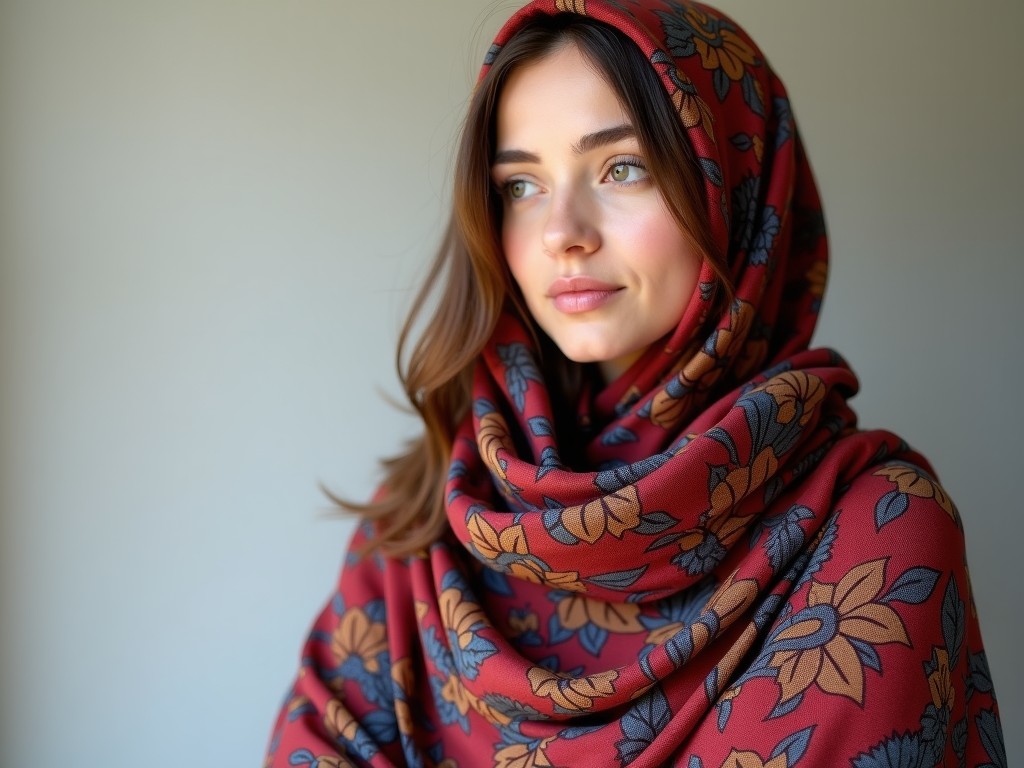
Cotton Voile Ethnic Scarves Shawls Hijab
Cotton voile is a lightweight, plain-weave fabric made from combed cotton yarns, typically ranging from 60 to 100 tex in linear density. Its open structure provides high air permeability, making it
Cotton Voile Ethnic Scarves Shawls Hijab
Cotton voile is a lightweight, plain-weave fabric made from combed cotton yarns, typically ranging from 60 to 100 tex in linear density. Its open structure provides high air permeability, making it suitable for applications where breathability and drape are essential, such as ethnic scarves, shawls, and hijabs intended for warm or humid climates.
The fabric’s low mass per unit area—usually between 40 and 80 g/m²—results from low yarn density and minimal finishing, allowing it to conform closely to the body without adding bulk. This characteristic is particularly important for hijab wearers who require layered coverage without thermal discomfort.
Unlike heavier cotton fabrics such as poplin or twill, voile exhibits minimal wrinkle recovery due to its loose weave and low twist yarns. This means it drapes naturally but may require ironing or steaming to maintain a smooth appearance after washing or prolonged storage.
Material Composition and Finishing
The base fabric is 100% cotton, sourced from long-staple varieties such as Egyptian or Pima cotton to ensure tensile strength and reduce pilling. Yarns are typically carded or combed, with combed variants preferred for scarf applications due to fewer short fibers and smoother surface finish.
Finishing processes include bleaching, dyeing, or printing, followed by mild calendaring to enhance luster without compromising breathability. Resin-free finishes are standard to maintain skin compatibility, especially for products worn in direct contact with the face and neck.
Dyeing uses reactive or direct dyes suitable for cellulose fibers, with fixation methods designed to minimize bleed and crocking. Colorfastness to washing and light is typically rated at 3–4 on the grey scale, sufficient for indoor and occasional outdoor use but requiring care instructions to prevent fading.
Dimensional Specifications
| Parameter | Typical Range | Notes |
|---|---|---|
| Width | 100–150 cm | Measured selvage to selvage |
| Length | 180–220 cm | Standard for full-coverage hijab styles |
| Weight | 40–80 g/m² | Grams per square meter |
| Thread Count | 80–120 threads/inch | Warp and weft combined |
| Shrinkage | 3–5% after first wash | At 40°C, tumble dry low |
Dimensional stability is influenced by yarn tension during weaving and post-production relaxation. Buyers should account for shrinkage in pattern making, especially when producing fitted or pleated styles where dimensional accuracy affects fit and appearance.
Applications in Ethnic and Religious Wear
Cotton voile is selected for ethnic scarves and hijabs primarily due to its ability to layer without overheating. In South Asian and Middle Eastern contexts, where garments are often worn for extended periods, the fabric’s low thermal retention reduces discomfort during prolonged wear.
The fabric’s translucency—typically 30–50% opacity depending on color and weave density—allows for styling versatility. It can be worn as a single layer for modest coverage or doubled for increased opacity, adapting to varying social or environmental requirements without changing the base garment.
Unlike synthetic alternatives such as polyester chiffon, cotton voile absorbs moisture and wicks sweat away from the skin, reducing the risk of irritation or bacterial buildup. This hygroscopic property is a key factor in its preference for daily wear in warm climates.
Customization Options
Customization begins with yarn selection—count, twist, and fiber length—allowing adjustments to drape, strength, and surface texture. Finer yarns (higher tex) produce a softer hand but lower tear resistance, while coarser yarns increase durability at the expense of drape.
Width and length can be adjusted to accommodate regional styling preferences—for example, wider widths for Afghan-style chadars or longer lengths for Sudanese thawb-inspired hijabs. Edges may be finished with hemstitch, rolled hem, or lace trim depending on end-use aesthetics.
Printing methods include screen printing for bold, geometric patterns common in African and South Asian designs, or digital printing for intricate floral motifs seen in Persian-inspired patterns. All prints are tested for wash fastness before bulk production.
Quality Control and Inspection
Incoming yarn is tested for tensile strength, elongation, and evenness using USTER® standards. Fabric inspection follows a 4-point system, with defects such as thick ends, thin places, or misprints evaluated per 100 square yards. Acceptable quality levels are typically set at 2.5% for major defects.
Color consistency is verified under D65 lighting using a spectrophotometer, with delta E values kept below 3.0 for bulk consistency. Shrinkage and spirality are tested after three wash cycles to ensure dimensional stability meets customer expectations.
Final inspection includes dimensional verification, hand feel assessment, and visual checks for staining, snagging, or odor. Products are folded and packed to minimize creasing, with interleaving tissue used for dyed or printed variants to prevent transfer.
Products
Related Products
News
Related News

2026-11-02
Cotton Voile Scarf Manufacturing and Performance Analysis how to make a cotton voile scarfCreating a professional-grade cotton voile scarf requires a precise balance of textile engineering and artisanal finishing. Unlike standard cotton weaves, voile is defined by its p···

2026-10-28
chiffon hijab Technical Production and Performance AnalysisSelecting the right fabric for a hijab involves a delicate balance between modesty, breathability, and aesthetic drape. For many women in Southeast Asia and the Middle East, the ma···

2026-10-26
custom silk scarf textile manufacturing and performance analysisSelecting a high-quality scarf is no longer just about color matching; it is an exercise in understanding how textile weight, drape, and print scale interact with individual facial···
