Cotton Swiss Voile Fabric Wholesale






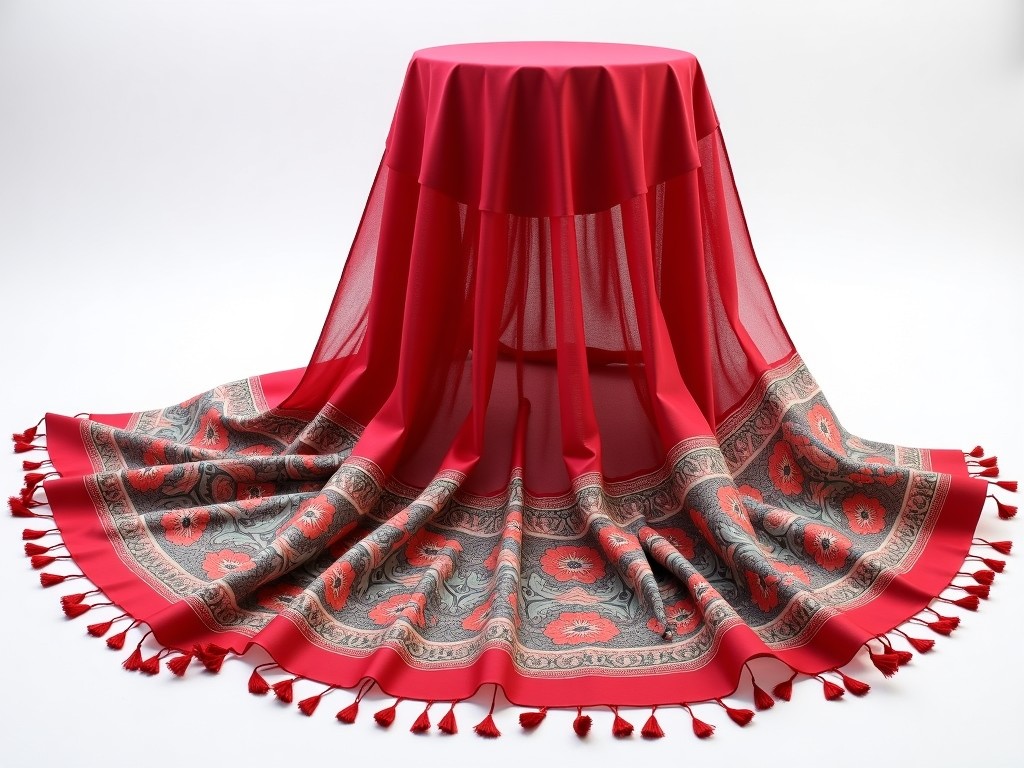
Cotton Swiss Voile Fabric Wholesale
Swiss voile is a lightweight, plain-weave fabric traditionally made from combed cotton yarns with a tight, even construction. The term "Swiss" refers to the historical origin of high-quality voile
Cotton Swiss Voile Fabric Wholesale
Swiss voile is a lightweight, plain-weave fabric traditionally made from combed cotton yarns with a tight, even construction. The term "Swiss" refers to the historical origin of high-quality voile production in Switzerland, where fine yarn counts and precise weaving tolerances were established. Today, cotton Swiss voile is valued for its semi-transparency, smooth surface, and dimensional stability, making it suitable for applications requiring both visibility and controlled airflow.
Technical Characteristics
Cotton Swiss voile typically uses combed ring-spun yarns in the range of 60s to 100s Ne (English cotton count), with warp and weft densities between 80–120 ends per inch and 60–100 picks per inch. The plain weave structure ensures balanced tensile strength in both directions, with typical breaking strength of 8–12 N/tex in warp and 6–10 N/tex in weft. The fabric weight ranges from 30 to 50 g/m², contributing to its lightweight nature while maintaining sufficient opacity for privacy-sensitive applications.
The smooth surface results from mercerization, a caustic soda treatment that swells cotton fibers, increasing luster and dye affinity. Mercerization also improves tensile strength by up to 20% and reduces shrinkage. The fabric exhibits low pilling tendency due to the use of long-staple cotton and tight twist in yarn production. Air permeability typically measures between 150–300 mm/s under standard test conditions (ISO 9237), allowing controlled ventilation without compromising visual screening.
Material Composition and Variants
Wholesale cotton Swiss voile is available in 100% combed cotton construction, which provides natural breathability, moisture absorption (up to 8% regain at 65% RH), and biodegradability. For applications requiring enhanced durability, polyester-cotton blends (typically 65/35 or 50/50) are offered, increasing abrasion resistance and reducing wrinkle formation. However, pure cotton variants retain superior comfort and skin compatibility, making them preferable for direct-contact uses.
Yarn dyeing is standard for solid colors, ensuring uniform penetration and resistance to fading. Piece-dyed options are available for lighter shades but may show slight batch variation. Optical brighteners are avoided in base stocks to prevent yellowing over time; instead, color stability is achieved through stabilized dye systems and proper pH control during finishing. Flame-retardant treatments can be applied upon request for specific industrial or public-space compliance.
Applications in Industrial and Commercial Settings
Cotton Swiss voile is used in architectural interiors where diffuse daylight transmission is desired without full transparency, such as in office partitions, hotel lobbies, and healthcare waiting areas. Its lightweight nature allows for smooth operation in motorized track systems, reducing mechanical load. In industrial environments, it serves as a dust barrier in cleanroom antechambers or as a splash guard in food processing zones where visibility must be maintained while preventing contaminant spread.
The fabric is also employed in textile manufacturing as a lining or interlayer in lightweight garments, curtains, and protective covers. Its low bulk and smooth surface reduce friction during sewing operations, minimizing needle wear and thread breakage. For exhibition and event Swiss voile is favored for backdrop systems due to its ease of folding, minimal creasing, and ability to be flame-retardant treated to meet public assembly codes (e.g., NFPA 701).
Customization Options
Wholesale buyers can specify yarn count, weave density, and finish based on end-use requirements. Widths are commonly available from 150 cm to 320 cm, with custom slit widths possible for narrow applications. Lengths are typically put up on rolls of 50–100 linear meters, though longer continuous lengths can be produced for large-scale installations. Color matching to Pantone or RAL standards is available for dyed lots, with laboratory dip approval prior to bulk production.
Finishing options include softener application for improved hand feel, anti-static treatment for environments sensitive to electrostatic discharge, and UV stabilizers for prolonged outdoor exposure in shaded areas. Shrinkage control treatments (sanforization) can limit residual shrinkage to under 1% after washing. Edge finishes range from raw cut to hemmed or ultrasonic sealed, depending on fray resistance needs.
Quality Control and Testing
Quality assurance begins with yarn testing for evenness, tensile strength, and moisture content. During weaving, real-time monitoring of warp tension and weft insertion helps maintain consistent density. Finished fabric undergoes inspection under standardized lighting (D65, 500 lux) for defects such as thick/thin places, missing ends, or color deviation. A 4-point system is commonly used, with acceptance criteria based on defect points per 100 square yards.
Dimensional stability is verified through washing and drying cycles according to ISO 6330, with residual shrinkage reported in both warp and weft directions. Colorfastness to light (ISO 105-B02), washing (ISO 105-C06), and rubbing (ISO 105-X12) is tested for dyed lots. Air permeability and thickness are measured to confirm compliance with specified performance ranges. Test reports are available upon request for qualifying orders.
Packaging and Logistics
Fabric is wound onto paper or plastic cores with inner diameter of 38–50 mm, depending on roll weight. Outer wrapping uses polyethylene film to prevent moisture ingress during transit, with additional cardboard end caps for crush protection. Rolls are labeled with product code, width, length, batch number, and care instructions. For export shipments, fumigated pallets and ISPM-15 compliant packaging are standard to meet international phytosanitary requirements.
Carton dimensions are optimized for palletization, typically holding 20–40 kg per carton to facilitate handling. Carton markings include handling symbols (e.g., "Keep Dry," "This Side Up") and country of origin. Lead times vary based on customization but generally range from 2–4 weeks for stock colors and 6–8 weeks for custom dye lots. Expedited options are available for critical projects.
| Property | Typical Range | Test Standard |
|---|---|---|
| Fabric Weight | 30–50 g/m² | ISO 3801 |
| Warp Density | 80–120 ends/inch | ASTM D3775 |
| Weft Density | 60–100 picks/inch | ASTM D3775 |
| Breaking Strength (Warp) | 8–12 N/tex | ISO 13937-2 |
| Air Permeability | 150–300 mm/s | ISO 9237 |
| Thickness | 0.18–0.25 mm | ISO 5084 |
Why Choose Cotton Swiss Voile for Wholesale Procurement
Cotton Swiss voile offers a balance of translucency, lightweight handling, and natural fiber comfort that synthetic alternatives often lack. Its matte finish reduces glare in daylight environments, while the smooth surface minimizes dust accumulation compared to textured weaves. For buyers prioritizing sustainability, combed cotton provides a renewable resource with established recycling pathways, unlike petroleum-based synthetics.
The fabric’s consistent performance in dimensional stability and colorfastness reduces the risk of post-installation issues such as puckering or fading, which can lead to costly rework. Wholesale pricing benefits from economies of scale in yarn procurement and weaving efficiency, particularly for standard widths and colors. Technical support is available to assist with specification selection, ensuring the fabric meets functional requirements without over-engineering.
Products
Related Products
News
Related News

2026-11-02
Cotton Voile Scarf Manufacturing and Performance Analysis how to make a cotton voile scarfCreating a professional-grade cotton voile scarf requires a precise balance of textile engineering and artisanal finishing. Unlike standard cotton weaves, voile is defined by its p···

2026-10-28
chiffon hijab Technical Production and Performance AnalysisSelecting the right fabric for a hijab involves a delicate balance between modesty, breathability, and aesthetic drape. For many women in Southeast Asia and the Middle East, the ma···

2026-10-26
custom silk scarf textile manufacturing and performance analysisSelecting a high-quality scarf is no longer just about color matching; it is an exercise in understanding how textile weight, drape, and print scale interact with individual facial···
