Cotton Silk Voile Fabric Dressmaking






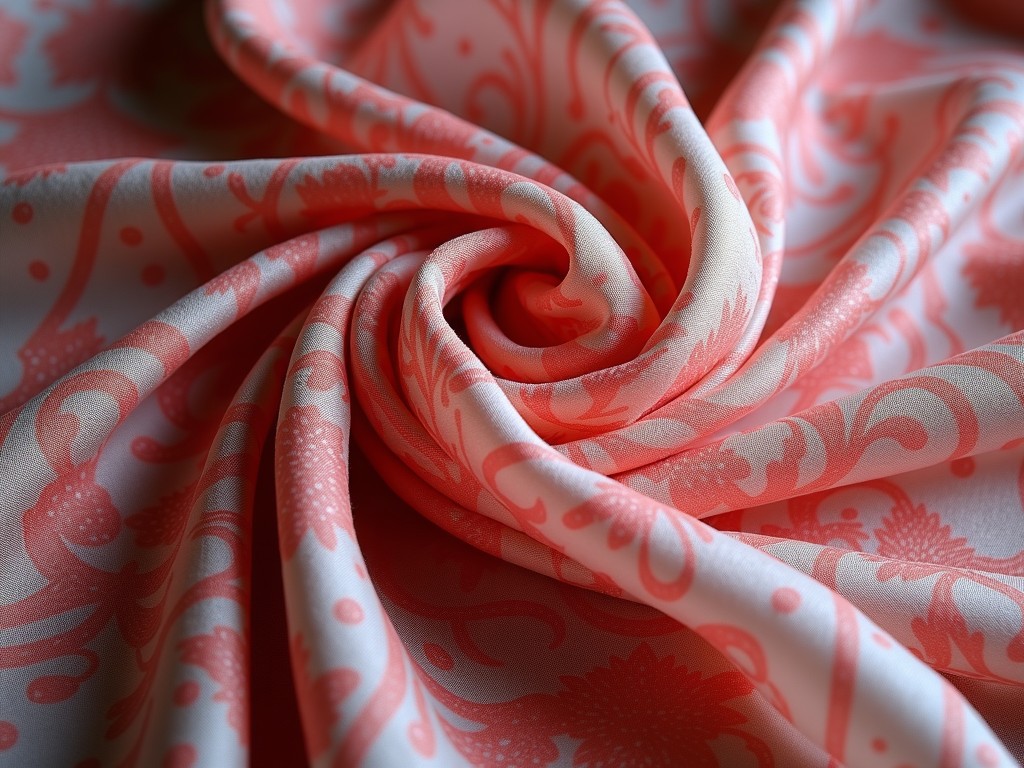
Cotton Silk Voile Fabric Dressmaking
Cotton silk voile is a lightweight, semi-sheer fabric engineered for precision dressmaking applications where drape, breathability, and subtle luster are critical. This technical overview details its
Cotton Silk Voile Fabric for Dressmaking
Cotton silk voile is a lightweight, semi-sheer fabric engineered for precision dressmaking applications where drape, breathability, and subtle luster are critical. This technical overview details its construction, performance characteristics, and suitability for industrial garment production.
Fiber Composition and Yarn Structure
The fabric combines combed cotton fibers (typically 60-70% by weight) with mulberry silk filaments (30-40%) in a blended yarn construction. Cotton provides dimensional stability and moisture absorption, while silk contributes tensile strength, smooth surface finish, and natural recoverability. Yarn counts range from 80s to 120s Ne for both fibers, resulting in a balanced blend that minimizes pilling and maintains consistency across bolt lengths.
Yarns are spun using ring-spinning for cotton and reeling for silk, then plied in a 2:1 ratio (two cotton-wrapped silk plies per single) to enhance uniformity. This structure reduces snagging during high-speed cutting and sewing operations. The blended yarn exhibits a tenacity of 3.8-4.2 cN/tex and elongation at break of 18-22%, suitable for stress points in seams and darts.
Weave Specification and Physical Properties
Cotton silk voile is produced as a plain weave with a thread density of 90-110 ends per inch (EPI) and 70-90 picks per inch (PPI). This open construction achieves a nominal weight of 45-55 g/m² while maintaining opacity suitable for linings, overlays, and lightweight dresses. The weave allows air permeability of 180-220 mm/s, verified via ISO 9237 testing.
Thickness measures 0.18-0.22 mm under 2 kPa pressure (ISO 5084), contributing to its characteristic float without compromising sewability. Dimensional stability after 5 wash cycles at 40°C shows shrinkage under 1.5% in warp and 1.0% in weft, critical for pattern accuracy in mass production. The fabric’s bending length is 1.8-2.2 cm, indicating soft drape ideal for gathered sections and fluid silhouettes.
Surface Finish and Optical Characteristics
The fabric undergoes a controlled bleaching process using hydrogen peroxide to achieve a base whiteness of 82-86 CIE L*, followed by optional dyeing or printing. Silk’s natural triangular cross-section scatters light to produce a soft sheen with a gloss unit measurement of 8-12 GU at 60° angle, distinct from the higher gloss of synthetic voiles. This finish minimizes glare under studio lighting, beneficial for fashion photography and runway presentation.
Surface roughness (Ra) averages 3.5-4.5 µm, allowing ink adhesion for digital printing without bleeding while resisting snag from sewing needles. The fabric accepts reactive dyes for cotton and acid dyes for silk, enabling uniform color uptake across the blend with a colorfastness to washing of 4-5 (ISO 105-C06) and lightfastness of 4 (ISO 105-B02).
Industrial Applications in Dressmaking
This fabric is selected for applications requiring lightweight layering without bulk, such as overlay panels in evening gowns, breathable linings in structured jackets, and sheer sleeves in summer dresses. Its moisture regain of 8-10% (standard conditions) ensures comfort in humid climates, while the silk component reduces static cling during wear—a common issue with pure cotton voiles in synthetic-heavy environments.
In production, the fabric’s low hysteresis loss allows consistent feeding through automated spreaders and cutters. Sewn seam strength averages 12-15 N/mm when using polyester thread (size 60) with 8-10 stitches per cm, sufficient for stress areas like armholes and waistbands. The material resists puckering on lightweight seams due to its balanced recovery properties, reducing rework in high-volume lines.
Comparison with Alternative Voile Fabrics
Compared to 100% cotton voile, the cotton silk blend offers 20-25% higher tensile strength and improved drape coefficient (0.45-0.50 vs 0.35-0.40), reducing the need for interlinings in structured designs. Against polyester voile, it provides superior breathability (air permeability 180-220 mm/s vs 90-120 mm/s) and biodegradability, aligning with sustainable garment initiatives. The silk content also reduces electrostatic discharge during handling, minimizing dust attraction in clean cutting rooms.
| Property | Cotton Silk Voile | 100% Cotton Voile | Polyester Voile |
|---|---|---|---|
| Weight (g/m²) | 45-55 | 50-60 | 40-50 |
| Air Permeability (mm/s) | 180-220 | 150-190 | 90-120 |
| Tensile Strength (cN/tex) | 3.8-4.2 | 3.0-3.5 | 4.5-5.0 |
| Drape Coefficient | 0.45-0.50 | 0.35-0.40 | 0.55-0.65 |
| Moisture Regain (%) | 8-10 | 8-10 | 0.4-0.6 |
Customization and Ordering Considerations
Fabric width is available in 115 cm or 150 cm loom states, with custom widths achievable upon request. Length is typically supplied in 50-100 meter bolts, wrapped in polyethylene tubing to prevent moisture ingress during transit. Custom dye lots require a minimum of 300 meters to ensure shade consistency, with lab dips provided for approval prior to bulk production.
Finish options include softener application (silicone-based, 1.0-1.5% owf) for enhanced hand feel or anti-static treatment (0.5% owf) for environments with synthetic friction. Specifications such as yarn count, EPI/PPI, and weight can be adjusted within ±10% to meet specific drape or durability requirements. Lead time for standard greige fabric is 3-4 weeks; dyed or finished variants add 1-2 weeks depending on complexity.
For technical inquiries, sample requests, or to discuss custom specifications for your dressmaking production line, contact our technical team. Provide details on intended garment type, required width, and any performance criteria such as shrinkage limits or colorfastness needs to receive accurate quotation and lead time.
Products
Related Products
News
Related News

2026-11-02
Cotton Voile Scarf Manufacturing and Performance Analysis how to make a cotton voile scarfCreating a professional-grade cotton voile scarf requires a precise balance of textile engineering and artisanal finishing. Unlike standard cotton weaves, voile is defined by its p···

2026-10-28
chiffon hijab Technical Production and Performance AnalysisSelecting the right fabric for a hijab involves a delicate balance between modesty, breathability, and aesthetic drape. For many women in Southeast Asia and the Middle East, the ma···

2026-10-26
custom silk scarf textile manufacturing and performance analysisSelecting a high-quality scarf is no longer just about color matching; it is an exercise in understanding how textile weight, drape, and print scale interact with individual facial···
