China Plain Cotton Voile Fabric






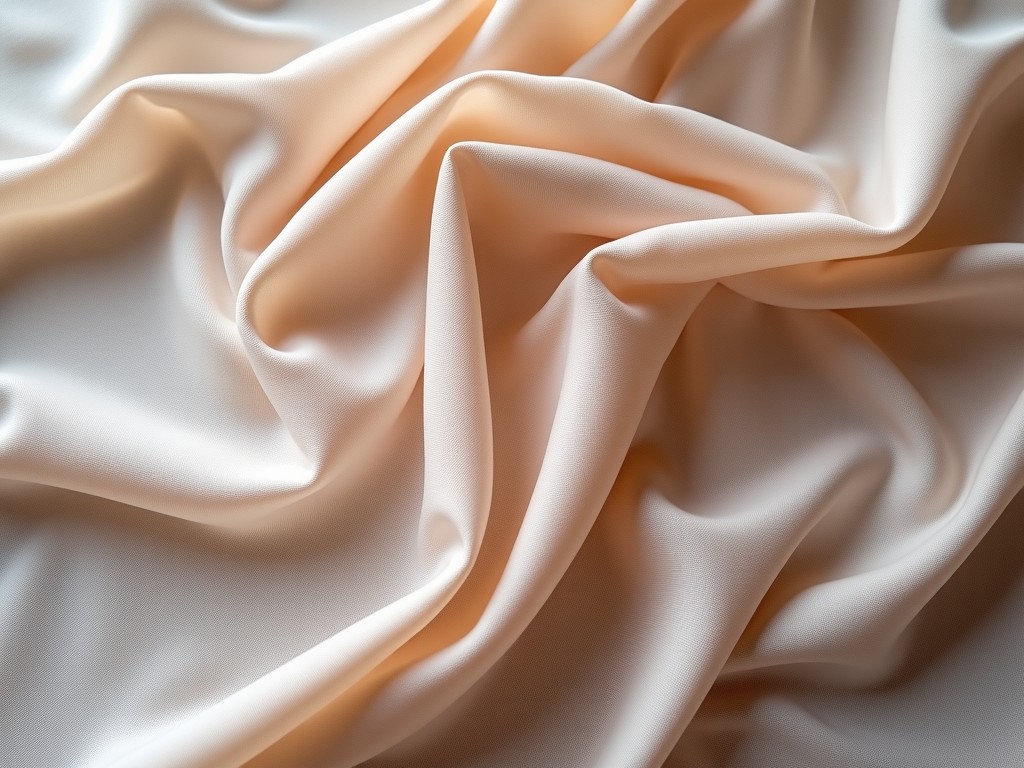
China Plain Cotton Voile Fabric
Plain cotton voile is a lightweight, sheer woven fabric constructed from combed or carded cotton yarns in a simple plain weave structure. It is characterized by its low areal density, high air
China Plain Cotton Voile Fabric
Plain cotton voile is a lightweight, sheer woven fabric constructed from combed or carded cotton yarns in a simple plain weave structure. It is characterized by its low areal density, high air permeability, and soft hand feel, making it suitable for applications requiring drape, breathability, and subtle translucency. This material is produced in China using standardized spinning and weaving processes to ensure consistency in yarn count, thread density, and dimensional stability for industrial and commercial buyers.
Technical Specifications
The fabric’s performance is defined by measurable parameters including yarn count (typically Ne 40s to Ne 80s for both warp and weft), ends per inch (EPI) ranging from 60 to 100, and picks per inch (PPI) from 50 to 80. These values determine the fabric’s weight, usually between 30 to 60 GSM (grams per square meter), and its tensile strength, which averages 15–25 N in the warp direction and 10–20 N in the weft direction under standard testing conditions (ISO 13937-2). Shrinkage after washing is typically controlled to less than 3% in both directions when pre-sanforized or stabilized.
| Parameter | Typical Range | Unit |
|---|---|---|
| Yarn Count (Warp/Weft) | Ne 40s – Ne 80s | English Cotton Count |
| Ends per Inch (EPI) | 60 – 100 | threads/inch |
| Picks per Inch (PPI) | 50 – 80 | threads/inch |
| Fabric Weight | 30 – 60 | GSM |
| Warp Tensile Strength | 15 – 25 | N |
| Weft Tensile Strength | 10 – 20 | N |
| Dimensional Stability (Wash) | < 3 | % (max) |
Material Composition and Processing
The fabric is made from 100% natural cotton fibers, with fiber length typically ranging from 25 to 32 mm (medium staple), ensuring adequate spinnability and tensile properties. Yarns are usually combed to remove short fibers and neps, resulting in a smoother surface and reduced pilling tendency. The greige fabric undergoes standard pretreatment including scouring to remove natural impurities and bleaching to achieve a consistent base whiteness (typically ≥ 80% reflectance) before final finishing. No synthetic blends or chemical treatments are applied unless specified for end-use requirements such as flame resistance or UV stabilization.
Weaving is performed on rapier or air-jet looms operating at controlled tension to maintain uniform fabric geometry. Post-weaving, the fabric may undergo calendaring to enhance smoothness and luster or sanforization to limit residual shrinkage. These processes are monitored via inline tension sensors and periodic off-line testing to ensure batch-to-batch consistency, which is critical for cut-and-sew operations and automated manufacturing lines.
Industrial Applications
Plain cotton voile is selected in industrial contexts where lightweight separation, filtration, or protective layering is required without impeding airflow or light transmission. In agricultural settings, it serves as insect barrier netting in greenhouse cultivation, where its porosity allows for adequate ventilation and light diffusion while excluding pests larger than 1 mm. In medical device manufacturing, it is used as a disposable inner layer in surgical gowns or drapes, providing a sterile interface that resists liquid strike-through under low-pressure conditions while maintaining wearer comfort due to low thermal retention.
In filtration systems, the fabric functions as a pre-filter medium for coarse particulate removal in air handling units, capturing particles above 50 microns with minimal pressure drop (< 25 Pa at 0.5 m/s face velocity). Its uniform pore structure, derived from consistent yarn spacing, ensures predictable performance across batches. Additionally, it is employed in packaging as a breathable wrap for delicate goods such as fresh produce or pharmaceuticals, where moisture vapor transmission rate (MVTR) exceeding 2000 g/m²/24h prevents condensation buildup without compromising containment integrity.
Customization Options
Buyers can specify adjustments to yarn count, thread density, and width to align with specific equipment or process constraints. Widths are commonly available from 150 cm to 320 cm, accommodating standard cutting tables and roll-to-roll processing lines. Custom finishes include optical brightener addition for enhanced whiteness, antimicrobial treatment (e.g., zinc pyrithione) for hygienic environments, or hydroentanglement bonding for increased stability in non-woven composite structures. Dyeing to Pantone or CIELAB color standards is feasible for applications requiring visual identification or branding, though this increases weight slightly and may reduce air permeability by 5–10%.
Tolerance levels for weight (±5 GSM), width (±1.5 cm), and shrinkage (±2%) are negotiable based on production capabilities and inspection protocols. For high-volume orders, statistical process control (SPC) charts can be provided to demonstrate consistency in key parameters over time. Custom labeling, barcoding, and roll length specifications (e.g., 50 m, 100 m) are supported to integrate with automated warehouse and cutting systems.
Quality Control and Testing
Quality assurance follows a multi-stage approach: incoming yarn is tested for count strength product (CSP) and unevenness (U%); greige fabric is inspected for defects using 4-point or 10-point systems under standardized lighting (ISO 3664); and finished fabric undergoes dimensional stability, tensile strength, and porosity verification. Testing equipment includes Instron tensile testers, Shirley analyzers for air permeability, and Martindale abrasion testers when applicable. All tests are conducted in conditioned atmospheres (20°C ± 2°C, 65% RH ± 4%) per ISO 139 standards.
Batch traceability is maintained via lot numbers linked to raw material sources, machine logs, and test reports. Third-party certifications such as OEKO-TEX® Standard 100 or ISO 9001 are available upon request, though their presence depends on the specific manufacturer’s accreditation status. Visual inspection is conducted under 45° lighting to detect surface imperfections, with acceptance criteria typically set at no more than 5 major defects per 100 linear meters for industrial-grade material.
Packaging and Logistics
Fabric is wound onto paper or plastic cores with inner diameters of 38 mm or 50 mm, depending on customer handling equipment. Rolls are wrapped in polyethylene film to prevent moisture ingress and labeled with product code, weight, length, and batch number. Outer packaging uses corrugated cardboard boxes or woven polypropylene sacks for palletized shipment, with corner boards and edge protectors added to prevent deformation during transit. Standard roll lengths range from 50 to 200 meters, though longer lengths are achievable for continuous processing lines.
Export shipments comply with ISPM 15 for wooden pallets and include desiccant packs to control humidity during sea freight. Transit damage is minimized through proper blocking and bracing within containers, with shock indicators optionally applied for high-value consignments. Lead times typically range from 15 to 30 days after order confirmation, depending on fabric complexity, dyeing requirements, and current production load. Samples (1 m × 1.5 m) are available for evaluation upon request, with shipping costs borne by the requester unless otherwise agreed.
Products
Related Products
News
Related News

2026-11-02
Cotton Voile Scarf Manufacturing and Performance Analysis how to make a cotton voile scarfCreating a professional-grade cotton voile scarf requires a precise balance of textile engineering and artisanal finishing. Unlike standard cotton weaves, voile is defined by its p···

2026-10-28
chiffon hijab Technical Production and Performance AnalysisSelecting the right fabric for a hijab involves a delicate balance between modesty, breathability, and aesthetic drape. For many women in Southeast Asia and the Middle East, the ma···

2026-10-26
custom silk scarf textile manufacturing and performance analysisSelecting a high-quality scarf is no longer just about color matching; it is an exercise in understanding how textile weight, drape, and print scale interact with individual facial···
