Buy Soft Cotton Voile Fabric Scarf






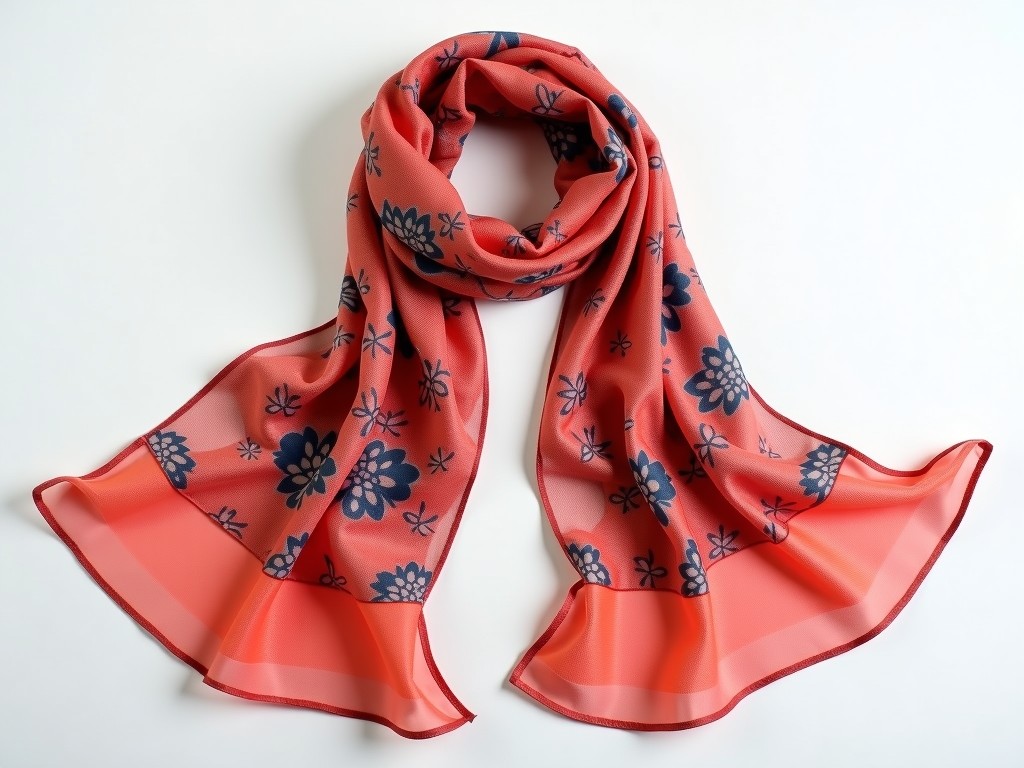
Buy Soft Cotton Voile Fabric Scarf
A lightweight, sheer textile made from combed cotton fibers with a plain weave construction, soft cotton voile offers breathability, drape, and a smooth hand feel suitable for apparel accessories
Soft Cotton Voile Fabric Scarf
A lightweight, sheer textile made from combed cotton fibers with a plain weave construction, soft cotton voile offers breathability, drape, and a smooth hand feel suitable for apparel accessories such as scarves. This product page details the technical characteristics, material behavior, and industrial considerations relevant to B2B buyers evaluating voile fabric for scarf production.
Material Composition and Construction
Soft cotton voile is typically produced using 100% combed ring-spun cotton yarns with a yarn count ranging from 60s to 100s Ne (English cotton count), resulting in a fine, lightweight fabric. The plain weave structure interlaces warp and weft yarns in a simple over-one-under-one pattern, contributing to the fabric’s dimensional stability and uniform appearance. Fabric weight generally falls between 60 and 90 gsm, classifying it as a lightweight voile suitable for layered or draped applications.
Key Technical Properties
- Thread count: Typically 120–180 threads per square inch, influencing smoothness and opacity.
- Tensile strength: Warp and weft directions exhibit balanced strength due to symmetrical plain weave, reducing skew during cutting and sewing.Shrinkage: Controlled sanforization limits residual shrinkage to under 3% after washing, ensuring dimensional stability in finished goods.
- Air permeability: High due to open plain weave structure, enhancing comfort in warm conditions.
- Opacity: Semi-sheer; light transmission varies with color and finish, requiring consideration for lining or layering in apparel use.
Manufacturing Considerations for Scarf Production
When converting voile fabric into scarves, industrial buyers should account for fraying tendencies inherent to lightweight plain weaves. Overlocking or narrow hem finishing (e.g., 3–6 mm rolled hem) is commonly applied to prevent edge unraveling. The fabric’s low bending rigidity allows for easy rolling or folding, but may require tissue interleaving during cutting to prevent slippage on automated spreaders. Dye uptake is uniform due to the fabric’s scoured and bleached base, supporting consistent coloration across batch lots.
Typical Applications in Apparel and Accessories
Soft cotton voile scarves are valued in markets requiring lightweight layering pieces, particularly in transitional seasons or warm climates where heavy fabrics are impractical. The fabric’s drape allows for stylish folding, knotting, or wrapping techniques without bulk. Its breathability and moisture-wicking properties—inherent to natural cotton—make it suitable for direct skin contact, reducing irritation risk compared to synthetic sheers. Common end uses include fashion accessories, promotional wear, and uniform accents in hospitality or retail environments.
Customization Options
Industrial buyers can specify variations in yarn count, finish, and dimensions to align with end-product requirements. Common customizations include:
- Yarn count: Adjustable from 60s to 120s Ne for finer or slightly heavier voile.
- Width: Standard loom widths of 115 cm or 150 cm; custom widths available upon re-engineering.
- Finish: Options include softening, optical brightening, or antimicrobial treatment based on end-use.
- Dimensions: Scarf length and width tailored to design specs, with typical ranges of 160–180 cm length and 30–40 cm width.
- Color: Pantone-matched dyeing or natural undyed (ecru) available.
Quality Control and Inspection
To ensure consistency, suppliers typically implement inline inspection during weaving and final audit post-finishing. Key checkpoints include yarn evenness (Class Uster® or equivalent), pick density, width consistency, and surface defects such as thick places, neps, or holes. Colorfastness to washing, light, and perspiration is verified per AATCC or ISO standards, with results available upon request. Fabric is usually wound on perforated cores with polyethylene wrapping to prevent moisture ingress and creasing during transit.
Packaging and Logistics
Finished voile scarves are commonly packed in polybags (50–100 units per carton) or rolled on tubes for hanging display, depending on customer specifications. Carton dimensions are optimized for palletization, reducing void space and transit damage. For export shipments, moisture-resistant liners and corner protectors are used to maintain fabric integrity. Lead times vary based on order complexity but typically range from 2–4 weeks for standard specifications after sample approval, with exact timelines confirmed during quotation.
Comparison with Alternative Sheer Fabrics
| Property | Soft Cotton Voile | Polyester Voile | Rayon Challis |
|---|---|---|---|
| Weight (gsm) | 60–90 | 50–80 | 80–120 |
| Breathability | High | Low | Medium |
| Moisture Absorption | High (cotton) | Very Low | High |
| Dimensional Stability | Good (with sanforization) | Excellent | Fair (prone to stretching) |
| Typical Use in Scarves | Lightweight, breathable layers | Low-cost, wrinkle-resistant | Drapey, medium-weight |
This comparison highlights trade-offs in material selection. While polyester voile offers superior wrinkle resistance, it lacks the moisture management and skin comfort of cotton. Rayon challis provides better drape but is less dimensionally stable and more prone to shrinkage. Soft cotton voile balances breathability, comfort, and adequate stability for scarf applications where natural fiber performance is valued.
For technical inquiries, sample requests, or to discuss custom specifications for soft cotton voile fabric scarves, contact our engineering team to evaluate suitability for your production requirements.
Request Technical ConsultationProducts
Related Products
News
Related News

2026-11-02
Cotton Voile Scarf Manufacturing and Performance Analysis how to make a cotton voile scarfCreating a professional-grade cotton voile scarf requires a precise balance of textile engineering and artisanal finishing. Unlike standard cotton weaves, voile is defined by its p···

2026-10-28
chiffon hijab Technical Production and Performance AnalysisSelecting the right fabric for a hijab involves a delicate balance between modesty, breathability, and aesthetic drape. For many women in Southeast Asia and the Middle East, the ma···

2026-10-26
custom silk scarf textile manufacturing and performance analysisSelecting a high-quality scarf is no longer just about color matching; it is an exercise in understanding how textile weight, drape, and print scale interact with individual facial···
