Buy Black Cotton Voile Fabric Scarf






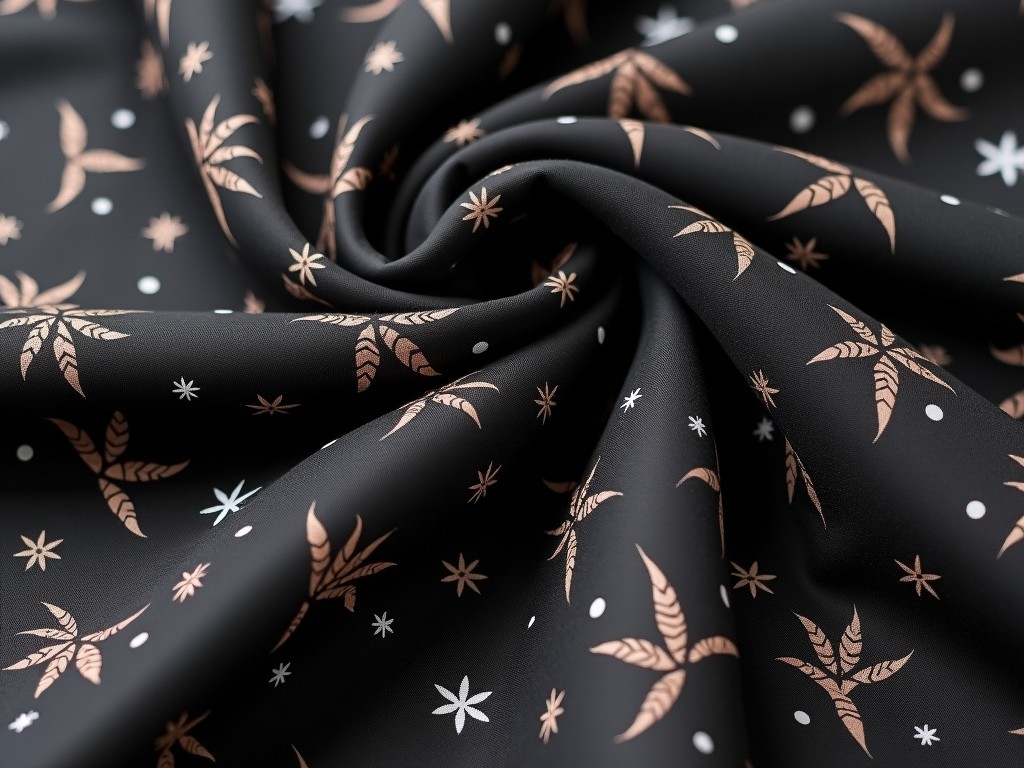
Buy Black Cotton Voile Fabric Scarf
Black cotton voile scarves are lightweight textile accessories made from finely woven cotton voile, a plain-weave fabric characterized by its semi-sheer appearance, soft drape, and breathability. The
Buy Black Cotton Voile Fabric Scarf
Black cotton voile scarves are lightweight textile accessories made from finely woven cotton voile, a plain-weave fabric characterized by its semi-sheer appearance, soft drape, and breathability. The fabric is typically produced using combed cotton yarns in the 40s to 60s Ne range, resulting in a smooth surface with minimal lint and consistent opacity when layered. These scarves are valued in industrial and commercial textile applications where a neutral, versatile base layer is required for dyeing, printing, or layering in apparel production.
Material Construction and Technical Properties
Cotton voile used in these scarves is constructed from 100% combed ring-spun cotton fibers, with yarn counts typically ranging from 40s to 60s Ne in both warp and weft directions. The plain weave structure produces a fabric weight between 60 and 90 GSM (grams per square meter), contributing to its lightweight nature while maintaining sufficient tensile strength for handling during manufacturing processes. The fabric exhibits a thread count of approximately 80x60 ends per inch, providing a balance between translucency and structural integrity.
The natural off-white state of raw cotton voile is bleached or dyed to achieve a true black color using reactive or vat dyes, which bond chemically with the cellulose fibers to ensure washfastness and resistance to fading under normal lighting conditions. The dyeing process is conducted at temperatures between 60–80°C with precise pH control to prevent fiber degradation. After dyeing, the fabric undergoes a mild softening treatment to enhance hand feel without compromising dimensional stability.
Dimensional Specifications and Tolerances
Standard black cotton voile scarves are manufactured in rectangular formats with common dimensions of 70 cm × 180 cm or 80 cm × 200 cm, though custom lengths and widths are available upon request. The fabric is cut with a straight grain orientation to minimize skew during sewing or folding operations. Hemming is typically performed using a 3mm double-fold stitch with a 4-thread overlock seam, resulting in a finished edge width of 6–8 mm that resists fraying under repeated handling.
Dimensional stability is maintained through pre-sanforization processes that limit shrinkage to less than 2% after five wash cycles at 40°C, as measured per AATCC Test Method 135. The fabric retains its dimensional accuracy within ±3% tolerance under standard ambient conditions (20°C, 65% RH), making it suitable for precision cutting and automated assembly lines in garment production.
Performance Characteristics in Industrial Use
The breathability of cotton voile, measured by air permeability rates between 150–250 mm/s, allows for comfortable wear in layered applications while preventing moisture buildup during extended use. Its low thermal conductivity (~0.04 W/m·K) makes it suitable as a lightweight liner or overlay in climate-sensitive environments. The fabric’s surface resistivity, typically in the range of 10⁹–10¹⁰ ohms, indicates low static buildup, reducing attraction to dust and particulates in cleanroom-adjacent settings.
Tensile strength averages 25–35 N in the warp direction and 20–30 N in the weft direction, providing sufficient durability for automated cutting, folding, and packaging systems without tearing. Elongation at break ranges from 8–12%, allowing the fabric to conform to contours during draping or forming processes. These mechanical properties are verified via ASTM D5034 grab testing on conditioned specimens.
Applications in Textile Manufacturing and Supply Chains
Black cotton voile scarves serve as intermediate components in the production of layered garments, linings, and decorative overlays where a neutral, lightweight base is required before dyeing, printing, or embellishment. Their consistent color and texture make them ideal for use in batch processing environments where visual uniformity across production lots is critical for quality control. They are commonly used in the manufacture of scarves, shawls, and lightweight wraps for fashion brands requiring a semi-sheer aesthetic.
In industrial settings, these scarves function as protective interleaves between fabric rolls during storage and transit, preventing color transfer and surface abrasion. Their low bulk density allows for efficient stacking in warehouse environments, while their moisture regain of approximately 8% helps stabilize humidity-sensitive materials. They are also utilized in theatrical costume departments and uniform production as base layers for appliqué or embroidery work.
Quality Control and Inspection Parameters
Each batch of black cotton voile scarves undergoes systematic inspection for color consistency using a spectrophotometer under D65 lighting, with Delta E values maintained below 1.5 to ensure visual match across production runs. Fabric width is monitored at 10-point intervals along the roll, with tolerance held to ±3 mm. Ends per inch (EPI) and picks per inch (PPI) are verified via thread counting to confirm adherence to the 80x60 baseline construction.
Defects such as thin places, thick places, neps, or oil spots are classified per the 4-point system, with acceptance criteria limiting total defect points to no more than 40 per 100 square yards. Colorfastness to light is rated at minimum 4 on the Blue Wool Scale after 20 hours of xenon arc exposure, while washfastness is validated at 4+ for staining and 3+ for color change after 5 cycles at 40°C. All inspections are documented in batch-specific quality reports available upon request.
Packaging and Handling Specifications
Scarves are folded to a uniform size of 20 cm × 30 cm and packed in polyethylene-lined cartons to prevent moisture ingress and contamination during transit. Each carton contains 50 units, arranged in layers with interleaving tissue paper to reduce surface friction. Carton dimensions are standardized at 40 cm × 30 cm × 25 cm, with a gross weight of approximately 8 kg per unit, facilitating palletization and automated warehouse handling.
Packaging includes barcode labels on each carton for inventory tracking, with optional RFID tagging available for high-volume distribution chains. Storage conditions are recommended at 18–22°C and 45–55% relative humidity to prevent yellowing or fiber degradation. The packaging design complies with ISTA 1A standards for vibration and shock resistance during domestic shipping.
| Parameter | Typical Value | Test Method / Standard |
|---|---|---|
| Fabric Weight | 60–90 GSM | ASTM D3776 |
| Thread Count (EPI x PPI) | 80x60 | ASTM D3775 |
| Tensile Strength (Warp/Weft) | 25–35 N / 20–30 N | ASTM D5034 |
| Shrinkage (5 washes @ 40°C) | <2% | AATCC 135 |
| Colorfastness to Light | Minimum 4 (Blue Wool) | AATCC 16.3 |
| Colorfastness to Wash | 4+ staining, 3+ change | AATCC 61 |
| Air Permeability | 150–250 mm/s | ASTM D737 |
Technical specifications are representative of standard production lots. Custom requirements for yarn count, weave density, dye formulation, or dimensions can be accommodated based on project-specific needs. All values are derived from controlled laboratory testing and may vary slightly due to natural fiber characteristics. For detailed test reports or material safety data sheets, contact the supplier directly.
Products
Related Products
News
Related News

2026-11-02
Cotton Voile Scarf Manufacturing and Performance Analysis how to make a cotton voile scarfCreating a professional-grade cotton voile scarf requires a precise balance of textile engineering and artisanal finishing. Unlike standard cotton weaves, voile is defined by its p···

2026-10-28
chiffon hijab Technical Production and Performance AnalysisSelecting the right fabric for a hijab involves a delicate balance between modesty, breathability, and aesthetic drape. For many women in Southeast Asia and the Middle East, the ma···

2026-10-26
custom silk scarf textile manufacturing and performance analysisSelecting a high-quality scarf is no longer just about color matching; it is an exercise in understanding how textile weight, drape, and print scale interact with individual facial···
