Blue Cotton Voile Fabric Yard Top Factory






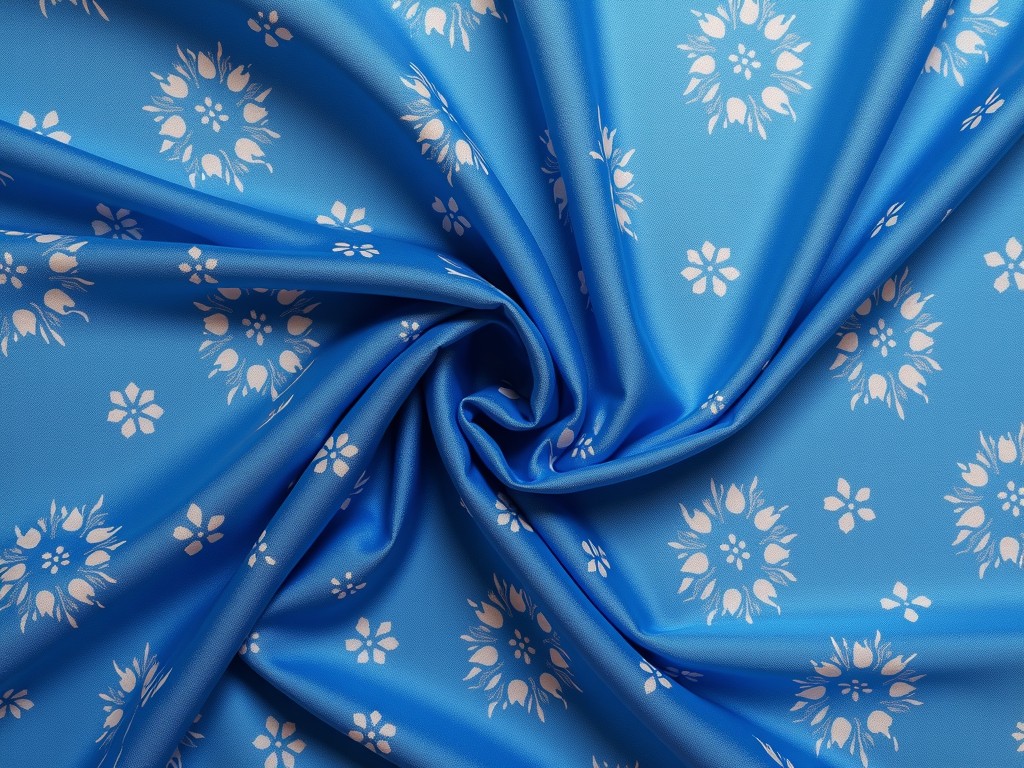
Blue Cotton Voile Fabric Yard Top Factory
Blue cotton voile fabric is a lightweight, plain-weave textile made from combed cotton yarns, characterized by its semi-sheer appearance, soft hand feel, and breathability. The term "yard top" refers
Blue Cotton Voile Fabric Yard Top Factory
Blue cotton voile fabric is a lightweight, plain-weave textile made from combed cotton yarns, characterized by its semi-sheer appearance, soft hand feel, and breathability. The term "yard top" refers to fabric sold in continuous lengths measured by the yard, typically wound on rolls or bolts for industrial cutting and sewing operations. This product page details the technical specifications, manufacturing considerations, and application suitability of blue cotton voile produced in a factory setting for B2B buyers.
Material Composition and Yarn Specifications
The fabric is constructed using 100% cotton yarns, typically in the range of Ne 40s to Ne 60s (English cotton count), which indicates finer yarns suitable for lightweight voiles. The blue coloration is achieved through piece-dyeing or yarn-dyeing processes using reactive or direct dyes that bond with cellulose fibers, ensuring wash fastness and resistance to fading under normal indoor lighting. Yarn twist is carefully controlled—usually between 3.0 to 4.5 turns per inch—to balance strength, drape, and minimal snagging during high-speed weaving.
Weave Structure and Physical Properties
Cotton voile employs a plain weave (1 up, 1 down) with a low thread count density, typically ranging from 80 to 120 ends per inch (EPI) and 60 to 100 picks per inch (PPI). This open construction results in a fabric weight of approximately 40 to 70 grams per square meter (GSM), contributing to its translucency and air permeability. The low crimp in both warp and weft yarns enhances softness and fluid drape, while the minimal interlacing points reduce stiffness compared to tighter weaves like poplin or broadcloth.
Dimensional Stability and Finishing Treatments
To minimize shrinkage after cutting and sewing, the fabric undergoes sanforization (controlled compressive shrinking) or resin finishing, limiting residual shrinkage to under 2% in both warp and weft directions after washing at 40°C. Optical brighteners are generally avoided in blue shades to prevent hue shift; instead, color consistency is maintained through precise dye batching and pH-controlled rinsing. A light starch or silicone-based softener may be applied to improve sewability and hand feel without compromising breathability.
Width Options and Put-Up Configurations
Standard working widths for blue cotton voile range from 112 cm (44 inches) to 150 cm (59 inches), with 140 cm (55 inches) being common for apparel and home textile applications. Custom widths are achievable upon request, subject to loom capacity and minimum order quantities. The fabric is typically put up on cardboard or plastic cores with a yardage of 50 to 100 yards per roll, though longer lengths can be supplied for continuous cutting systems. Each roll is labeled with yardage, width, GSM, dye lot number, and care instructions.
Quality Control and Inspection Parameters
Factory inspection follows a 4-point system or equivalent, evaluating defects such as broken ends, picks, neps, stains, and color variation. Acceptable quality levels (AQL) are typically set at 2.5 for major defects and 4.0 for minor defects per 100 square yards. Shade matching is verified under D65 lighting using a spectrophotometer, with Delta E values kept below 1.5 to ensure batch-to-batch consistency. Tensile strength is tested periodically, with minimum values of 1.5 N/tex in warp and 1.2 N/tex in weft to ensure durability during handling and sewing.
Applications in Industrial and Commercial Sectors
Blue cotton voile is selected for applications requiring lightweight drape, translucency, and comfort. In apparel, it is used for blouses, dresses, curtains, and linings where a soft, flowing aesthetic is desired. In home textiles, it serves as sheer curtain panels, bed canopies, and decorative overlays due to its light-filtering properties and ability to layer without adding bulk. Industrial buyers in event staging and theater production use it for backdrops and diffusers because of its uniform light transmission and low glare. Its breathability also makes it suitable for lightweight packaging inserts and protective covers in humidity-sensitive environments.
Customization and Technical Support
Customization options include shade matching to Pantone or RAL standards, adjustment of yarn count for altered opacity or strength, and application of functional finishes such as UV stabilization, antimicrobial treatment, or flame retardancy (where applicable and compliant with safety regulations). Buyers are advised to provide end-use requirements, expected washing cycles, and exposure conditions to enable accurate material selection. Factory technical teams can provide lab-dipped samples, construction swatches, and performance data sheets upon request to support qualification processes.
Packaging and Logistics Considerations
Rolls are wrapped in polyethylene film to prevent moisture ingress and soiling during transit, then placed in cardboard cartons or on pallets for stable handling. Each carton includes a packing list with roll numbers, yardage, width, and destination marks. For export shipments, fumigated pallets and moisture barrier bags are used as needed. Standard lead times range from 2 to 4 weeks after sample approval and deposit receipt, depending on dye lot size and finishing complexity. FOB and CIF pricing models are available, with volume discounts applicable for repeat orders.
Products
Related Products
News
Related News

2026-11-02
Cotton Voile Scarf Manufacturing and Performance Analysis how to make a cotton voile scarfCreating a professional-grade cotton voile scarf requires a precise balance of textile engineering and artisanal finishing. Unlike standard cotton weaves, voile is defined by its p···

2026-10-28
chiffon hijab Technical Production and Performance AnalysisSelecting the right fabric for a hijab involves a delicate balance between modesty, breathability, and aesthetic drape. For many women in Southeast Asia and the Middle East, the ma···

2026-10-26
custom silk scarf textile manufacturing and performance analysisSelecting a high-quality scarf is no longer just about color matching; it is an exercise in understanding how textile weight, drape, and print scale interact with individual facial···
