Bawal Cotton Voile Premium Top Supplier






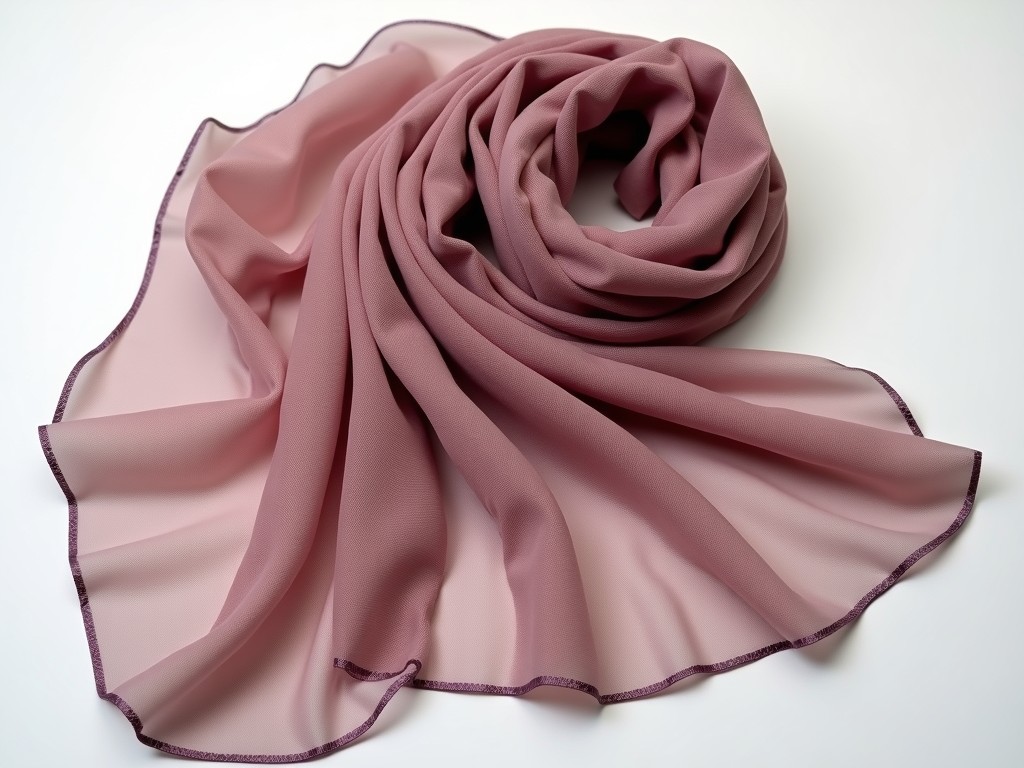
Bawal Cotton Voile Premium Top Supplier
Bawal cotton voile is a lightweight, plain-weave fabric constructed from combed single-ply cotton yarns, typically ranging from 40s to 80s Ne count. The voile construction employs a low thread
Bawal Cotton Voile: Premium Top Supplier for Industrial Applications
Material Composition and Structural Properties
Bawal cotton voile is a lightweight, plain-weave fabric constructed from combed single-ply cotton yarns, typically ranging from 40s to 80s Ne count. The voile construction employs a low thread density—commonly 80 to 120 ends per inch warp and 60 to 100 picks per inch weft—resulting in a sheer, breathable textile with controlled opacity. Unlike standard cotton poplin or broadcloth, the loose weave minimizes crimp interference, enhancing drape and air permeability while maintaining dimensional stability under low-tension conditions.
The fabric undergoes mercerization to improve luster, tensile strength, and dye affinity, reducing fibrillation during repeated washing. Shrinkage is stabilized through sanforization, limiting residual shrinkage to under 2% after five home laundering cycles at 40°C. These treatments ensure consistent performance in applications requiring precise dimensional tolerance, such as layered apparel components or technical linings where shrinkage-induced distortion must be avoided.
Performance Characteristics in Industrial Use Cases
Bawal cotton voile is selected not for its aesthetic alone but for its engineered balance of porosity, tensile resilience, and thermal regulation. Its air permeability typically ranges from 150 to 300 mm/s under ASTM D737 testing, making it suitable for applications requiring passive ventilation, such as protective garment linings or filtration pre-filters where moisture vapor transmission is critical.
The fabric exhibits a breaking strength of 18–25 N in the warp direction and 12–18 N in the weft, measured per ISO 13937-2, sufficient for sustained use in low-stress interfacial layers. Its low bending rigidity—due to minimal yarn crimp and low areal density (typically 40–60 g/m²)—allows it to conform precisely to complex geometries without inducing pressure points, a key factor in medical draping or precision molding applications where fabric-induced stress could compromise product integrity.
Unlike synthetic alternatives, cotton voile retains hygroscopic properties, absorbing up to 8% of its weight in moisture at 65% RH, which aids in thermal buffering during prolonged wear or process exposure. This hygroscopic behavior reduces static buildup and improves comfort in wearable industrial systems, a consideration often overlooked in purely synthetic substitutes.
Customization Parameters and Manufacturing Tolerances
As a premium top supplier, we control critical process variables to meet exacting industrial specifications. Yarn count, twist level (typically 3.5–4.5 TPI for combed cotton), and weave tightness are adjusted based on end-use requirements. For instance, higher twist levels increase surface smoothness and reduce snagging in automated handling systems, while lower twist enhances bulk and moisture absorption for thermal management layers.
Width is available from 90 cm to 160 cm with a tolerance of ±0.5%, controlled via electronic let-off and take-up monitoring during weaving. Areal density is held to ±3% through real-time monitoring of yarn feed and beat-up force. Color consistency is maintained using spectrophotometer-controlled dyeing, with ΔE < 1.5 against approved lab dips for batch-to-batch uniformity—essential for applications where visual consistency impacts downstream assembly or consumer perception.
Finishing options include optical brightener-free bleaching for medical compliance, antimicrobial treatment via zinc pyrithione (effective against Gram-positive and Gram-negative bacteria), or flame retardant application using PROBAN®-based systems to meet ISO 15025 limited flame spread criteria. All finishes are applied via pad-dry-cure methods to ensure even penetration without stiffening the hand.
Quality Assurance and Inspection Protocols
Each roll undergoes 100% visual inspection under 500 lux LED lighting (6500K) to detect defects such as thick/thin places, neps, or weaving faults per ASTM D1423. Fault density is recorded and must not exceed 10 points per 100 linear yards for first-grade classification. Additional testing includes pilling resistance (Martindale, 2000 cycles, rating ≥3–4), dimensional stability after washing, and colorfastness to light (ISO 105-B02, ≥4) and washing (ISO 105-C06, ≥3–4).
For regulated industries, we provide full traceability from bale to roll, including cotton origin, spinning lot, dye batch, and finishing parameters. Test reports are generated per order and available upon request. Our quality system aligns with ISO 9001:2015 principles, with process controls focused on minimizing variation in critical-to-quality characteristics rather than relying solely on end-of-line inspection.
Comparison with Alternative Sheer Fabrics
| Property | Bawal Cotton Voile | Polyester Voile | Rayon Voile |
|---|---|---|---|
| Areal Density (g/m²) | 40–60 | 35–50 | 45–65 |
| Air Permeability (mm/s) | 150–300 | 200–400 | 100–200 |
| Moisture Regain (% at 65% RH) | 7–8 | 0.4 | 11–12 |
| Dimensional Stability (Wash, %) | <1.5 | <0.5 | 3–5 |
| Breaking Strength (Warp, N) | 18–25 | 25–35 | 12–18 |
| Thermal Conductivity (W/m·K) | 0.040 | 0.025 | 0.038 |
While polyester offers superior strength and dimensional stability, it lacks moisture management and thermal buffering. Rayon provides high absorbency but suffers from wet-strength loss and inconsistent dimensional behavior. Bawal cotton voile presents a balanced solution for applications where breathability, skin compatibility, and moderate mechanical performance must coexist—such as in reusable surgical gown liners, filtration media for humid environments, or thermal interface layers in wearable sensor systems.
Typical Industrial Applications
The fabric’s combination of breathability, low thermal conductivity, and hygroscopic nature makes it ideal for use as a lining layer in limited-use protective garments where wearer comfort during extended shifts is a functional requirement. In medical device manufacturing, it serves as a low-lint barrier between skin and adhesive components, minimizing irritation during prolonged wear.
In industrial filtration, Bawal cotton voile functions as a pre-filter medium in humid air streams, capturing larger particulates while allowing moisture vapor to pass—preventing premature clogging of downstream hydrophobic filters. Its natural fibers resist static charge accumulation in low-humidity environments, reducing the risk of particulate attraction in precision assembly areas.
Additionally, it is used as a release layer in composite molding processes where a non-stick, conformable interface is needed between the mold surface and vacuum bagging material. The fabric’s smooth surface and thermal stability under 180°C curing cycles (for short durations) allow clean release without residue transfer, a critical factor in high-value aerospace or automotive composite production.
Ordering and Technical Support
Minimum order quantities start at 300 linear meters per color/width combination, with lab dip approval available prior to bulk production. Lead time is typically 4–6 weeks after approval, depending on finish complexity and current capacity. We provide technical data sheets, test reports, and sample swatches upon request to support material qualification processes.
Our engineering team collaborates with clients to optimize yarn selection, weave parameters, and finish specifications based on end-use performance criteria—whether the goal is maximizing airflow, minimizing skin friction, or ensuring compatibility with sterilization methods such as ethylene oxide or gamma irradiation.
To initiate a technical consultation or request a quotation, please provide your application requirements, including target areal density, desired width, required finishes, and estimated annual volume. We respond to all inquiries within one business day with a detailed feasibility assessment and cost estimate.
Products
Related Products
News
Related News

2026-11-02
Cotton Voile Scarf Manufacturing and Performance Analysis how to make a cotton voile scarfCreating a professional-grade cotton voile scarf requires a precise balance of textile engineering and artisanal finishing. Unlike standard cotton weaves, voile is defined by its p···

2026-10-28
chiffon hijab Technical Production and Performance AnalysisSelecting the right fabric for a hijab involves a delicate balance between modesty, breathability, and aesthetic drape. For many women in Southeast Asia and the Middle East, the ma···

2026-10-26
custom silk scarf textile manufacturing and performance analysisSelecting a high-quality scarf is no longer just about color matching; it is an exercise in understanding how textile weight, drape, and print scale interact with individual facial···
