B2B Printed Cotton Voile Hijab






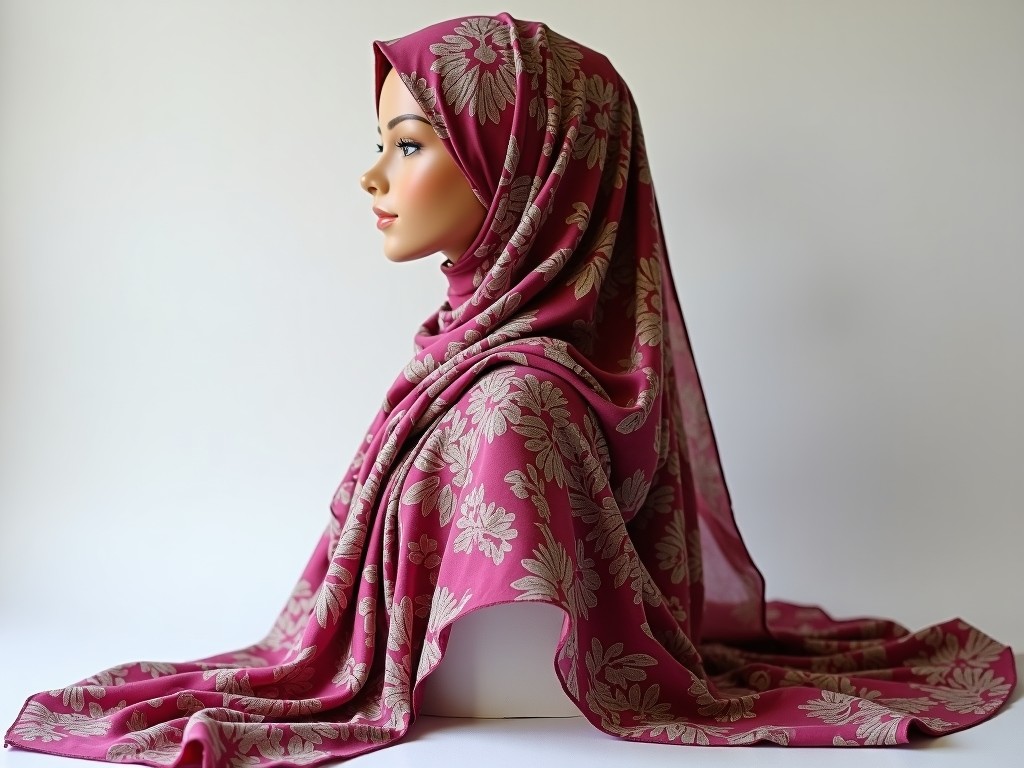
B2B Printed Cotton Voile Hijab
This document details the technical characteristics of printed cotton voile hijabs designed for B2B supply chains. Cotton voile is a lightweight, plain-weave fabric characterized by its semi-sheer
B2B Printed Cotton Voile Hijab: Technical Specifications for Industrial Procurement
This document details the technical characteristics of printed cotton voile hijabs designed for B2B supply chains. Cotton voile is a lightweight, plain-weave fabric characterized by its semi-sheer appearance, low mass per unit area, and specific drape properties. Understanding these material fundamentals is essential for evaluating suitability in bulk textile applications where performance consistency and production scalability are prioritized.
Material Composition and Fabric Construction
The base fabric is 100% combed cotton voile with a typical thread count ranging from 80 to 100 ends per inch (EPI) in both warp and weft directions. This construction yields a fabric weight between 60 and 85 grams per square meter (gsm), measured under standard atmospheric conditions (20°C, 65% RH). The plain weave structure ensures isotropic tensile strength, minimizing directional bias during cutting and sewing operations in high-volume production.
Combed cotton removes short fibers and neps, resulting in a smoother yarn surface that enhances print definition and reduces pilling propensity. The voile’s inherent translucency (approximately 40-60% light transmission) is controlled through precise yarn twist (typically 18-22 TPI) and pick density, balancing opacity requirements with breathability for end-use comfort in layered applications.
Printing Process and Colorfastness Standards
Designs are applied using reactive dye printing, which forms covalent bonds with cellulose fibers, ensuring wash resistance exceeding 40 cycles at 40°C without significant fading. Print penetration achieves minimum 80% strike-through on the reverse side, critical for maintaining visual consistency when the fabric is draped or folded. Pigment printing is not used due to its tendency to create a stiff hand feel and reduced flexibility in voile substrates.
Colorfastness to light (ISO 105-B02) averages 4-5 on the blue wool scale under controlled xenon arc exposure, suitable for indoor storage and limited outdoor transfer. Sublimation printing is incompatible with natural cotton voile; therefore, all coloration relies on direct dye fixation followed by steaming and washing-off processes to remove unfixed dye and prevent crocking.
Dimensional Specifications and Tolerances
Standard finished dimensions are 180 cm in length and 70 cm in width, measured after relaxation under 0.5 g/denier tension for 24 hours. Cutting tolerances are maintained within ±3 mm for length and ±2 mm for width to ensure uniformity in stacking and packaging. Hemming employs a 3 mm double-fold with 6 mm stitch depth, using polyester-core cotton-wrapped thread (Tex 24) to minimize puckering in lightweight fabric.
Length stability after five wash cycles at 40°C does not exceed 2% shrinkage in either direction, verified through AATCC Test Method 135. Width stability is similarly constrained, with residual skewness kept below 1.5° to prevent torque-induced twisting during consumer use. These tolerances are critical for automated folding and counting systems in distribution centers.
Quality Control and Inspection Protocol
Each production lot undergoes 100% visual inspection under 500 lux cool white fluorescent lighting (D65 simulator) to detect print defects, yarn imperfections, or staining. Acceptable quality limits (AQL) are set at 0.65 for critical defects (e.g., misprints, holes) and 2.5 for major defects (e.g., uneven hem, shade variation). Fabric width is monitored every 10 meters during weaving to maintain consistency.
Color matching is verified using a spectrophotometer with Delta-E tolerance ≤ 2.0 against Pantone TCX standards under D65 illumination. Print registration is checked at 10x magnification to ensure alignment within ±0.5 mm of design specifications. Final random audits include pilling assessment (ASTM D3512) and seam strength testing (ASTM D1683) on finished units.
Packaging and Logistics Considerations
Units are folded to a standardized 15 cm × 10 cm × 2 cm format using automated board folders to optimize carton utilization. Each polypropylene bag contains 10 pieces, sealed with heat-seal edges to prevent moisture ingress. Master cartons (5-layer corrugated, 200 kg burst strength) hold 120 units (12 bags), dimensioned at 40 cm × 30 cm × 25 cm for efficient palletization.
Carton markings include barcode labels (Code 128) for SKU tracking, country of origin, and care instructions in multiple languages. Silica gel packets (5 g) are included per master carton to maintain relative humidity below 60% during transit. Stacking strength is validated to withstand 3-meter high pallet loads without deformation, supporting warehouse automation systems.
Customization Parameters for Industrial Orders
Minimum order quantity (MOQ) starts at 500 units per design/colorway, with incremental pricing available at 1,000, 2,500, and 5,000 units. Custom dimensions require new cutting dies and may affect MOQ; width adjustments beyond ±5 cm of standard necessitate loom reprogramming. Lead time for approved artwork is 22-28 days FOB factory, inclusive of sample approval (physical or digital).
Color customization uses Pantone Solid Coated references; lab dips are provided within 5 working days of request. Custom printing screens incur a one-time fee, amortized over orders exceeding 2,000 units. Embroidery or appliqué additions are not offered on voile due to weight and drape disruption; alternative fabrics are recommended for such embellishments.
Comparison Table: Standard vs. Customizable Attributes
| Attribute | Standard Specification | Customizable Range |
|---|---|---|
| Fabric Weight | 65 gsm (±5 gsm) | 60–85 gsm (yarn count adjustment) |
| Length | 180 cm (±3 mm) | 160–200 cm (cutting die change) |
| Width | 70 cm (±2 mm) | 65–75 cm (loom adjustment) |
| Print Type | Reactive dye | Pigment (upon request, hand feel trade-off) |
| Packaging Unit | 10 pieces/bag | 5, 15, 20 pieces/bag (re-labeling) |
Note: Custom specifications may affect pricing, MOQ, and lead time. All values are typical; actual results depend on yarn lot variability and environmental conditions during production. Confirm requirements during technical quotation phase.
Applications in Industrial Supply Chains
This product serves B2B distributors supplying modest apparel retailers, institutional uniform programs, and e-commerce fulfillment centers requiring consistent SKU performance. The lightweight nature reduces shipping volumetric weight compared to heavier fabrics, lowering freight costs per unit. Its breathability supports layering systems in climate-variable environments, while the semi-sheer quality allows for styling over under-scarves or liners without excessive bulk.
Printed designs enable brand differentiation without altering fabric properties, critical for private-label programs where visual identity must be maintained across reorders. The combed cotton base ensures minimal lint generation during automated handling, reducing contamination risks in clean packing areas. These characteristics make it suitable for high-turnover inventory where dimensional stability and appearance retention directly impact return rates and customer satisfaction.
For technical inquiries, sample requests, or quotation details, contact our industrial sales team.
Request Technical Specification SheetProducts
Related Products
News
Related News

2026-11-02
Cotton Voile Scarf Manufacturing and Performance Analysis how to make a cotton voile scarfCreating a professional-grade cotton voile scarf requires a precise balance of textile engineering and artisanal finishing. Unlike standard cotton weaves, voile is defined by its p···

2026-10-28
chiffon hijab Technical Production and Performance AnalysisSelecting the right fabric for a hijab involves a delicate balance between modesty, breathability, and aesthetic drape. For many women in Southeast Asia and the Middle East, the ma···

2026-10-26
custom silk scarf textile manufacturing and performance analysisSelecting a high-quality scarf is no longer just about color matching; it is an exercise in understanding how textile weight, drape, and print scale interact with individual facial···
