B2B Japanese Cotton Voile Fabric






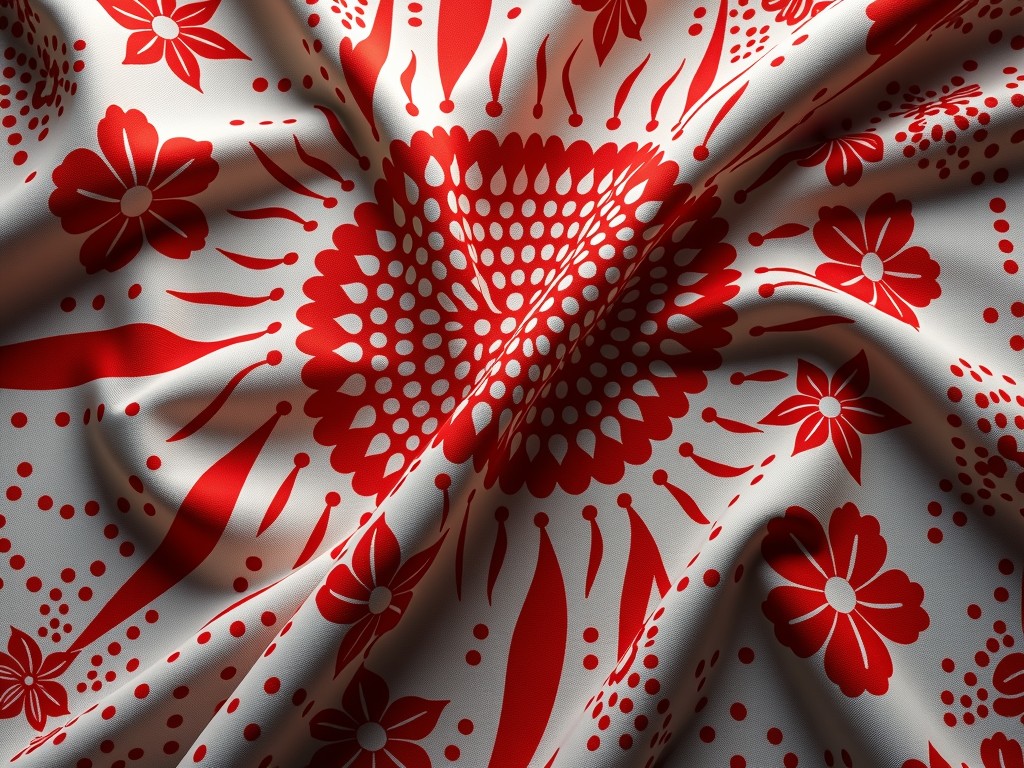
B2B Japanese Cotton Voile Fabric
Japanese cotton voile fabric is a lightweight, plain-woven textile made from combed or carded cotton yarns with a typical thread count ranging from 80 to 120 ends per inch in both warp and weft. Its
B2B Japanese Cotton Voile Fabric
Japanese cotton voile fabric is a lightweight, plain-woven textile made from combed or carded cotton yarns with a typical thread count ranging from 80 to 120 ends per inch in both warp and weft. Its open weave structure produces a semi-sheer appearance with a soft drape and low air permeability, making it suitable for applications requiring controlled light diffusion and breathability. The fabric undergoes mercerization to improve luster, tensile strength, and dye affinity, while maintaining dimensional stability under standard washing conditions.
Material Composition and Construction
The base material is 100% long-staple cotton, typically sourced from Japanese-grown varieties such as Yamada Nishiki or San’in cotton, known for their fine fiber length (28–34 mm) and low neps count. Yarns are usually single-ply, combed, and spun to a count between 60s and 80s Ne (English cotton count), resulting in a fabric weight of 40–60 gsm. The plain weave is constructed with a balanced warp and weft density, typically 90×90 threads per inch, creating uniform porosity and minimal skewing.
Mercerization is applied under controlled tension (10–15% elongation) with sodium hydroxide solution (18–22% concentration) at 20–25°C, followed by neutralization and rinsing. This process increases tensile strength by 10–15%, enhances moisture regain to 8–10%, and improves color yield by 20–30% compared to non-mercerized equivalents. The fabric retains a pH between 6.0 and 7.5 after finishing, suitable for skin-contact applications.
Technical Properties and Performance
The fabric exhibits a tensile strength of 18–22 N in the warp direction and 16–20 N in the weft direction when tested per ISO 13937-2, with elongation at break ranging from 8–12%. Tear resistance averages 1.8–2.4 N (warp) and 1.6–2.1 N (weft) under ISO 9073-4. Air permeability measures between 150–250 mm/s under ISO 9237, allowing controlled airflow while maintaining visual opacity sufficient for privacy screens or diffusers.
Dimensional stability is maintained within ±3% after five wash cycles at 40°C per ISO 6330, with shrinkage primarily occurring in the weft direction due to yarn relaxation. The fabric demonstrates a UV protection factor (UPF) of 8–12, suitable for indirect sunlight exposure in interior applications. Colorfastness to washing, light, and rubbing typically achieves grades 4–5 on the Gray Scale, depending on dye class (reactive or direct) and post-treatment.
Applications in Industrial and Commercial Sectors
In architectural interiors, Japanese cotton voile is used as a diffusing layer in ceiling panels, window treatments, and modular partitions where soft light transmission and acoustic softening are required. Its low mass and drape allow for seamless integration into tensioned systems without adding structural load. The fabric’s breathability reduces condensation risk in humid environments when used as a lining or secondary layer.
In medical and healthcare settings, it serves as a disposable or reusable barrier layer in patient screens, privacy curtains, and equipment covers, where lint generation must be minimized. The combed yarn construction reduces fiber shedding to below 50 mg/m² per hour under ASTM D4970, meeting criteria for low-lint environments. Its ability to withstand repeated autoclave cycles (up to 50 cycles at 121°C) makes it suitable for reusable applications when treated with antimicrobial finishes.
Industrial filtration systems utilize the fabric as a pre-filter medium in low-pressure air handling units, where its uniform pore structure captures particles between 10–30 μm with an efficiency of 60–75% at 0.5 m/s face velocity. The cotton substrate allows for easy disposal or incineration without releasing toxic byproducts, unlike synthetic alternatives. It is also employed in food processing facilities as a protective cover for drying racks or conveyor belts, where compliance with FDA 21 CFR 177.2600 for cotton textiles is required.
Customization Options
Fabric width is available in standard roll widths of 110 cm, 150 cm, and 280 cm, with custom slitting to narrower widths (down to 30 cm) possible upon request. Length is typically supplied in 50–100 meter rolls, though shorter lengths for sample evaluation or specialty cutting can be arranged. Color matching is supported via Pantone, RAL, or NCS systems, with reactive dyeing preferred for deep shades and direct dyeing for pastels.
Finishing options include calendering for enhanced smoothness, anti-static treatment (surface resistivity <10¹¹ Ω/sq), and flame retardancy compliant with NFPA 701 or BS 5867 Part 2 Type B. Optical brighteners can be omitted for applications requiring UV stability or where fluorescence interference must be avoided, such as in inspection booths or photography studios. Custom finishes are applied post-mercerization and require minimum order quantities of 300 linear meters per variant.
Quality Control and Inspection
Each batch undergoes systematic inspection per ISO 9001-inspired protocols, including visual assessment under 500 lux D65 lighting for defects such as thick/thin places, neps, or mispicks, limited to Class 2 tolerance (max 4 defects per 100 linear meters). Width is monitored at 1-meter intervals with tolerance of ±0.5%. Weight is verified per square meter using calibrated GSM cutters and balances, with acceptance criteria of ±5% from target.
Color consistency is evaluated using a spectrophotometer (d/8 geometry, UV excluded) with ΔEcmc < 1.5 accepted for commercial matching. Dimensional stability is verified on a representative sample after three wash/dry cycles. All test reports are available upon request, including raw data for tensile, tear, permeability, and colorfastness testing. Non-conforming material is segregated and reprocessed or diverted based on defect type and severity.
Packaging and Logistics
Fabric is wound onto corrugated paper cores (inner diameter 38 mm, wall thickness 5 mm) with outer protection provided by polyethylene film (50 μm thickness) and kraft paper wrapping. Rolls are labeled with batch number, width, length, weight, and care instructions using solvent-resistant ink. Standard packaging includes 2–4 rolls per carton, sized to optimize pallet utilization (1200×1000 mm) with a maximum stack height of 1.6 m.
For export shipments, moisture barrier bags (aluminum laminate) are available upon request to prevent humidity gain during transit, particularly for routes exceeding 30 days or passing through tropical climates. Each pallet is stretch-wrapped and secured with polyamide strapping. Lead time from order confirmation to ex-factory readiness is typically 14–21 days for standard colors and finishes, extending to 28–35 days for custom dye lots or specialized treatments. Samples (A4 size, 1–2 variants) are dispatched within 3–5 business days after request.
| Property | Typical Value | Test Standard |
|---|---|---|
| Fabric Weight | 40–60 gsm | ISO 3801 |
| Warp Tensile Strength | 18–22 N | ISO 13937-2 |
| Weft Tensile Strength | 16–20 N | ISO 13937-2 |
| Air Permeability | 150–250 mm/s | ISO 9237 |
| Shrinkage (Wash 5×40°C) | ±3% | ISO 6330 |
| UPF Rating | 8–12 | AS/NZS 4399 |
For technical consultation, sample requests, or quotation support regarding Japanese cotton voile fabric for your specific application, please contact our industrial textiles team. Provide details on required width, length, finish, color, and intended use case to ensure accurate matching of material properties to your operational needs.
Products
Related Products
News
Related News

2026-11-02
Cotton Voile Scarf Manufacturing and Performance Analysis how to make a cotton voile scarfCreating a professional-grade cotton voile scarf requires a precise balance of textile engineering and artisanal finishing. Unlike standard cotton weaves, voile is defined by its p···

2026-10-28
chiffon hijab Technical Production and Performance AnalysisSelecting the right fabric for a hijab involves a delicate balance between modesty, breathability, and aesthetic drape. For many women in Southeast Asia and the Middle East, the ma···

2026-10-26
custom silk scarf textile manufacturing and performance analysisSelecting a high-quality scarf is no longer just about color matching; it is an exercise in understanding how textile weight, drape, and print scale interact with individual facial···
