B2B Embroidered Cotton Voile Fabric Scarf






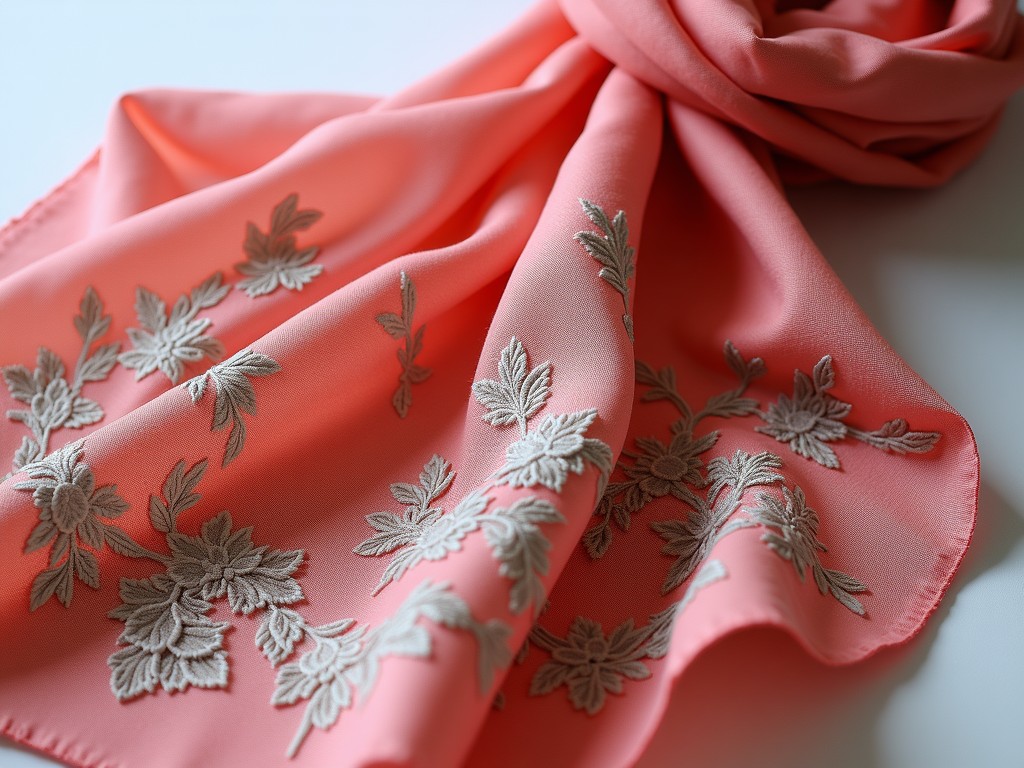
B2B Embroidered Cotton Voile Fabric Scarf
This product page details the technical specifications, material behavior, and industrial applications of embroidered cotton voile fabric scarves designed for B2B procurement. The information focuses
B2B Embroidered Cotton Voile Fabric Scarf
This product page details the technical specifications, material behavior, and industrial applications of embroidered cotton voile fabric scarves designed for B2B procurement. The information focuses on measurable characteristics, manufacturing considerations, and use-case suitability to support informed purchasing decisions.
Material Composition and Fabric Properties
The base fabric is 100% combed cotton voile with a plain weave construction. Typical yarn count ranges from 40s to 60s Ne, resulting in a fabric weight between 60 and 90 gsm. This lightweight structure provides high air permeability, measured at approximately 250–350 mm/s under standard test conditions (ASTM D737). The voile’s low density allows for translucency while maintaining sufficient tensile strength for embroidery stabilization, with warp and weft breaking strengths typically exceeding 15 N/cm.
Cotton voile exhibits moderate shrinkage potential, averaging 3–5% after the first wash at 40°C. To mitigate dimensional instability in finished goods, the fabric undergoes sanforization or controlled pre-shrinking during manufacturing. Colorfastness to washing and light is evaluated per ISO 105-C06 and ISO 105-B02, with typical ratings of 4–5 for both properties when using reactive or direct dyes suitable for cellulose fibers.
Embroidery Specifications and Thread Compatibility
Embroidery is applied using polyester or rayon thread with a standard thickness of 40 wt. Stitch density is maintained between 12 and 18 stitches per cm to balance visual detail with fabric integrity. Higher densities risk puckering or distortion in lightweight voile, while lower densities may compromise design definition. Underlay stitches—typically zigzag or satin—are used to stabilize the fabric prior to top stitching, minimizing pull distortion during production.
Thread tension is calibrated to avoid excessive stress on the delicate ground fabric. Needle size ranges from 60/8 to 75/11 sharp, selected based on thread type and design complexity. Backing material, when used, is a lightweight tear-away or water-soluble stabilizer weighing 15–25 gsm, chosen to provide temporary support without leaving residue or altering drape.
Dimensional Standards and Tolerances
Finished scarves are typically cut to a rectangular format with nominal dimensions of 160 cm in length and 40 cm in width. Cut tolerance is held to ±3 mm in both axes to ensure consistency across production runs. Hemming is performed using a narrow rolled hem or baby lock stitch, with a width of 2–3 mm, to minimize weight addition while preventing fraying. The hem’s stitch density is maintained at 10–12 stitches per cm for durability.
After embroidery, the fabric may exhibit slight dimensional distortion due to thread tension. Final dimensions are verified post-production and post-pressing using relaxed-state measurements. Any residual skew is corrected during finishing, with angular deviation held to less than 1.5° from true rectangular alignment.
Color Options and Dyeing Considerations
The cotton voile base is available in natural, bleached, or piece-dyed finishes. Common stock colors include white, ivory, pastel shades (e.g., light blue, blush, mint), and select deeper tones achievable through reactive dyeing. Color matching is performed using spectrophotometers with Delta-E values kept below 1.5 for batch-to-batch consistency under D65 lighting.
Embroidery thread colors are selected from standardized pantone or thread manufacturer charts. Due to the translucency of voile, darker thread colors may appear more saturated, while lighter shades can appear subdued. Customers are advised to request physical strike-offs when color accuracy is critical, especially for brand-specific palettes.
Industrial Applications and Use-Case Suitability
These scarves are commonly procured by fashion distributors, corporate gifting programs, and hospitality suppliers seeking lightweight, breathable accessories for warm-climate uniforms or promotional wear. The voile’s drape and soft hand make it suitable for applications where comfort and minimal thermal retention are priorities, such as summer uniforms for airline staff, retail associates, or outdoor event personnel.
Embroidery enables brand identification or custom messaging without adding significant weight or stiffness. Unlike heavier fabrics, voile allows embroidered logos to remain flexible and conform to the body’s contours, reducing discomfort during prolonged wear. The fabric’s breathability also minimizes heat buildup in layered wear scenarios.
Quality Control and Inspection Parameters
Incoming fabric is inspected for yarn uniformity, neps, and visual defects using 4-point or 10-point systems under standardized lighting (AATCC EP1). Embroidery is evaluated for stitch integrity, thread tension consistency, and design accuracy against approved artwork. Registration tolerance between design elements is held to ±0.5 mm.
Final inspection includes dimensional verification, colorfastness spot testing, and hand feel assessment. Loose threads are trimmed, and any staining or marking from production is addressed. Products are pressed under low temperature (110–130°C) with minimal pressure to avoid crushing the voile’s texture or distorting embroidery.
Packaging and Logistics Considerations
Scarves are typically folded to a uniform size and packed in poly bags (50–70 micron thickness) to protect against moisture and particulate contamination. Standard pack quantities range from 25 to 50 pieces per carton, depending on client specifications. Carton dimensions are optimized for palletization, with common sizes of 40×30×20 cm (L×W×H).
Each carton includes a packing list detailing SKU, quantity, color, and embroidery design code. For export shipments, cartons are sealed with pressure-sensitive tape and strapped for pallet stability. Humidity indicators may be included upon request to monitor transit conditions. Labeling complies with ISO/IEC 15417 (Code 128) for barcode scannability in warehouse systems.
Customization Options and Engineering Support
Customization is available for fabric base (e.g., organic cotton, bleach-resistant treatment), dimensions, hem style, embroidery placement, thread type, and color. Design files should be submitted in vector format (AI, EPS, or SVG) with outlined fonts and specified thread colors. Stitch files (DST, EXP, or PES) are also accepted for direct machine input.
Engineering support includes stitch simulation to predict puckering risk, seam strength analysis for hem options, and colorfastness forecasting based on dye-thread combinations. Lead times are influenced by design complexity, fabric sourcing, and embroidery density, with typical ranges provided upon technical review of specifications.
| Parameter | Typical Value or Range | Test Standard or Reference |
|---|---|---|
| Fabric Weight | 60–90 gsm | ASTM D3776 |
| Air Permeability | 250–350 mm/s | ASTM D737 |
| Breaking Strength (Warp/Weft) | >15 N/cm | ASTM D5034 |
| Shrinkage (After Wash) | 3–5% | ISO 6330 |
| Colorfastness to Washing | 4–5 (Grey Scale) | ISO 105-C06 |
| Embroidery Stitch Density | 12–18 stitches/cm | Internal Process Control |
| Finished Length Tolerance | ±3 mm | Client Specification |
| Packaging Unit | 25–50 pcs/carton | Logistics Optimization |
Products
Related Products
News
Related News

2026-11-02
Cotton Voile Scarf Manufacturing and Performance Analysis how to make a cotton voile scarfCreating a professional-grade cotton voile scarf requires a precise balance of textile engineering and artisanal finishing. Unlike standard cotton weaves, voile is defined by its p···

2026-10-28
chiffon hijab Technical Production and Performance AnalysisSelecting the right fabric for a hijab involves a delicate balance between modesty, breathability, and aesthetic drape. For many women in Southeast Asia and the Middle East, the ma···

2026-10-26
custom silk scarf textile manufacturing and performance analysisSelecting a high-quality scarf is no longer just about color matching; it is an exercise in understanding how textile weight, drape, and print scale interact with individual facial···
