Ways To Wear A Satin Scarf






Ways To Wear A Satin Scarf
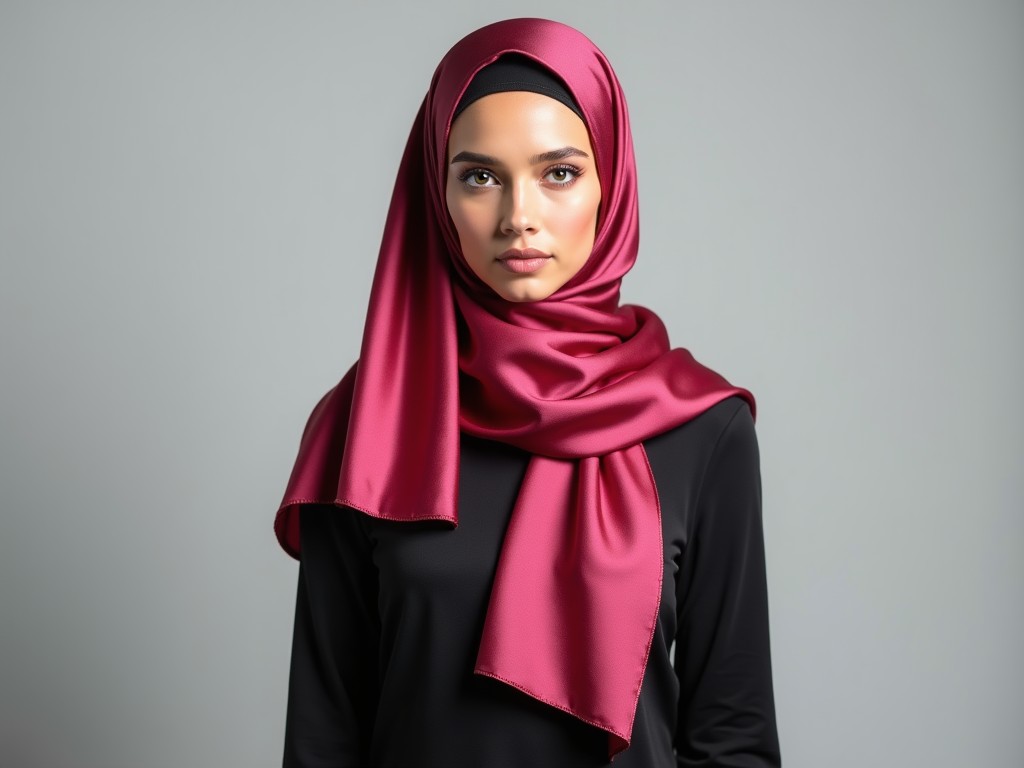
A satin scarf offers versatility through its smooth texture, drape characteristics, and lightweight construction. Understanding how these material properties influence styling options helps users
Ways to Wear a Satin Scarf
A satin scarf offers versatility through its smooth texture, drape characteristics, and lightweight construction. Understanding how these material properties influence styling options helps users maximize utility across different contexts, from professional environments to casual settings.
Material Properties Influencing Wearability
Satin scarves typically use polyester or silk blends with a satin weave, producing a glossy front surface and a matte back. This asymmetry allows for dual-sided presentation—either side can face outward depending on desired reflectivity. The fabric’s low friction coefficient enables smooth looping and knotting without creasing, while its moderate tensile strength maintains shape under light tension.
Standard dimensions range from 60x60 cm to 90x90 cm for square scarves, and 180x90 cm for rectangular styles. These proportions determine feasible folding techniques and knot complexity. Heavier weights (above 80 gsm) provide better structure for sculpted folds, whereas lighter variants (below 60 gsm) excel in fluid draping but require careful handling to avoid slippage.
Classic Neckwear Configurations
The Parisian knot involves folding the scarf diagonally into a triangle, rolling it loosely from the wide end, then wrapping once around the neck and tucking the ends through the loop. This method uses approximately 70% of the scarf’s length and creates a balanced, symmetrical profile suitable for business attire. It minimizes bulk at the throat while securing the scarf against wind displacement.
For a looser fit, the European loop requires pulling the scarf through a ring or folding it in half, placing the loop behind the neck, and drawing both ends through. This technique distributes pressure evenly and allows vertical adjustment. It works best with scarves weighing 60–70 gsm, as lighter fabrics may twist excessively under tension.
Head and Hair Applications
When used as a headband, folding the scarf into a 5 cm wide strip provides sufficient coverage for sweat absorption while maintaining flexibility. Wrapping it twice around the head and tying a flat knot at the nape prevents slippage during movement. The satin surface reduces friction against hair, minimizing breakage compared to cotton or wool alternatives.
As a hair wrap, laying the scarf flat, placing gathered hair at the center, and twisting the ends upward creates a secure turban. This method relies on the scarf’s ability to hold tension without elastic recovery—polyester satin retains shape better than silk after repeated twisting. For optimal hold, the fabric should be slightly dampened before wrapping to increase surface tack.
Bag Accessorizing Techniques
Tying a scarf around a bag handle adds visual interest while protecting the material from wear. A double half-hitch knot distributes load across two contact points, reducing stress on any single fiber. For tote bags, wrapping the scarf once and tucking the ends under the wrap creates a clean finish that resists loosening during use.
When used as a bag charm, folding the scarf into a narrow cord (approximately 2 cm wide) and securing it to a zipper pull with a lark’s head knot allows for easy removal. This configuration adds minimal weight—typically under 5 g—while introducing color contrast. The knot’s symmetry prevents rotational drift, keeping the scarf oriented correctly.
Comparison of Styling Methods by Use Case
| Use Case | Recommended Method | Key Consideration |
|---|---|---|
| Professional settings | Parisian knot | Minimal bulk, secure fit |
| Active movement | Headband wrap | Low friction, sweat management |
| Bag enhancement | Handle wrap with half-hitch | Load distribution, abrasion resistance |
| Casual draping | European loop | Adjustable length, fluid drape |
Each method leverages specific material behaviors—such as drape coefficient, surface energy, and tensile retention—to achieve functional and aesthetic outcomes. Selecting a technique based on scarf weight, dimensions, and intended activity ensures durability and comfort.
Care Implications for Longevity
Repeated knotting and unknotting can cause localized abrasion at stress points, particularly where the scarf folds tightly. Hand washing in water below 30°C with neutral pH detergent preserves the satin finish better than machine washing, which risks snagging. Air drying flat prevents distortion from hanging weight.
Ironing on low heat (110°C max) with a pressing cloth restores gloss without scorching the fibers. Storing the scarf rolled rather than folded avoids permanent crease lines at sharp bends. For long-term storage, wrapping in acid-free tissue paper prevents yellowing of polyester-based satin.
Contact us for material specifications or custom sizing options
Products
Related Products
News
Related News

2026-11-02
Cotton Voile Scarf Manufacturing and Performance Analysis how to make a cotton voile scarfCreating a professional-grade cotton voile scarf requires a precise balance of textile engineering and artisanal finishing. Unlike standard cotton weaves, voile is defined by its p···

2026-10-28
chiffon hijab Technical Production and Performance AnalysisSelecting the right fabric for a hijab involves a delicate balance between modesty, breathability, and aesthetic drape. For many women in Southeast Asia and the Middle East, the ma···

2026-10-26
custom silk scarf textile manufacturing and performance analysisSelecting a high-quality scarf is no longer just about color matching; it is an exercise in understanding how textile weight, drape, and print scale interact with individual facial···
