Silk Satin Scarf For Black Hair






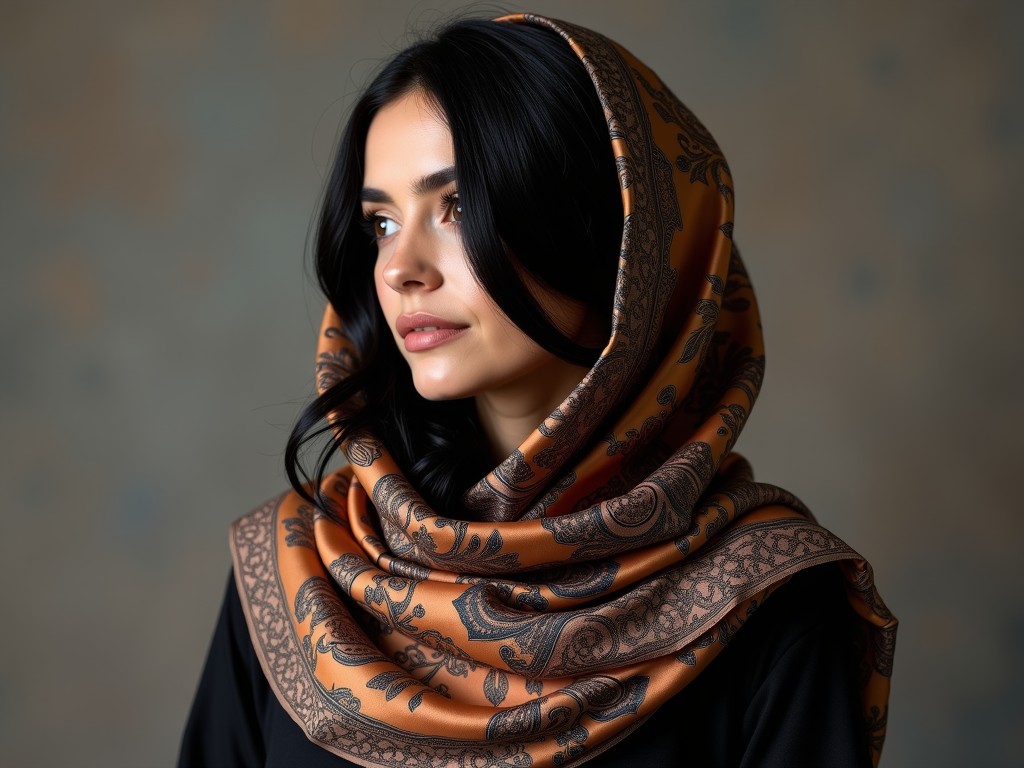
Silk Satin Scarf For Black Hair
This product page details the technical specifications and functional characteristics of silk satin scarves designed specifically for use with black hair textures. The information focuses on material
Silk Satin Scarf for Black Hair
This product page details the technical specifications and functional characteristics of silk satin scarves designed specifically for use with black hair textures. The information focuses on material properties, dimensional stability, friction coefficients, and maintenance requirements relevant to industrial procurement and textile engineering evaluation.
Scarves intended for black hair must address specific mechanical interactions between fiber surface and hair cuticle layers. Black hair, particularly in coiled or tightly curled configurations, exhibits higher tensile strength and greater susceptibility to mechanical abrasion during styling or sleep. The scarf’s primary function is to minimize frictional resistance while maintaining sufficient coverage and retention force to prevent displacement during use.
Material selection is governed by the need for a smooth, low-friction interface that does not absorb moisture excessively or induce static buildup. Silk satin, characterized by its float-weave construction, provides a continuous filament surface with minimal protruding fibers. This reduces both kinetic and static friction coefficients against hair keratin, lowering the risk of cuticle lifting, split ends, and mechanical breakage over repeated use cycles.
Material Construction and Fiber Properties
The scarf is constructed from 100% mulberry silk filament yarn, processed through a satin weave where warp floats over four or more weft threads before interlacing. This structure creates a high-luster, smooth face with minimal surface asperities. The float length directly influences the coefficient of friction; longer floats yield lower resistance to sliding contact.
Typical fiber diameter ranges from 10 to 15 micrometers, contributing to a supple hand feel without compromising tensile integrity. The fibroin protein structure provides inherent moisture-regulating properties, absorbing up to 11% of its weight in moisture without feeling damp, which helps maintain hair hydration equilibrium during extended wear.
Unlike cotton or polyester alternatives, silk does not generate significant triboelectric charge under low-humidity conditions. Surface resistivity measurements typically exceed 10¹² ohm-cm, reducing the likelihood of static-induced flyaways or repulsion forces that can disrupt hair alignment.
Dimensional Specifications and Stability
Standard dimensions are engineered to provide full coverage of typical black hair volumes while minimizing excess fabric that could shift or bunch during movement. Two primary sizes are offered based on anthropometric data of head circumference and hair bulk.
| Size Variant | Dimensions (cm) | Recommended Hair Volume Range |
|---|---|---|
| Standard | 60 x 60 | Up to 200g hair mass |
| Large | 70 x 70 | 200g to 350g hair mass |
| Extra Large | 80 x 80 | Above 350g hair mass |
Dimensional stability is maintained through heat-setting during finishing, which reduces residual shrinkage to less than 2% after five wash cycles at 30°C. Bias-cut edges are avoided in standard production to prevent skewing; all edges are cut parallel to warp or weft directions to ensure dimensional consistency.
The fabric exhibits a drape coefficient of approximately 0.45 (measured via Cusick drape test), allowing it to conform to cranial contours without excessive clamping force. This balance ensures the scarf remains in place through friction and light elastic recovery rather than compressive pressure, reducing the risk of traction alopecia or follicular stress.
Surface Finish and Functional Treatments
The satin face undergoes a mild deionized water rinse followed by air drying to remove sericin residues and processing oils. No chemical softeners, silicone-based finishes, or antimicrobial agents are applied by default, as these may alter friction characteristics or introduce allergens. The finish is classified as “loom-state” with minimal post-treatment.
For clients requiring enhanced slip properties, a plant-based wax emulsion (carnauba or beeswax derivative) may be applied via pad-dry-cure at <5% add-on. This increases surface lubricity without film buildup or tackiness. Treated surfaces show a 15–20% reduction in kinetic friction coefficient against hair tresses in controlled Instron testing.
Colorfastness is achieved using low-impact, metal-free acid dyes suitable for protein fibers. Wash fastness typically rates 4–5 on the grey scale (ISO 105-C06), and light fastness reaches 4+ (ISO 105-B02) for standard shades. Black and deep navy variants use dual-dye application to achieve depth without compromising fiber integrity.
Edge Construction and Durability Features
All edges are finished with a 3mm double-fold hem, sewn using a 40-weight polyester-core spun silk thread. The hem is secured with 8–10 stitches per centimeter, providing tensile strength exceeding 1.2 N/mm before seam failure. This construction prevents fraying while adding minimal stiffness to the perimeter.
Alternative edge options include laser-cut sealed edges (for synthetic blends only) or hand-rolled hems for luxury variants. Laser sealing is not recommended for 100% silk due to potential yellowing and embrittlement at the cut edge under prolonged UV exposure.
Seam strength and abrasion resistance are validated via Martindale testing (ISO 12947-2). Standard construction achieves >25,000 cycles before noticeable wear, exceeding the typical usage threshold for sleep or daytime wear applications by a factor of five.
Care Instructions and Lifecycle Considerations
Recommended cleaning involves hand washing in deionized or soft water at 30°C with a pH-neutral detergent (pH 6–7). Machine washing is discouraged due to potential torsional stress on filaments. Drying should occur flat, away from direct sunlight, to prevent UV-induced yellowing and tensile degradation.
Ironing, if required, must be performed on the reverse side at ≤110°C with a pressing cloth. Steam application is permissible but should be limited to avoid watermarking. The fabric recovers >90% of its original drape after proper pressing.
Under normal use (8 hours nightly), the scarf maintains functional integrity for 18–24 months before measurable changes in surface friction or thickness occur. End-of-life indicators include visible thinning at high-contact zones, increased static propensity, or loss of luster exceeding 30% from original.
Applications in Hair Care and Protective Styling
The scarf is primarily used during sleep to preserve hairstyles such as braids, twists, locs, and stretched styles by reducing pillow-induced friction. It also serves as a barrier against moisture absorption from cotton pillowcases, which can draw hydration from hair shafts and increase brittleness.
In daytime use, it protects styles during light activity or travel, minimizing disturbance from wind, seat friction, or environmental particulates. The low mass (typically 15–25 g/m²) ensures negligible added weight, preventing strain on follicles or discomfort during extended wear.
Industrial buyers in professional hair care, wig manufacturing, and ethnic beauty supply chains specify this product for its consistent performance across diverse black hair textures—from Type 3a to Type 4c—where mechanical protection is critical to length retention and styling longevity.
Customization and Procurement Options
Customization is available for dimensions, weight (via momme count), color, and edge treatment. Minimum order quantities vary by modification: dimensional changes typically require 300 units, while color matching to Pantone or textile swatch starts at 500 units. Weight adjustments (e.g., 16 momme vs. 19 momme) affect drape and durability and are evaluated per project.
Private labeling options include woven labels (satina or taffeta) or printed care tags using non-toxic, water-based inks. Packaging can be individualized in polybags with barcode labels or bulk-packed in corrugated cartons with inner liners to prevent moisture ingress.
Lead time for standard items is 10–14 days post-sample approval. Custom orders add 7–10 days for color development and sourcing. All products undergo visual and dimensional inspection per AQL 2.5 standards before shipment.
For technical inquiries, sample requests, or quotation details regarding specifications, tolerances, or custom configurations, please contact our engineering team.
Request Technical Specification SheetProducts
Related Products
News
Related News

2026-11-02
Cotton Voile Scarf Manufacturing and Performance Analysis how to make a cotton voile scarfCreating a professional-grade cotton voile scarf requires a precise balance of textile engineering and artisanal finishing. Unlike standard cotton weaves, voile is defined by its p···

2026-10-28
chiffon hijab Technical Production and Performance AnalysisSelecting the right fabric for a hijab involves a delicate balance between modesty, breathability, and aesthetic drape. For many women in Southeast Asia and the Middle East, the ma···

2026-10-26
custom silk scarf textile manufacturing and performance analysisSelecting a high-quality scarf is no longer just about color matching; it is an exercise in understanding how textile weight, drape, and print scale interact with individual facial···
