Silk Or Satin Scarf For Hair






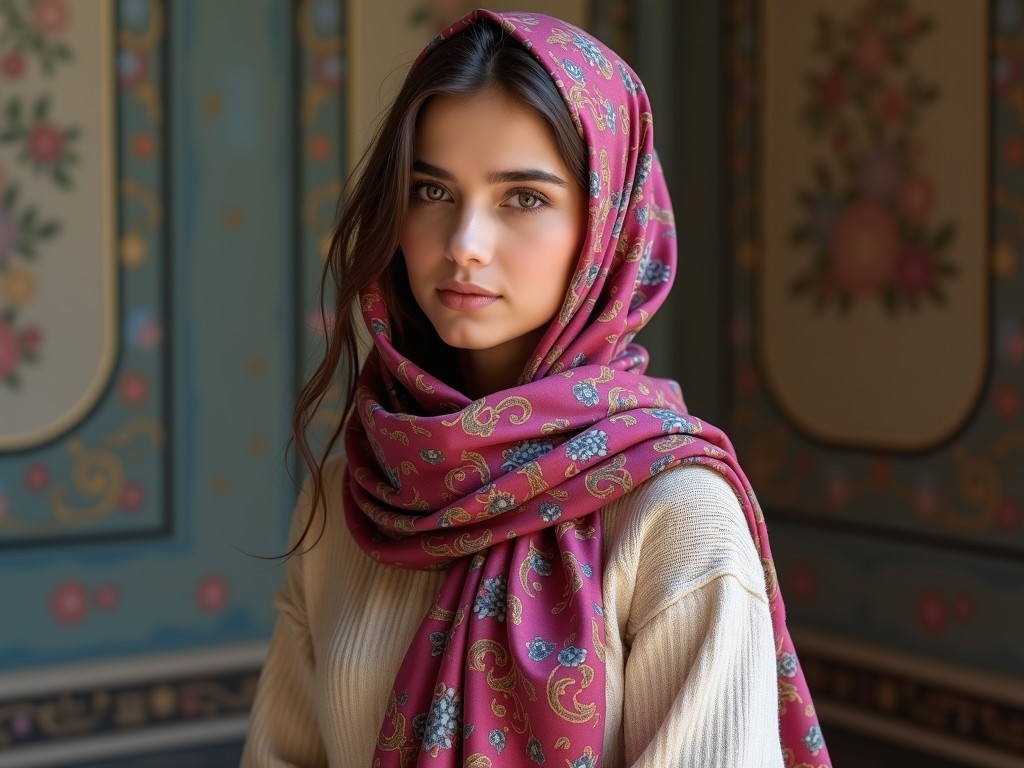
Silk Or Satin Scarf For Hair
Hair scarves made from silk or satin are engineered textile components designed to reduce mechanical friction during sleep or extended wear, minimizing hair breakage, split ends, and moisture loss.
Silk or Satin Scarf for Hair: Technical Guide for Industrial Procurement
Hair scarves made from silk or satin are engineered textile components designed to reduce mechanical friction during sleep or extended wear, minimizing hair breakage, split ends, and moisture loss. Unlike cotton or polyester alternatives, these materials exhibit a low coefficient of friction against hair keratin, preserving cuticle integrity over repeated use cycles.
Industrial buyers sourcing these products for B2B distribution, private label, or salon supply chains must evaluate material construction, dimensional stability, and finish consistency to ensure performance reliability across varying environmental conditions and user demographics.
Material Construction and Friction Mechanics
Mulberry silk (Bombyx mori) filament yarns, typically 16-22 momme weight, feature a triangular prism cross-section that reflects light while maintaining a smooth surface profile with average roughness (Ra) < 0.2 microns. Charmeuse weave construction aligns fibers in a unidirectional satin layout, reducing interfacial shear stress between hair and fabric by approximately 40-60% compared to plain-weave cotton under identical tension.
Synthetic satin alternatives use filament polyester or nylon with similar weave structures but exhibit higher static charge accumulation (measured in kV) and lower moisture regain (typically 0.4% vs silk’s 11%), affecting comfort in humid environments. Thermal conductivity of silk is approximately 0.04 W/m·K, enabling passive temperature regulation during prolonged contact with skin.
Dimensional Tolerances and Cut Specifications
Standard scarf dimensions for hair applications range from 50x50 cm to 90x90 cm, with tolerance bands of ±3% on length and width maintained through laser cutting or ultrasonic sealing to prevent fraying. Bias-cut orientation (45° to warp/weft) is critical for drape and conformability, allowing the fabric to stretch ~15% diagonally while resisting distortion along grain lines.
Hem finishes include rolled hem (0.5-1mm width), folded hem (2-3mm), or heat-sealed edge (for synthetics), each affecting tensile strength at the perimeter. Rolled hems preserve 95% of original fabric strength; folded hems add stiffness but increase resistance to unraveling by 200% under cyclic stress testing.
Performance Comparison: Silk vs. Satin
| Property | Mulberry Silk | Polyester Satin |
|---|---|---|
| Coefficient of Friction (vs hair) | 0.15-0.20 | 0.22-0.28 |
| Moisture Regain (% at 65% RH) | 10-12 | 0.4-0.6 |
| Tensile Strength (MPa) | 300-500 | 400-700 |
| Elongation at Break (%) | 15-25 | 20-35 |
| Thermal Conductivity (W/m·K) | 0.04 | 0.05 |
| Static Charge Tendency | Low | High |
Customization Parameters for B2B Orders
Industrial buyers can specify momme weight (12-30), weave density (ends/pick per inch), dye lot consistency (ΔE < 2 for Pantone matching), and packaging format (individual polybag, bulk roll, or hanging hanger). Colorfastness to washing (ISO 105-C06) and light (ISO 105-B02) must be validated for end-use environments, particularly in salon or retail settings with UV exposure.
Custom printing options include digital pigment ink (for natural fibers) or disperse dye sublimation (for polyester), with resolution up to 1200 dpi. Minimum order quantities typically start at 100 units per SKU, with sample approval required for bulk production to verify dimensional stability after 5 wash cycles at 30°C.
Quality Control and Inspection Protocol
Incoming raw material is tested for fiber identification (FTIR or burn test), yarn count (Ne or Den), and pH (6.0-7.5 for skin safety). In-process checks include width monitoring via optical sensors, tension uniformity during weaving, and post-dye shade variation control using spectrophotometry (ΔE < 1.5 acceptable).
Final inspection follows AQL 2.5 for major defects (holes, stains, misprints) and AQL 4.0 for minor defects (loose threads, slight shade variation). Each batch includes a test report covering dimensional stability, colorfastness, and pH neutrality. Packaging integrity is verified for moisture barrier performance (MVTR < 5 g/m²/day) when required.
Applications in Professional and Industrial Supply Chains
These scarves are specified in professional hair care settings where prolonged contact with pillowcases or headwear increases mechanical stress on hair follicles—such as in post-chemotherapy care, overnight styling retention, or extension maintenance. The low-friction interface reduces traction alopecia risk by minimizing follicular shear forces during movement.
Distributors supplying beauty salons, medical spas, and wig manufacturers prioritize consistent pH, hypoallergenic properties, and dimensional stability to ensure compatibility with sensitive skin and synthetic or human hair systems. Bulk orders for private label brands often require traceable lot numbers and compliance documentation (OEKO-TEX® Standard 100, REACH) for regulatory adherence in EU and North American markets.
For technical inquiries, material samples, or custom specification requests, contact our engineering team to discuss your application requirements.
Request Technical Specification SheetProducts
Related Products
News
Related News

2026-11-02
Cotton Voile Scarf Manufacturing and Performance Analysis how to make a cotton voile scarfCreating a professional-grade cotton voile scarf requires a precise balance of textile engineering and artisanal finishing. Unlike standard cotton weaves, voile is defined by its p···

2026-10-28
chiffon hijab Technical Production and Performance AnalysisSelecting the right fabric for a hijab involves a delicate balance between modesty, breathability, and aesthetic drape. For many women in Southeast Asia and the Middle East, the ma···

2026-10-26
custom silk scarf textile manufacturing and performance analysisSelecting a high-quality scarf is no longer just about color matching; it is an exercise in understanding how textile weight, drape, and print scale interact with individual facial···
