Satin Triangle Hair Scarf Top Supplier






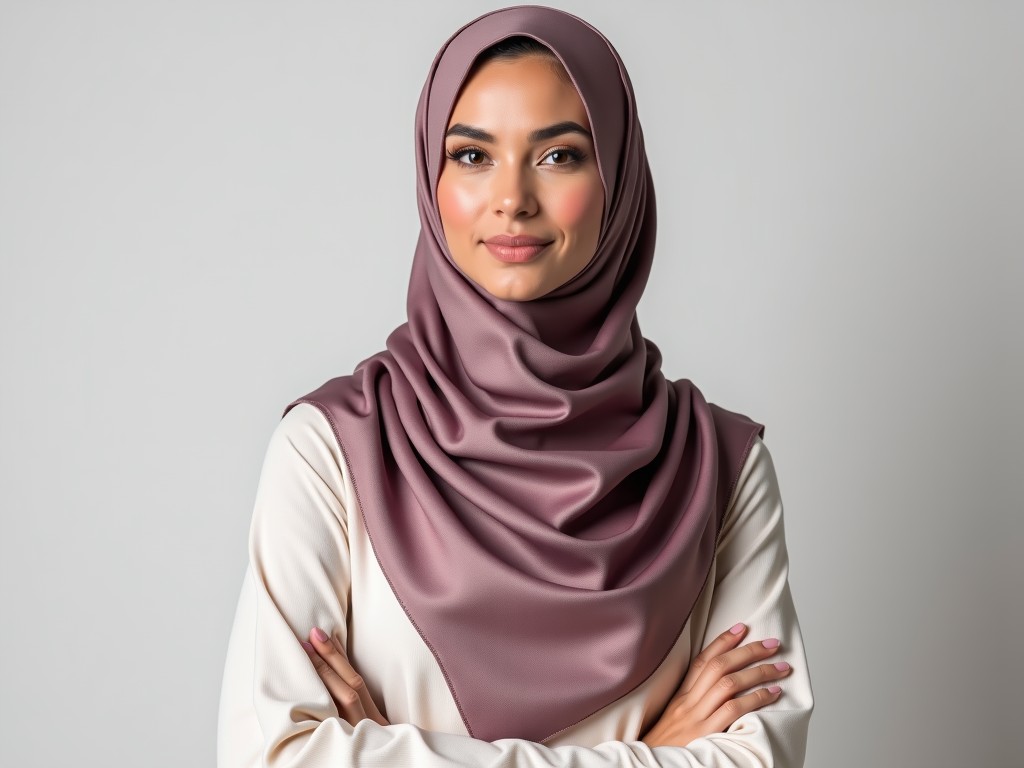
Satin Triangle Hair Scarf Top Supplier
Satin triangle hair scarves are manufactured using 100% polyester filament yarn with a satin weave structure, characterized by a minimum of 4-end float pattern that creates a smooth, lustrous face
Satin Triangle Hair Scarf: Technical Specifications and Supply Considerations for Industrial Buyers
Material Composition and Fabric Construction
Satin triangle hair scarves are manufactured using 100% polyester filament yarn with a satin weave structure, characterized by a minimum of 4-end float pattern that creates a smooth, lustrous face and a dull back. The fabric weight typically ranges from 60 to 85 GSM (grams per square meter), providing sufficient drape for comfortable wear while maintaining dimensional stability under repeated use. Thread count falls between 120 and 160 threads per inch in both warp and weft directions, ensuring a tight construction that resists snagging and minimizes fiber shedding during handling.
The satin finish is achieved through calendering processes involving heated rollers under controlled pressure, which flattens the yarn surface to enhance light reflection. This treatment does not involve chemical coatings that could degrade with washing or heat exposure, preserving the fabric’s inherent properties. Edge finishing employs a 3-thread overlock stitch with a stitch density of 8–10 stitches per centimeter to prevent fraying, critical for maintaining product integrity in high-volume distribution environments.
Dimensional Tolerances and Geometric Specifications
The triangle scarf is cut from a square blank with side lengths ranging from 50 cm to 70 cm, depending on end-use requirements. When folded along the diagonal to form the triangle, the resulting hypotenuse measures between 70.7 cm and 99.0 cm, with a tolerance of ±3 mm maintained through precision die-cutting or laser cutting methods. The apex angle is fixed at 90 degrees, ensuring consistent folding behavior and wear symmetry when tied.
Width consistency along the edges is held to ±2 mm across the entire length, verified using optical measurement systems during in-line quality checks. This tolerance prevents uneven tension distribution when the scarf is tied, reducing the risk of slippage or discomfort during extended wear. All dimensions are measured under standard atmospheric conditions (20°C, 65% RH) per ASTM D1776 to ensure repeatability across production batches.
Colorfastness and Dyeing Characteristics
Coloration is achieved through disperse dyeing at temperatures between 130°C and 135°C under pressure, ensuring molecular-level bonding of dye particles to the polyester polymer. This method achieves a minimum colorfastness to washing of 4–5 on the gray scale (ISO 105-C06) and lightfastness of 4–6 (ISO 105-B02), suitable for products exposed to regular laundering and indirect sunlight. Sublimation resistance is maintained above 180°C, preventing color migration during heat-setting or ironing by end users.
Dye lot variation is controlled within ΔE < 1.5 CIELAB units for solid colors, verified using spectrophotometer measurements at multiple points across each batch. For custom color matching, Pantone references are converted to RGB and CMYK equivalents with laboratory dip approvals required before bulk production. This level of control ensures color consistency across split shipments, a critical factor for OEMs integrating the scarf into branded product lines.
Packaging and Logistics Optimization
Standard packaging employs low-density polyethylene (LDPE) bags with a thickness of 40–50 microns, sealed using impulse heat sealing to create a moisture barrier. Each bag contains 50 units folded to a uniform size of 12 cm × 12 cm × 2 cm, optimized for palletization. Master cartons are constructed from single-wall corrugated fiberboard (150 GSM) with dimensions of 60 cm × 40 cm × 30 cm, holding 10 inner bags (500 units) and rated for a maximum stack load of 800 kg.
Void fill is minimized through precise folding techniques, reducing shipment volume by up to 30% compared to loose packing. Carton sealing uses pressure-sensitive tape with a tensile strength of 6.5 N/mm width, applied to all major seams. For export shipments, ISPM 15-compliant wooden pallets or plastic alternatives are used, with corner boards and stretch wrap (20–25 micron LLDPE) applied to prevent shifting during transit. These specifications reduce damage rates to below 0.5% in standard LTL freight conditions.
Quality Control and Inspection Protocol
Incoming yarn is tested for tensile strength (min. 4.5 cN/tex), elongation at break (min. 25%), and linear density consistency (±2% CV). Fabric inspection follows a 4-point system under 300 lux illumination, with defects categorized as critical (holes, tears, major stains), major (visible dye spots, thick/thin places), or minor (slubs, slight shade variation). Acceptable quality level (AQL) is set at 0.65 for critical, 1.5 for major, and 4.0 for minor defects.
Finished goods undergo 100% visual inspection for edge integrity and fold accuracy, followed by random sampling (Level II, ANSI/ASQC Z1.4) for dimensional checks and color assessment. Each batch is accompanied by a test report covering GSM, pH (4.5–7.5), formaldehyde content (< 75 ppm), and azo dye compliance (per REACH Annex XVII). These protocols ensure traceability and compliance with international textile regulations for markets in the EU, US, and Asia.
Customization Parameters and Supply Chain Flexibility
Customization is available across four primary axes: fabric weight (60–100 GSM), dimensions (40–80 cm square blank), edge finish (overlock, hemmed, or ultrasonic sealed), and packaging configuration (unit count per bag, carton size, labeling). Minimum order quantities typically start at 1,000 units for standard colors and 3,000 units for custom-dyed lots, based on dye vat efficiency and setup constraints. Lead times range from 14–21 days for stock items and 28–40 days for custom orders, inclusive of sample approval and production scheduling.
Tooling costs for custom dies or screens are amortized over orders exceeding 5,000 units, with no recurring charges for repeat orders. Technical documentation, including material safety data sheets (MSDS), OEKO-TEX® Standard 100 certification (upon request), and compliance declarations, is provided with each shipment. This structure supports just-in-time inventory models while accommodating seasonal demand fluctuations without compromising quality consistency.
Application Suitability in Professional and Industrial Contexts
These scarves are commonly used in food processing and pharmaceutical environments as part of hair containment systems, where low-linting properties and smooth surfaces reduce particulate shedding and facilitate sanitation. The satin finish minimizes friction against skin and hair, decreasing irritation during prolonged wear— a factor validated through occupational health assessments in cleanroom settings. Their lightweight construction allows layering under hoods or nets without adding bulk, maintaining compliance with headgear compatibility standards.
In hospitality and healthcare sectors, the scarves serve as interchangeable uniform accessories, offering a cost-effective method to differentiate roles or departments through color coding. The dimensional stability ensures consistent appearance after 50+ wash cycles at 60°C, supporting reuse models in institutional laundries. For retail and promotional applications, the high drape and sheen provide visual appeal under display lighting, while the fabric’s resistance to wrinkling reduces maintenance needs between uses.
Comparison of Fabric Weights for End-Use Selection
| Fabric Weight (GSM) | Drape Coefficient | Typical Use Case | Wash Durability (Cycles) |
|---|---|---|---|
| 60–70 | 0.45–0.50 | Lightweight promotional, single-use | 15–25 |
| 71–85 | 0.50–0.58 | Standard reusable, food/healthcare | 30–50 |
| 86–100 | 0.58–0.65 | Premium retail, extended wear | 50–75 |
Drape coefficient is measured via the Cusick drape test, with higher values indicating better conformity to complex shapes. Wash durability refers to the number of home laundering cycles (40°C, mild detergent) before visible loss of luster or hand strength exceeds 20% of original. Selection should balance cost, expected lifespan, and aesthetic requirements based on the end-user environment.
Supply Terms and Technical Support
Quotations are valid for 30 days and include EXW, FOB, or CIF incoterms as requested. Payment terms typically follow a 30% T/T deposit upon order confirmation and 70% balance against copy of B/L or before shipment. Sample provision is available at no cost for standard items (shipping charged), with custom samples requiring a fee that is creditable toward the first bulk order. All technical inquiries should be directed to the engineering team with specifications including target GSM, dimensions, color reference, and intended use case to enable accurate feasibility assessment.
Change orders after production commencement may incur costs for material restocking, machine retooling, or color purging, depending on the stage of completion. Continuous improvement notifications are issued for any process updates that affect critical dimensions or material composition, ensuring downstream compatibility. This approach minimizes supply chain disruption while maintaining transparency in supplier-buyer relationships.
Next Steps for Procurement and Engineering Teams
To initiate a technical evaluation, provide the following: required quantity, preferred fabric weight range, dimensional constraints (if non-standard), color specifications (Pantone or physical sample), packaging preferences, and target delivery date. Upon receipt, a formal quotation with lead time confirmation and sample arrangement options will be issued within 24 hours. This enables concurrent assessment of sample performance and commercial terms.
For ongoing programs, consider establishing a blanket order agreement with quarterly release schedules to lock in pricing and ensure supply priority. Technical documentation packages, including test reports and compliance certificates, can be configured for automatic shipment with each delivery. This supports audit readiness and reduces administrative overhead in regulated industries.
Inquiry and Technical Consultation
Industrial buyers seeking to evaluate satin triangle hair scarves for specific applications are invited to submit detailed requirements through the technical inquiry form. Responses include material data sheets, sample availability, and preliminary cost estimates based on provided parameters. This step ensures alignment between product capabilities and end-use demands before commitment to purchase.
Products
Related Products
News
Related News

2026-11-02
Cotton Voile Scarf Manufacturing and Performance Analysis how to make a cotton voile scarfCreating a professional-grade cotton voile scarf requires a precise balance of textile engineering and artisanal finishing. Unlike standard cotton weaves, voile is defined by its p···

2026-10-28
chiffon hijab Technical Production and Performance AnalysisSelecting the right fabric for a hijab involves a delicate balance between modesty, breathability, and aesthetic drape. For many women in Southeast Asia and the Middle East, the ma···

2026-10-26
custom silk scarf textile manufacturing and performance analysisSelecting a high-quality scarf is no longer just about color matching; it is an exercise in understanding how textile weight, drape, and print scale interact with individual facial···
