Satin Scarf For Hair Women






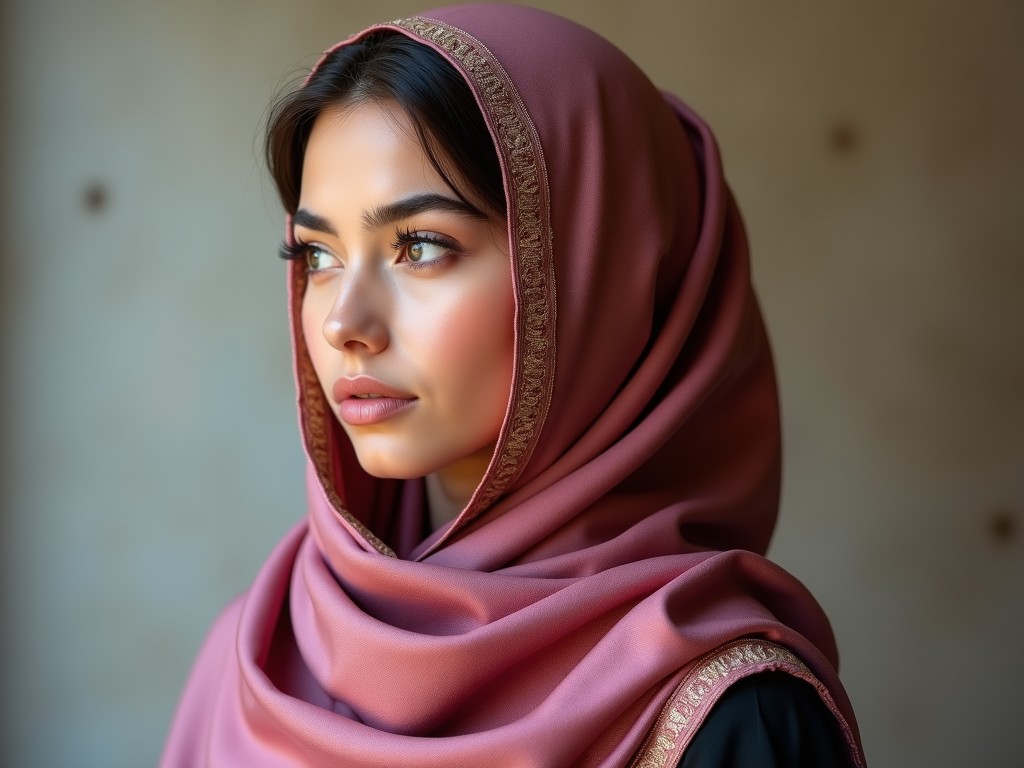
Satin Scarf For Hair Women
A satin scarf for hair women is a textile accessory designed to reduce friction between hair and external surfaces during sleep, styling, or daily wear. Unlike cotton or polyester alternatives, satin
Satin Scarf for Hair Women
A satin scarf for hair women is a textile accessory designed to reduce friction between hair and external surfaces during sleep, styling, or daily wear. Unlike cotton or polyester alternatives, satin weaves produce a smooth, low-friction surface that minimizes cuticle abrasion, tangling, and moisture loss. This makes it particularly beneficial for maintaining hair integrity in textured, curly, or chemically treated hair types.
The primary function is protective: by creating a barrier between hair and pillowcases, clothing, or styling tools, the scarf helps preserve hairstyles, reduce breakage, and retain natural oils. Industrial buyers sourcing these products for private label or distribution should evaluate material composition, weave density, edge finishing, and dimensional stability as key performance indicators.
Material Composition and Weave Characteristics
Satin scarves are typically manufactured using filament yarns such as polyester, nylon, or silk, woven in a satin pattern where four or more weft threads float over a single warp thread (or vice versa). This creates long, uninterrupted floats on the fabric surface, resulting in a smooth hand feel and low coefficient of friction—typically ranging from 0.2 to 0.4 under dry conditions, significantly lower than plain weave cotton (0.5–0.7).
Polyester satin offers durability, resistance to shrinking, and ease of care, making it suitable for high-volume production. Silk satin provides superior smoothness and moisture retention but requires delicate handling and is cost-prohibitive for large-scale distribution. Nylon satin balances strength and elasticity but may generate static in low-humidity environments. Buyers should specify yarn denier (commonly 75D–150D for filament) and picks per inch (PPI) to ensure consistency in slip performance.
Dimensional Specifications and Tolerances
Standard dimensions for hair satin scarves range from 50 cm × 50 cm to 90 cm × 90 cm, with 60 cm × 60 cm and 70 cm × 70 cm being the most common for full-head coverage. Thickness is typically 0.08–0.12 mm, measured under 5 kPa pressure using a thickness gauge. Dimensional stability after washing is critical: acceptable shrinkage should not exceed 3% in either direction after five home launderings at 40°C.
Edge finishing methods include rolled hem, overlock, or ultrasonic sealing. Rolled hems provide a soft, flat edge that minimizes snagging but require precise stitch tension control. Overlock edges offer durability but may create a slight ridge that could irritate sensitive scalps. Ultrasonic sealing eliminates thread use entirely, producing a clean, smooth edge ideal for sensitive skin applications, though it requires thermoplastic-capable materials.
Performance Comparison by Material
| Property | Polyester Satin | Silk Satin | Nylon Satin |
|---|---|---|---|
| Coefficient of Friction (dynamic) | 0.25–0.35 | 0.20–0.30 | 0.28–0.38 |
| Moisture Regain (%) | 0.4 | 11.0 | 4.5 |
| Tensile Strength (MPa) | 60–80 | 30–50 | 70–90 |
| Shrinkage after 5 Washes (40°C) | <2% | 3–5% | 1–3% |
| Typical Denier Range | 75D–150D | 20D–40D | 70D–140D |
Values represent typical ranges for filament yarn satin weaves. Actual performance depends on yarn quality, weave tightness, and finishing treatments. For critical applications, request material test reports (MTRs) covering abrasion resistance, pilling propensity, and colorfastness to washing and light.
Quality Control and Inspection Criteria
Industrial buyers should implement incoming quality checks focused on surface uniformity, edge integrity, and dimensional accuracy. Surface defects such as snags, floats, or oil stains are evaluated under 3000 lux illumination at 30 cm distance using a 10x magnifier. Acceptable limits: no more than two minor defects per square decimeter, with no critical defects (holes, tears, loose yarns) permitted.
Dimensional verification uses a calibrated template or vision system to confirm length and width within ±2% tolerance. Skew (bias) should not exceed 1.5 cm over a 60 cm length to ensure even drape and prevent twisting during use. Color consistency is assessed via spectrophotometer against a master batch, with ΔE < 2.0 acceptable for solid shades and < 3.0 for prints.
Additional tests may include pilling resistance (Martindale method, 1000 cycles), seam strength (if applicable), and formaldehyde content (for Oeko-Tex compliance). Suppliers should provide test certificates upon request. For private label programs, define acceptance criteria in the technical agreement to avoid ambiguity.
Packaging and Handling Considerations
To prevent creasing and contamination during transit, satin scarves are typically folded using a standardized tri-fold or quarter-fold method and placed in polybags made of low-density polyethylene (LDPE) with a thickness of 40–60 microns. Each bag should include a desiccant packet (silica gel, 2g) to control humidity, especially for silk variants. Carton dimensions are optimized for palletization: common configurations are 48×40×36 cm holding 100–150 units depending on thickness.
Marking on cartons must include SKU, size, material, quantity, and country of origin. For export shipments, use ISPM 15-compliant pallets and consider corner protectors to prevent edge damage. Avoid direct pressure on stacked cartons; maximum stack height should not exceed 1.2 m to prevent deformation of lower layers. For retail-ready packaging, consider adding a recycled paper belly band with care instructions and material information.
Storage conditions should maintain relative humidity between 40–60% and temperature below 25°C to prevent yellowing (especially in nylon) or mildew growth. Avoid exposure to direct sunlight or fluorescent lighting for extended periods, as UV radiation can degrade polyester and nylon over time.
Customization Options for Industrial Buyers
Beyond standard specifications, satin scarves can be customized to meet specific branding or functional requirements. Common modifications include custom dye lots (Pantone-matched), jacquard-woven logos, screen-printed designs, and specialized finishes such as antimicrobial or anti-static treatments. For high-end private label, consider adding a woven label or hangtag made from recycled polyester or organic cotton.
Dimensions can be adjusted for niche applications: longer lengths (100–120 cm) for wrap-style use, or narrower widths (15–20 cm) for edge protection during styling. Shape variations include triangular (for headscarf styling) or circular (for volumetric drape). All customizations require updated tooling and may affect minimum order quantities (MOQs), typically starting at 500–1000 units for color changes and 2000+ for custom weaves or prints.
Lead times for custom orders range from 4–8 weeks after sample approval, depending on complexity. Early engagement with suppliers is recommended to align on specifications, approve lab dips, and confirm packaging logistics. Clearly define revision limits and approval stages in the purchase agreement to manage expectations.
For technical inquiries, sample requests, or to discuss custom specifications for satin scarf for hair women, contact our engineering team.
Request Technical Specification SheetProducts
Related Products
News
Related News

2026-11-02
Cotton Voile Scarf Manufacturing and Performance Analysis how to make a cotton voile scarfCreating a professional-grade cotton voile scarf requires a precise balance of textile engineering and artisanal finishing. Unlike standard cotton weaves, voile is defined by its p···

2026-10-28
chiffon hijab Technical Production and Performance AnalysisSelecting the right fabric for a hijab involves a delicate balance between modesty, breathability, and aesthetic drape. For many women in Southeast Asia and the Middle East, the ma···

2026-10-26
custom silk scarf textile manufacturing and performance analysisSelecting a high-quality scarf is no longer just about color matching; it is an exercise in understanding how textile weight, drape, and print scale interact with individual facial···
