Satin Or Silk Head Scarf






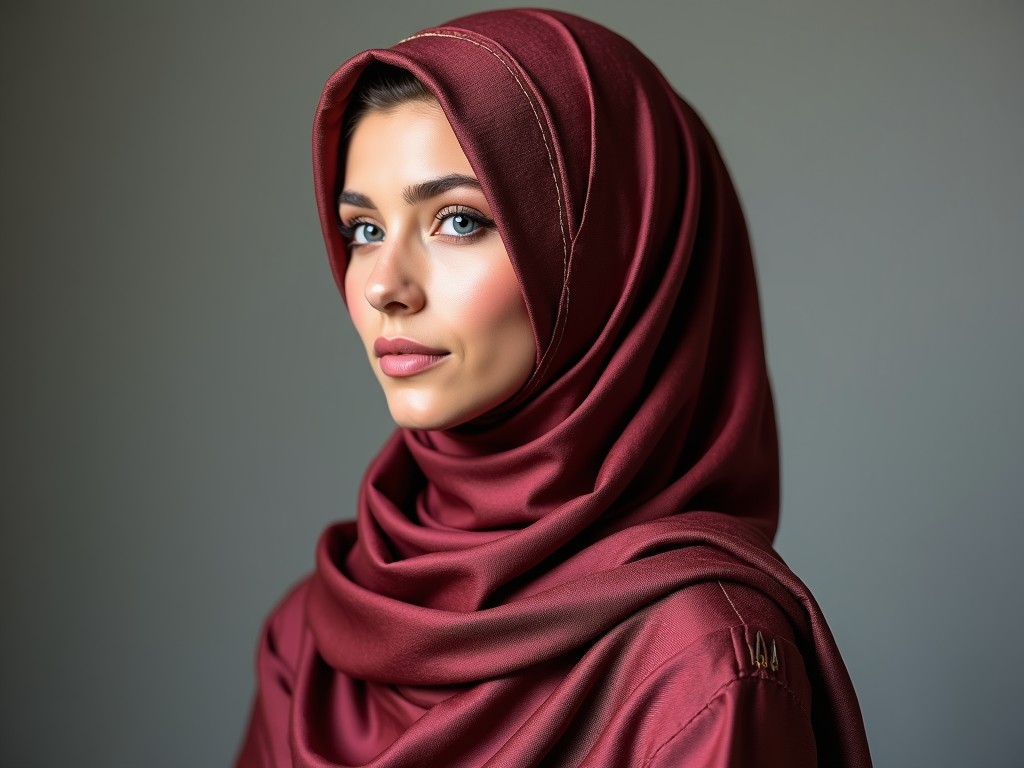
Satin Or Silk Head Scarf
Head scarves made from satin or silk are used in industrial environments where hair containment, skin protection, or contamination control is required. These textiles are selected based on fiber
Satin or Silk Head Scarf: Material Properties, Construction, and Industrial Applications
Head scarves made from satin or silk are used in industrial environments where hair containment, skin protection, or contamination control is required. These textiles are selected based on fiber composition, weave structure, and surface finish to meet specific operational needs in cleanrooms, food processing, pharmaceutical manufacturing, and light assembly.
Satin refers to a weave pattern characterized by floating warp or weft yarns that create a smooth, lustrous surface with minimal interlacing. Silk is a natural protein fiber produced by silkworms, known for its tensile strength, elasticity, and moisture-regulating properties. When combined, silk satin offers a low-friction interface that reduces abrasion on hair and skin while maintaining barrier integrity.
Industrial buyers evaluate these materials not for aesthetics but for functional performance: particle shedding resistance, compatibility with sanitization protocols, durability under repeated use, and ease of donning/doffing without generating static or lint.
Material Composition and Technical Characteristics
Silk filaments have a triangular cross-section that refracts light, contributing to the natural sheen of silk satin. The fiber’s tensile strength ranges from 3.0 to 4.0 g/den, with elongation at break between 15% and 25%. These properties allow the fabric to withstand tension during use without tearing or permanent deformation.
Satin weave construction typically uses a 4-harness or 5-harness pattern, where warp yarns float over four or more weft yarns before interlacing. This reduces surface abrasion points and minimizes fiber breakage compared to plain or twill weaves. The resulting fabric has a coefficient of friction lower than 0.3 against stainless steel and nylon, reducing snagging during movement.
For industrial use, silk may be blended with synthetic filaments (e.g., polyester) to improve wash stability and UV resistance. Typical blends range from 60/40 to 80/20 silk/synthetic, balancing natural comfort with enhanced durability. Pure silk satin is reserved for low-cycle, high-sensitivity applications where minimal chemical exposure is expected.
Performance in Contamination-Controlled Environments
In cleanroom settings (ISO Class 5–8), head coverings must limit particulate emission. Silk satin demonstrates low particle shedding due to its continuous filament structure and tight weave. Unlike staple fibers, filament silk does not produce short fibers that can detach and become airborne contaminants.
The smooth surface resists adhesion of powders, aerosols, and microdroplets. When tested via Helmke drum methodology, silk satin fabrics typically generate <100 particles/cm²/min in the 0.5–5.0 μm range under dynamic conditions—comparable to polyester-based cleanroom garments but with superior skin comfort.
Moisture regain of silk is approximately 11% at 65% RH, allowing it to absorb perspiration without feeling damp. This reduces skin irritation during extended wear. The fabric dries quickly when exposed to airflow, minimizing microbial growth risk compared to hydrophilic materials like cotton.
Construction Variants and Customization Options
Industrial head scarves are manufactured in several configurations to suit different operational workflows. The most common forms include triangular bandanas, full-coverage caps with elasticized edges, and two-piece sets comprising a liner and outer shell. Dimensions are standardized based on head circumference ranges (50–62 cm) with adjustable features for secure fit.
Edge finishing options include overlocked seams, ultrasonic bonding, or folded hems with bar tack reinforcement. Ultrasonic bonding eliminates thread protrusions that could snag or shed particles. Seam strength is typically >15 N/cm when bonded, sufficient for repeated donning cycles.
Customization is available for length, width, and closure type. Tie-back designs use flat silk ribbons (15–20 mm wide) with tensile strength >8 N. Elasticized edges use rubber-free spandex cores wrapped in silk-covered yarn to avoid latex allergies. All components are selected to maintain compatibility with gamma irradiation, ethylene oxide, or steam sterilization protocols.
Comparison: Silk Satin vs. Alternative Materials
| Property | Silk Satin | Polyester Satin | Cotton Plain Weave |
|---|---|---|---|
| Tensile Strength (g/den) | 3.0–4.0 | 4.5–6.0 | 2.5–3.5 |
| Elongation at Break (%) | 15–25 | 15–30 | 5–10 |
| Moisture Regain (%) at 65% RH | 10–12 | 0.4–0.8 | 7–8.5 |
| Particle Shedding (Helmke, 0.5–5.0 μm) | <100 particles/cm²/min | <80 particles/cm²/min | >500 particles/cm²/min |
| Coefficient of Friction (vs. Stainless Steel) | 0.25–0.30 | 0.20–0.25 | 0.40–0.50 |
| Sterilization Compatibility | ETO, Gamma, Steam (≤121°C) | ETO, Gamma, Steam (≤135°C) | ETO, Steam (≤121°C) |
Typical values; actual performance depends on yarn count, weave density, and post-treatment. Data based on ISO 105-E04, ISO 9073-10, and IEST-RP-CC003.4 test methods.
Quality Control and Manufacturing Considerations
Production begins with greige goods inspection for yarn uniformity, pick count, and weave consistency. Fabric width is monitored to ensure minimal deviation (±2 mm) from nominal, preventing skewed cutting and inconsistent seam alignment. Tensile testing is performed on warp and weft directions using ASTM D5034 to verify batch integrity.
Each finished unit undergoes visual inspection under 1000 lux illumination to detect surface defects such as snags, stains, or misprints. Dimensional stability is assessed after three wash cycles at 40°C to confirm shrinkage remains <2%. For sterile-grade versions, bioburden testing follows ISO 11737-1, with acceptable limits defined per application.
Packaging is conducted in Class 7 or cleaner environments to prevent post-manufacture contamination. Scarves are folded using anti-static tools and placed in polyethylene bags with low-particle emission ratings. Bulk packs include desiccant strips to maintain equilibrium RH below 50% during transit and storage.
Applications in Industrial Sectors
In pharmaceutical manufacturing, silk satin head scarves are worn under hoods or bun suits to contain hair and prevent microbe transfer. Their low friction reduces discomfort during prolonged wear in aseptic filling lines, where operator movement must remain unrestricted. The material’s compatibility with frequent alcohol-based disinfectant wipes ensures surface integrity over multiple shifts.
Food processing facilities use these scarves to comply with HACCP and FSMA requirements for foreign material control. Unlike fibrous materials that may shed, silk satin’s continuous filament structure minimizes the risk of physical contamination in ready-to-eat products. The smooth surface also allows for easy visual inspection during line clearance checks.
In electronics assembly, particularly for optical sensor or semiconductor packaging, static dissipation is a secondary concern. While silk is inherently slightly conductive due to moisture absorption, anti-static treatments can be applied without compromising breathability. The low coefficient of friction prevents snagging on delicate components or tools during fine motor tasks.
For technical specifications, customization requests, or sample evaluation, contact our engineering team to discuss material selection, dimensional tolerances, and packaging options suited to your facility’s contamination control protocols.
Request Technical DocumentationProducts
Related Products
News
Related News

2026-11-02
Cotton Voile Scarf Manufacturing and Performance Analysis how to make a cotton voile scarfCreating a professional-grade cotton voile scarf requires a precise balance of textile engineering and artisanal finishing. Unlike standard cotton weaves, voile is defined by its p···

2026-10-28
chiffon hijab Technical Production and Performance AnalysisSelecting the right fabric for a hijab involves a delicate balance between modesty, breathability, and aesthetic drape. For many women in Southeast Asia and the Middle East, the ma···

2026-10-26
custom silk scarf textile manufacturing and performance analysisSelecting a high-quality scarf is no longer just about color matching; it is an exercise in understanding how textile weight, drape, and print scale interact with individual facial···
