Satin Head Scarf Target Top Supplier






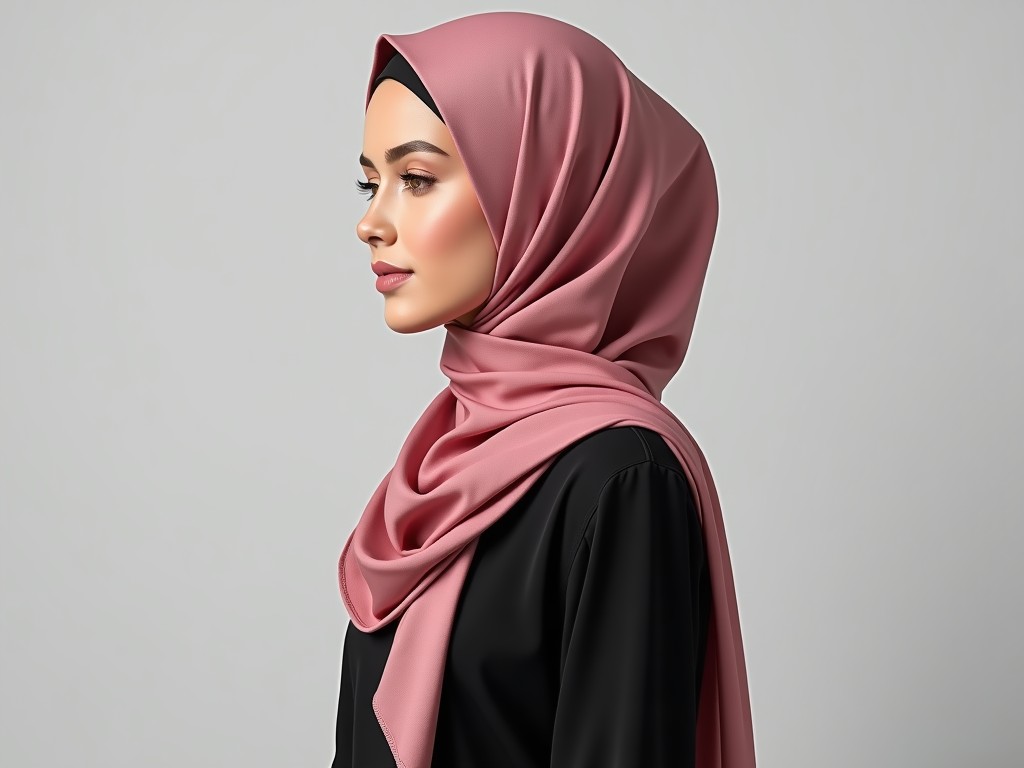
Satin Head Scarf Target Top Supplier
Industrial buyers seeking consistent quality in satin head scarves require suppliers with documented material traceability, controlled finishing processes, and scalable production capacity. This page
Satin Head Scarf Target Top Supplier
Industrial buyers seeking consistent quality in satin head scarves require suppliers with documented material traceability, controlled finishing processes, and scalable production capacity. This page details the technical specifications, manufacturing controls, and application considerations that define a reliable top-tier supplier for this product category.
Material Composition and Fabric Construction
Satin head scarves supplied for industrial or uniform applications typically use 100% polyester filament yarn with a satin weave structure, where warp yarns float over multiple weft yarns to create a smooth, lustrous surface. The fabric weight ranges from 80 to 120 GSM, balancing drape durability with breathability for extended wear. Thread count is maintained between 120 and 160 threads per inch to ensure surface integrity without excessive stiffness.
Colorfastness is critical; reactive or disperse dyes are selected based on fiber type, with wash testing (AATCC 61) confirming minimal fading after 20+ cycles. pH neutrality (6.0–8.0) is verified to prevent skin irritation during prolonged contact. Anti-static finishes may be applied upon request to reduce cling in low-humidity environments.
Dimensional Accuracy and Tolerance Control
Standard scarf dimensions are 70 cm x 70 cm (±3 mm) or 90 cm x 90 cm (±4 mm), measured under 2 N/cm tension after conditioning at 20°C and 65% RH for 24 hours. Hemming tolerance is held to ±2 mm width variation, with rolled or narrow hems (2–3 mm) used to minimize bulk and prevent fraying. Corner mitering is maintained at 45° ±1° to ensure clean, symmetrical finishes.
For bulk orders, statistical process control (SPC) charts monitor width and length deviations across production batches, with Cpk values maintained above 1.33. Edge curl is minimized through controlled heat-setting during finishing, typically at 180–200°C for 30–60 seconds, depending on yarn count and weave density.
Quality Assurance and Inspection Protocols
Incoming yarn is tested for tenacity (≥4.5 cN/dtex), elongation at break (15–25%), and boil-off loss (<1.5%) to ensure consistent dye uptake and strength. Fabric inspection follows a 4-point system under 3000 lux lighting, with defects classified as: critical (holes, tears), major (stains, misprints >5 mm), and minor (slubs, thin spots). Acceptable quality limit (AQL) is set at 2.5 for major defects and 4.0 for minor.
Color matching is verified using a spectrophotometer (ΔE < 1.5) against Pantone or RAL standards under D65 lighting. Batch-to-batch consistency is maintained through computerized dyeing recipes and real-time pH/temperature monitoring. Final inspection includes fold uniformity, label placement accuracy (±5 mm), and packaging integrity checks.
Customization Options and Technical Constraints
Custom dye lots are available from 500 kg minimum, with lead times of 3–4 weeks for standard colors and 6–8 weeks for complex shades requiring multiple dye baths. Screen printing or digital transfer is supported for logos, with ink adhesion tested via ASTM D3359 (tape test) to ensure ≥4B rating after 15 washes. Embroidery is limited to ≤8,000 stitches to avoid puckering on lightweight satin.
Size adjustments beyond standard dimensions require retooling of cutting dies and may increase waste factor by 10–15%. Custom packaging (e.g., individual poly bags, branded boxes, or bulk bales) is available upon request, with moisture barriers (desiccant packs) included for shipments to high-humidity regions. All customizations require formal approval of lab dips and pre-production samples.
Applications in Industrial and Professional Settings
Satin head scarves are used in food processing facilities where hair containment is required under HACCP guidelines; the smooth surface minimizes particle retention and allows for easy sanitation. In pharmaceutical environments, low-linting polyester satin reduces contamination risk compared to cotton alternatives. The fabric’s resistance to repeated autoclaving (up to 134°C) makes it suitable for sterile processing areas when specified with heat-stable dyes.
Corporate uniform programs benefit from the fabric’s wrinkle resistance and color retention after industrial laundering (up to 75°C). In hospitality, the lustrous appearance supports brand presentation while meeting durability needs for daily use. Anti-microbial finishes can be integrated for high-touch environments, though they may slightly alter hand feel and require revalidation after 30+ wash cycles.
Packaging, Labeling, and Logistics Considerations
Standard packaging uses LDPE poly bags (50–70 µm thickness) with 10–25 units per bag, depending on weight. Cartons are double-wall corrugated (200 GSM bursting strength), sized to optimize pallet utilization (typically 40x60x80 cm). Each carton includes a packing list with batch number, yarn lot, dye lot, and QC pass/fail status. HS code 6213.90.00 applies for international shipments.
For export, fumigation-treated pallets (ISPM 15 compliant) are used, with corner boards and stretch wrap to prevent shifting. Humidity indicators are included in shipments to tropical climates. Labeling includes country of origin, care instructions (machine wash 40°C, tumble dry low), and fiber content per textile labeling regulations. RFID tags or barcodes can be added for inventory tracking upon request.
Supplier Evaluation Criteria for Procurement Teams
When assessing a satin head scarf supplier, request third-party test reports for colorfastness (wash, light, rubbing), dimensional stability after 5 wash cycles, and pH verification. Ask for process flow diagrams showing dyeing, finishing, and inspection stages to evaluate control points. Verify that the facility maintains ISO 9001 certification and has undergone social compliance audits (e.g., SMETA, BSCI) if ethical sourcing is required.
Inquire about minimum order quantities for custom colors, sample lead times (typically 3–5 days for stock shades, 10–14 days for lab dips), and whether the supplier holds inventory for buffer stock. Confirm that all chemical finishes comply with OEKO-TEX® Standard 100 or equivalent restrictions on hazardous substances. A transparent supplier will provide access to subcontractor details for critical processes like dyeing or printing.
Products
Related Products
News
Related News

2026-11-02
Cotton Voile Scarf Manufacturing and Performance Analysis how to make a cotton voile scarfCreating a professional-grade cotton voile scarf requires a precise balance of textile engineering and artisanal finishing. Unlike standard cotton weaves, voile is defined by its p···

2026-10-28
chiffon hijab Technical Production and Performance AnalysisSelecting the right fabric for a hijab involves a delicate balance between modesty, breathability, and aesthetic drape. For many women in Southeast Asia and the Middle East, the ma···

2026-10-26
custom silk scarf textile manufacturing and performance analysisSelecting a high-quality scarf is no longer just about color matching; it is an exercise in understanding how textile weight, drape, and print scale interact with individual facial···
