Orange Satin Head Scarf






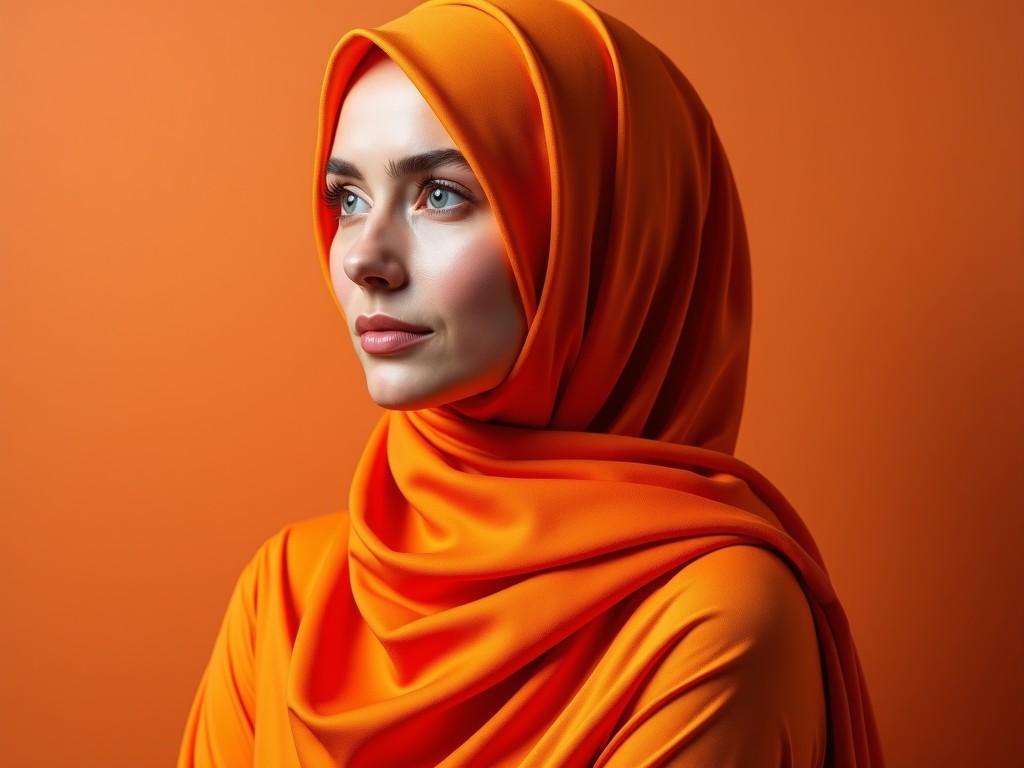
Orange Satin Head Scarf
An orange satin head scarf is a textile accessory designed for industrial environments where hair containment, contamination control, and worker identification are required. Constructed from
Orange Satin Head Scarf
An orange satin head scarf is a textile accessory designed for industrial environments where hair containment, contamination control, and worker identification are required. Constructed from synthetic filament yarns with a smooth, lustrous finish, it provides a low-particulate-shedding barrier suitable for cleanroom-adjacent settings, food processing lines, and pharmaceutical handling areas. The scarf’s dimensions and fastening method are engineered to accommodate various head sizes while maintaining position during prolonged wear.
Material Composition and Construction
The scarf is made from 100% polyester filament satin, chosen for its tight weave structure and minimal fiber release under mechanical stress. The satin weave employs a 4/1 or 5/1 float pattern, creating a smooth surface that reduces friction against skin and hair, thereby decreasing irritation during extended shifts. Polyester’s inherent moisture-wicking properties help manage perspiration, while its resistance to common industrial detergents allows for repeated laundering at temperatures up to 70°C without degradation of color or dimensional stability.
Colorfastness is achieved through disperse dyeing at elevated temperatures, ensuring the orange hue (Pantone 1655 C equivalent) retains vibrancy after 50+ wash cycles. The fabric weight is approximately 90 gsm, balancing drape and durability—light enough for comfort, dense enough to prevent hair penetration. Edges are finished with a narrow overlock stitch (3-thread) to prevent fraying, maintaining integrity after repeated use and washing.
Dimensional Specifications and Fit
Standard dimensions are 60 cm in width by 90 cm in length, providing sufficient coverage for full hair containment across diverse hairstyles and head circumferences ranging from 52 cm to 60 cm. The rectangular shape allows for multiple wrapping configurations—triangular fold for secure knot tying or rectangular drape for use with elasticized headbands. This flexibility accommodates both male and female workers without requiring gender-specific variants.
When worn, the scarf overlaps by approximately 15 cm at the frontal and temporal zones, ensuring no gaps exist where particulate escape could occur. The length allows for a double-wrap technique in high-containment zones, increasing the effective barrier layer without compromising breathability. All dimensions are subject to a tolerance of ±2% due to fabric relaxation characteristics post-laundering.
Functional Advantages in Industrial Settings
The primary function of the head scarf is to contain loose hair and desquamated skin cells, preventing them from entering product streams or settling on critical surfaces. In food processing, this reduces the risk of foreign object contamination, aligning with HACCP prerequisite programs. In electronics assembly, it minimizes particulate deposition on sensitive components, supporting ISO 14644-1 Class 7 or 8 environmental goals when used alongside other garments.
The smooth satin surface resists adhesion of dust and fibers compared to cotton or knitted alternatives, facilitating easier visual inspection for soiling. Its lightweight nature reduces thermal burden during prolonged wear, a factor considered in occupational comfort assessments. The orange color serves as a high-visibility identifier in zones where role-based clothing coding is implemented, aiding supervisors in rapid personnel assessment without interrupting workflow.
Care Instructions and Lifecycle
Recommended laundering involves machine washing at 60°C with non-ionic detergents, followed by tumble drying at low temperature (<50°C) or line drying. Bleach and fabric softeners should be avoided, as they can degrade the dye matrix or leave residues that increase particulate retention. After 30 industrial wash cycles, dimensional change remains under 3%, and color difference (ΔE) stays below 4 units, indicating acceptable fade resistance for workplace use.
With proper care, the scarf maintains functional integrity for 6–12 months of regular use, depending on exposure frequency and laundering intensity. End-of-life disposal follows standard textile waste protocols; the polyester content allows for mechanical recycling in facilities equipped for synthetic fiber reclamation. No antimicrobial finishes are applied, avoiding potential leaching concerns in food-contact environments.
Customization Options
While the standard orange satin head scarf meets general industrial needs, modifications are available upon request to align with specific facility protocols. Width and length can be adjusted in 5 cm increments to accommodate cultural headwear preferences or specialized containment requirements. Alternative color options include navy blue, white, and green, each dyed using the same disperse process to ensure equivalent wash durability.
Closure systems can be modified to include integrated elastic loops, adjustable ties, or snap fasteners based on user preference or safety regulations prohibiting loose ends. For environments requiring electrostatic discharge (ESD) control, conductive yarns can be woven into the border at a density of 2% to achieve surface resistivity below 1×10⁹ Ω/sq. All customizations are subject to minimum order quantities and lead time adjustments, which are provided during quotation.
| Parameter | Standard Value | Customizable Range |
|---|---|---|
| Width | 60 cm | 50–80 cm (±5 cm increments) |
| Length | 90 cm | 70–120 cm (±5 cm increments) |
| Fabric Weight | 90 gsm | 75–110 gsm (upon material requalification) |
| Colorfastness (Wash Cycles) | ≥50 | Standard only |
| Maximum Wash Temperature | 70°C | Standard only |
Quality Assurance and Inspection
Each batch undergoes visual inspection under 500 lux illumination to detect weaving defects such as skipped picks, double ends, or staining. Dimensional verification is conducted on a sample basis using calibrated gauges, with acceptance criteria based on the tolerances outlined above. Color consistency is assessed via spectrophotometer against a master batch, with ΔE < 2.5 required for first article approval.
Laundering stability is validated through accelerated cycle testing (10 cycles at 70°C) prior to full production release, ensuring no significant shrinkage or color migration occurs. Packaging is inspected for correct folding, labeling, and containment to prevent transit damage. All quality records are retained for traceability, supporting audit requirements in regulated industries such as food, medical devices, and aerospace.
No formal certifications (e.g., ISO 9001, ISO 13485) are implied by this product description; compliance claims must be evaluated based on the end-user’s specific quality agreement. Test reports and material safety data sheets are available upon request for qualified industrial buyers.
Applications Across Industries
In bakery and confectionery production, the scarf prevents hair and dander from settling on exposed dough, glazes, or finished goods, directly supporting compliance with FDA 21 CFR Part 117. Its smooth surface minimizes lint transfer compared to woven cotton, reducing the need for frequent product line cleaning. The orange color allows line supervisors to quickly confirm that all personnel in the mixing and packaging zones are properly attired.
In pharmaceutical compounding, the scarf serves as a secondary barrier when worn under a bouffant cap, adding an extra layer of containment for potent compounds or aerosols. Its low-static polyester construction reduces the risk of attracting airborne particles to the wearer’s head, a consideration in powder handling operations. The ability to withstand frequent sanitization cycles makes it suitable for use in Grade C and D cleanroom annexes.
Electronics manufacturing facilities use the scarf in assembly lines for consumer devices, where particulate control prevents defects such as shorts or optical obscuration in sensors and cameras. When paired with wrist straps and heel grounders, it contributes to a holistic personnel grounding strategy. The scarf’s lightweight nature ensures it does not cause discomfort during 8–12 hour shifts at microscopes or soldering stations.
Packaging and Logistics
Scarves are folded to a uniform size of 15 cm × 20 cm and packed in polyethylene bags containing 25 units each. These bags are then placed in standard corrugated cartons (30 cm × 40 cm × 25 cm) holding 300 units, optimizing palletization for standard 48" × 40" freight. Each carton is labeled with product code, batch number, quantity, and care instructions in both English and local language variants as required.
For export shipments, cartons are secured with plastic strapping and corner boards to prevent shifting during transit. Moisture-resistant liners are included upon request for high-humidity routes. Lead time from order confirmation to shipment readiness is typically 15–20 working days for standard configurations, subject to fabric availability and dye lot scheduling. Expedited options are available for critical needs, with details provided during quotation.
To request a formal quotation, discuss customization options, or obtain technical documentation such as test reports or material specifications, please contact our technical sales team. Provide your intended application, required quantity, and any specific compliance needs to ensure accurate scoping.
Request QuotationProducts
Related Products
News
Related News

2026-11-02
Cotton Voile Scarf Manufacturing and Performance Analysis how to make a cotton voile scarfCreating a professional-grade cotton voile scarf requires a precise balance of textile engineering and artisanal finishing. Unlike standard cotton weaves, voile is defined by its p···

2026-10-28
chiffon hijab Technical Production and Performance AnalysisSelecting the right fabric for a hijab involves a delicate balance between modesty, breathability, and aesthetic drape. For many women in Southeast Asia and the Middle East, the ma···

2026-10-26
custom silk scarf textile manufacturing and performance analysisSelecting a high-quality scarf is no longer just about color matching; it is an exercise in understanding how textile weight, drape, and print scale interact with individual facial···
