Oem Stretch Satin Head Scarf






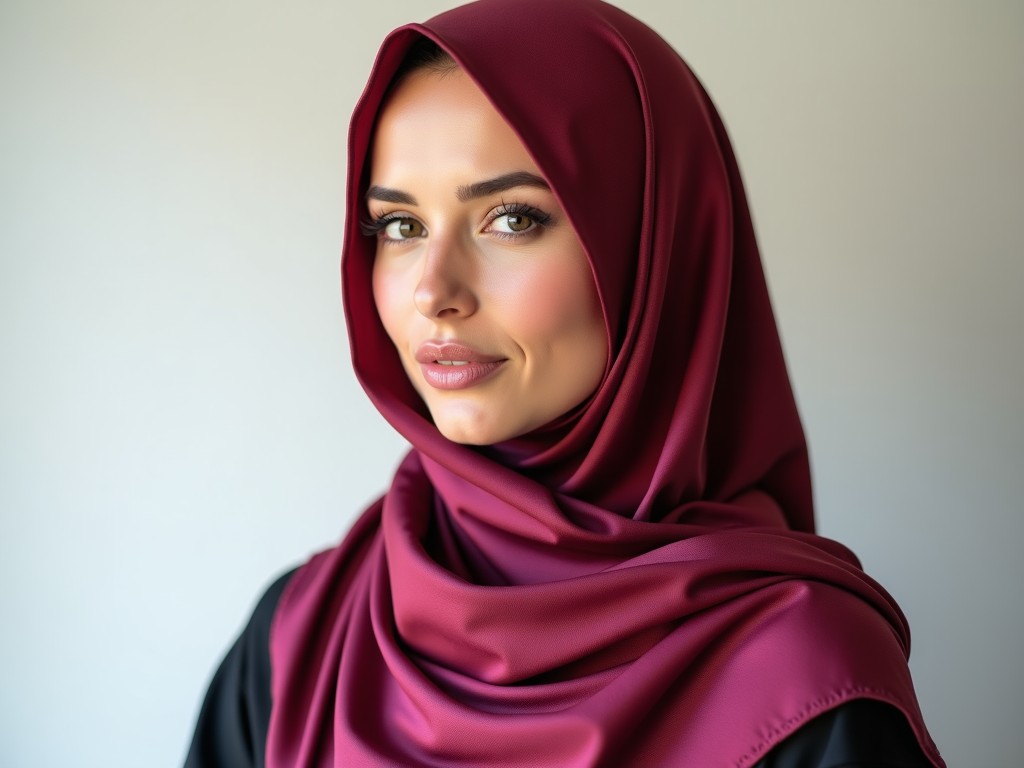
Oem Stretch Satin Head Scarf
An OEM stretch satin head scarf is a precision-engineered textile component designed for consistent performance in apparel manufacturing, medical environments, and industrial hygiene applications.
OEM Stretch Satin Head Scarf
An OEM stretch satin head scarf is a precision-engineered textile component designed for consistent performance in apparel manufacturing, medical environments, and industrial hygiene applications. Unlike standard fashion accessories, these scarves are produced to exact dimensional tolerances, material specifications, and functional requirements defined by the purchasing OEM. Their primary function is to provide secure, comfortable coverage while maintaining integrity under repeated use, washing, or sterilization cycles. The construction prioritizes dimensional stability, seam strength, and material recovery to ensure reliable fit across diverse head geometries without inducing pressure points or slippage.
Material Composition and Engineering Properties
The base fabric is typically a nylon-spandex or polyester-spandex satin weave, selected for its low-friction surface, controlled elongation, and recovery characteristics. Nylon variants offer superior abrasion resistance and moisture wicking, while polyester versions provide enhanced UV stability and chemical resistance to common cleaning agents. The spandex content, ranging from 8% to 18% by weight, determines the fabric’s bidirectional stretch capacity—critical for achieving a secure fit without constriction. Satin weave construction minimizes surface roughness, reducing lint generation and skin irritation during extended wear, which is essential in cleanroom or patient-care settings.
Fabric weight is precisely controlled between 80–120 GSM (grams per square meter) to balance durability with breathability. Thicker constructions (>120 GSM) resist pilling but may retain heat; lighter weights (<80 GSM) risk shear failure under tension. The finish is typically heat-set to lock in dimensional stability, preventing shrinkage beyond 2% after 50 wash cycles at 60°C. Colorfastness is rated to ISO 105-B02 standards, with minimum grade 4 for washing and light exposure, ensuring no bleeding or fading during reprocessing.
Dimensional Specifications and Tolerance Control
Standard dimensions are defined by finished width and length, measured flat under zero tension. Common widths range from 18–22 cm to accommodate varying hair volumes and head circumferences. Lengths typically fall between 50–65 cm, allowing for multiple wrapping configurations without excess material. Tolerances are held to ±3 mm for width and ±5 mm for length—critical for automated assembly lines where inconsistent sizing causes jamming or misalignment in downstream processes such as masking, bundling, or sterilization tray loading.
Elastic recovery is tested per ASTM D4964, requiring the fabric to retract to within 95% of its original length after 50% elongation and 30-second rest. This ensures the scarf maintains snug fit over time without loosening or bagging. Seam construction uses flatlock or overlock stitching with polyester thread, achieving seam strength of at least 12 N/mm to prevent unraveling under repeated stress. Seam placement is avoided along high-tension zones—typically offset 5–10 mm from the central axis—to distribute load evenly and prevent premature failure.
Functional Advantages in Industrial Applications
In medical environments, these scarves serve as barrier components under surgical caps or isolation hoods, containing hair and particulates without compromising sterility protocols. The low-lint satin surface minimizes fiber shedding, reducing contamination risk in Class 10,000 cleanrooms or operating theaters. Moisture management properties prevent sweat accumulation during prolonged procedures, enhancing wearer comfort and compliance. Unlike woven cotton alternatives, the synthetic blend resists degradation from autoclave cycles (up to 134°C) and repeated exposure to hydrogen peroxide or alcohol-based disinfectants.
For food processing and pharmaceutical manufacturing, the scarves meet FDA 21 CFR Part 177 requirements for indirect food contact when manufactured from compliant polymers. Their smooth surface inhibits microbial adhesion and facilitates efficient cleaning-in-place (CIP) procedures. In electronics assembly, static-dissipative variants (with surface resistivity <10¹¹ Ω/sq) are available upon request, incorporating conductive yarns to prevent electrostatic discharge (ESD) damage to sensitive components—verified via ANSI/ESD S20.20 testing.
Customization Parameters for OEM Integration
OEMs specify exact dimensions, fabric composition, color, and finishing treatments based on end-use requirements. Width and length can be adjusted in 5 mm increments to match specific headgear designs or packaging constraints. Color matching follows Pantone or RAL standards, with lab-dip approval required before bulk production. Additional finishes include antimicrobial treatments (e.g., silver-ion or zinc pyrithione) for healthcare applications, or flame-retardant coatings (meeting NFPA 701) for industrial settings near heat sources.
Packaging is tailored to production line efficiency—options include flat-folded stacks in polybags (50–100 units), roll-form for automated dispensing, or sterile peel-packs for medical OEMs. Labeling includes lot numbers, material codes, and care instructions in multiple languages as required. Minimum order quantities typically start at 1,000 units for standard specifications, with tooling-free adjustments possible for dimensional changes. Lead times average 3–4 weeks for stock fabrics, extending to 6–8 weeks for custom dyes or specialized finishes.
Quality Assurance and Testing Protocols
Incoming raw materials are tested for tensile strength, elongation at break, and spandex content via ISO 13934-1 and ISO 1833 methods. Fabric inspection follows a 4-point system under standardized lighting, with defects >0.5 mm classified as Class II and >1.0 mm as Class I (rejectable). Finished goods undergo dimensional audits on 10% of each batch, seam strength testing on 5 samples per 1,000 units, and recovery testing after simulated wash cycles. For medical-grade orders, biocompatibility testing per ISO 10993-5 (cytotoxicity) and ISO 10993-10 (irritation) is available upon request.
Color consistency is verified using a spectrophotometer with ΔE < 1.5 against approved master batches. Packaging integrity is validated through drop tests (ISTA 1A) and humidity exposure (40°C/90% RH for 72 hours) to ensure no degradation during transit. All test reports are traceable to lot numbers and available for audit. Statistical process control (SPC) charts monitor key parameters in real time, enabling immediate correction if trends approach control limits.
Comparison Table: Material Variants
| Property | Nylon/Spandex | Polyester/Spandex | Static-Dissipative |
|---|---|---|---|
| Abrasion Resistance (Martindale) | >50,000 cycles | >30,000 cycles | >40,000 cycles |
| Moisture Regain (%) | 4.0–4.5 | 0.4–0.6 | 0.5–0.7 |
| UV Stability (AFI 150 hrs) | Grade 3–4 | Grade 4–5 | Grade 4 |
| Typical Use Case | High-wear medical, sports | Food processing, pharma | Electronics assembly, cleanrooms |
*Values represent typical ranges; actual properties vary based on exact formulation and processing. Custom materials available upon request.
Applications Driven by Functional Requirements
In surgical settings, the scarf’s low-profile design prevents interference with headgear straps or ventilation systems, unlike bulkier cotton alternatives that create pressure points or shift during movement. Its smooth surface reduces snagging on sutures or drainage tubes, a critical factor in maintaining sterile fields. For cleanroom technicians, the antistatic variant prevents particle attraction to the fabric itself, minimizing the risk of introducing contaminants during equipment handling or wafer processing—where even sub-micron particulates can cause yield loss.
Food industry OEMs specify these scarves to comply with HACCP guidelines, as the non-absorbent surface does not harbor moisture or allergens, and withstands frequent sanitation cycles without fraying or discoloration. In pharmaceutical compounding, the scarf’s compatibility with gamma irradiation (up to 25 kGy) allows for terminal sterilization of reusable garments, reducing waste versus disposable alternatives. Automotive paint shops use them under hoods to prevent hair contamination in spray booths, where the fabric’s resistance to silicone and solvents ensures no transfer of impurities to wet coatings.
Ordering and Technical Support
To initiate an OEM quote, provide target dimensions (width, length), intended use environment (e.g., autoclave exposure, chemical contact, ESD sensitivity), required color (Pantone/RAL), and estimated annual volume. Technical datasheets, including material safety data sheets (MSDS), REACH compliance statements, and test reports, are available upon request. Samples can be dispatched within 3–5 business days for evaluation, with feedback incorporated into final specifications before production approval.
For detailed consultation on material selection, dimensional tolerances, or integration into your assembly process, contact our technical team via the inquiry form. We provide engineering support to ensure the component meets your functional, regulatory, and production efficiency requirements.
Products
Related Products
News
Related News

2026-11-02
Cotton Voile Scarf Manufacturing and Performance Analysis how to make a cotton voile scarfCreating a professional-grade cotton voile scarf requires a precise balance of textile engineering and artisanal finishing. Unlike standard cotton weaves, voile is defined by its p···

2026-10-28
chiffon hijab Technical Production and Performance AnalysisSelecting the right fabric for a hijab involves a delicate balance between modesty, breathability, and aesthetic drape. For many women in Southeast Asia and the Middle East, the ma···

2026-10-26
custom silk scarf textile manufacturing and performance analysisSelecting a high-quality scarf is no longer just about color matching; it is an exercise in understanding how textile weight, drape, and print scale interact with individual facial···
