Maroon Satin Head Scarf Top Factory



Maroon Satin Head Scarf Top Factory
This document outlines the technical specifications, material properties, and manufacturing considerations for maroon satin head scarf tops produced in industrial quantities. The information is
Maroon Satin Head Scarf Top Factory Specifications
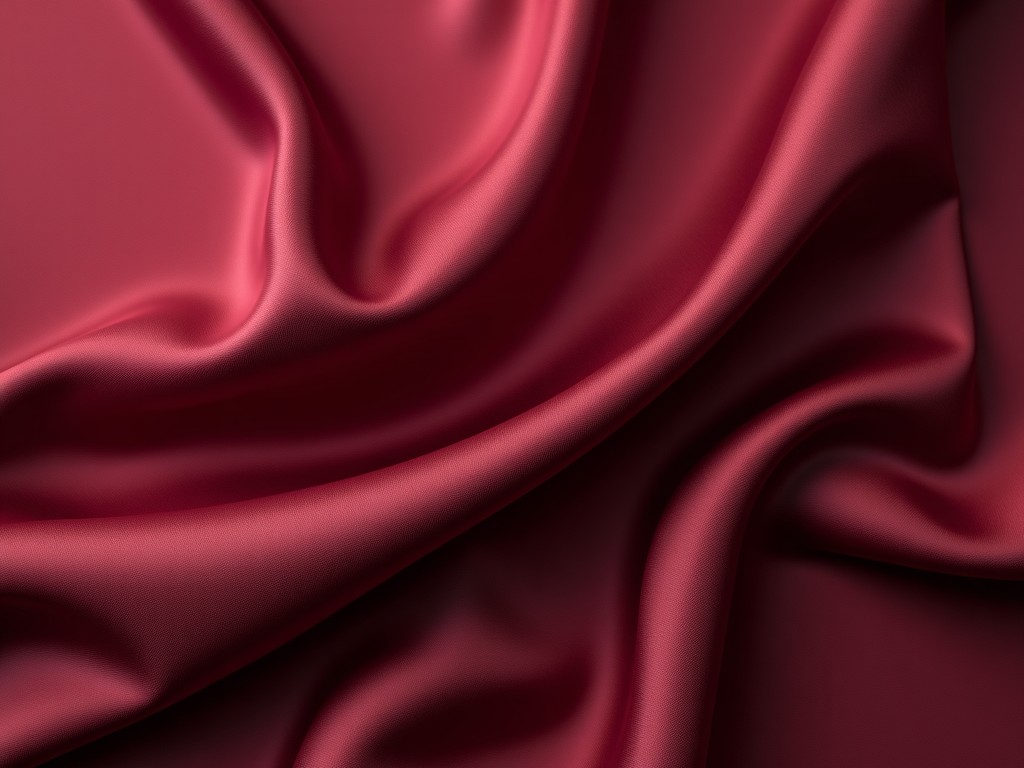
This document outlines the technical specifications, material properties, and manufacturing considerations for maroon satin head scarf tops produced in industrial quantities. The information is intended for procurement engineers, textile buyers, and OEM partners evaluating fabric performance, dimensional stability, and finish consistency for apparel integration.
Material Composition and Weave Structure
The base fabric is constructed from 100% polyester filament yarn with a denier range of 75D/36F to 150D/48F, selected for its lustrous surface and dimensional stability under repeated washing cycles. The satin weave employs a 4-up-1-down float pattern, creating a smooth, reflective face with a matte reverse side. This structure minimizes surface friction while maintaining drape characteristics essential for headwear applications. Yarn twist is controlled between 80–120 TPM to balance sheen retention and pilling resistance.
Colorfastness is achieved through disperse dyeing at 200–210°C under controlled pressure, ensuring the maroon shade (Pantone 202 C equivalent) meets ISO 105-B02 Grade 4 or higher for lightfastness and ISO 105-E04 Grade 3–4 for washfastness. Residual alkalinity is maintained below 0.5% to prevent fiber degradation during storage. The fabric undergoes heat setting at 180–190°C for 90 seconds to stabilize dimensions and reduce residual shrinkage to less than 2% after five home launderings at 40°C.
Dimensional Tolerances and Cutting Specifications
Finished scarf tops are cut to a nominal width of 22 cm ± 3 mm and length of 60 cm ± 5 mm, measured under standard atmospheric conditions (20°C, 65% RH) per ASTM D1776. The edges are finished with a 3-mm overlock stitch using polyester thread of matching color, with stitch density maintained at 8–10 stitches per cm to prevent fraying without adding bulk. Bias cutting is not employed; all pieces are cut strictly on-grain to ensure consistent drape and prevent torque-induced twisting during wear.
When laid flat, the fabric exhibits a maximum skew of 1.5° per meter, verified via laser grid inspection. End-to-end length variation across a production batch is held within ±1.5% through computerized cutting table calibration and tension-controlled fabric feeding. These tolerances ensure compatibility with automated sewing lines in downstream garment assembly.
Surface Finish and Functional Properties
The satin finish yields a specular gloss value of 45–55 GU at 60° incidence, measured per ASTM D523, providing the characteristic luxury appearance without excessive slipperiness. The fabric’s air permeability ranges from 80–120 mm/s under ISO 9237, balancing breathability with sufficient coverage for headwear use. Water repellency is not applied; the hydrophilic nature of polyester allows moisture wicking at a rate of 15–25 g/m²/hr under ISO 11092, enhancing comfort during extended wear.
Abrasion resistance is rated at 15,000–20,000 cycles Martindale (ISO 12947-2) before noticeable surface change, sufficient for typical headscarf usage. Pilling resistance after 5,000 cycles reaches Grade 3–4 (ISO 12945-2), maintained through filament yarn selection and controlled finishing temperatures. No anti-static treatment is applied by default, as intrinsic conductivity of the dyed polyester remains sufficient to prevent cling in low-humidity environments.
Quality Control and Inspection Protocol
Each production lot undergoes 100% visual inspection under 500 lux daylight simulation (D65) for color uniformity, with ΔE values monitored to stay below 1.5 relative to the approved master swatch. Defects such as yarn snags, thick/thin places, or dye streaks are flagged and removed via automated cloth inspection systems with AI-assisted pattern recognition. Width and length are verified via laser scanning at 10-point intervals across each roll.
Seam strength is tested on 10 random samples per batch using ASTM D1683, with minimum breaking force maintained at 18 N/cm in the warp direction and 15 N/cm in the weft. Color bleeding is assessed via ISO 105-C06 A2S test, with no transfer permitted to adjacent white multifiber fabric after 30 minutes of immersion in 40°C detergent solution. All test reports are retained for 36 months and available upon request.
Packaging and Handling Requirements
Finished scarf tops are folded to a uniform size of 11 cm × 15 cm × 2 cm and packed in polyethylene bags of 50-micron thickness, with 25 units per inner pack. Four inner packs are consolidated into a master carton measuring 40 cm × 30 cm × 25 cm, yielding 1,000 units per carton. Cartons are sealed with pressure-sensitive tape and labeled with batch number, quantity, care instructions, and country of origin. Stacking height is limited to 5 cartons to prevent compression deformation.
Storage conditions recommend 18–25°C and 40–60% RH to prevent dye migration or fabric stiffening. Direct sunlight exposure is avoided during transit and storage to maintain color integrity. Each carton includes a desiccant packet (silica gel, 10 g) to control moisture ingress. Shelf life under these conditions is 24 months without degradation in appearance or mechanical properties.
Customization Parameters
Color matching is available for Pantone, RAL, or custom lab-dip samples, with a minimum dye lot of 300 kg. Width can be adjusted between 18 cm and 28 cm in 2-mm increments, and length between 45 cm and 75 cm, subject to marker efficiency constraints. Edge finishes include rolled hem, flatlock, or ultrasonic sealing, with stitch type and thread color specified per order. Custom packaging—such as individual polybagging, hangtags, or branded inserts—is feasible at volumes exceeding 5,000 units.
Yarn substitution with recycled polyester (rPET) or biodegradable polyester variants is possible upon request, though it may alter gloss, dye uptake, and thermal stability characteristics. Flame-retardant treatments meeting EN 13501-1 Class B are available but require separate validation due to potential impacts on hand feel and breathability. All customizations undergo a pre-production sample approval cycle before full-scale manufacturing.
| Property | Typical Range | Test Standard |
|---|---|---|
| Fabric Weight | 85–105 g/m² | ISO 3801 |
| Thickness | 0.18–0.22 mm | ISO 5084 |
| Breaking Strength (Warp) | 28–35 N/cm | ISO 13937-2 |
| Breaking Strength (Weft) | 22–28 N/cm | ISO 13937-2 |
| Elongation at Break | 45–60% | ISO 13937-2 |
| Shrinkage (5x Wash) | < 2% | ISO 6330 |
| Air Permeability | 80–120 mm/s | ISO 9237 |
| Pilling Resistance | Grade 3–4 | ISO 12945-2 |
For technical inquiries, sample requests, or to discuss project-specific requirements including color matching, dimensional adjustments, or material substitutions, contact our engineering team. Provide your application details, target quantities, and any required certifications to receive a detailed feasibility assessment and lead time estimate.
Products
Related Products
News
Related News

2026-11-02
Cotton Voile Scarf Manufacturing and Performance Analysis how to make a cotton voile scarfCreating a professional-grade cotton voile scarf requires a precise balance of textile engineering and artisanal finishing. Unlike standard cotton weaves, voile is defined by its p···
2026-10-28
chiffon hijab Technical Production and Performance AnalysisSelecting the right fabric for a hijab involves a delicate balance between modesty, breathability, and aesthetic drape. For many women in Southeast Asia and the Middle East, the ma···

2026-10-26
custom silk scarf textile manufacturing and performance analysisSelecting a high-quality scarf is no longer just about color matching; it is an exercise in understanding how textile weight, drape, and print scale interact with individual facial···