Malaysia Satin Silk Shawl Hijab Wholesale






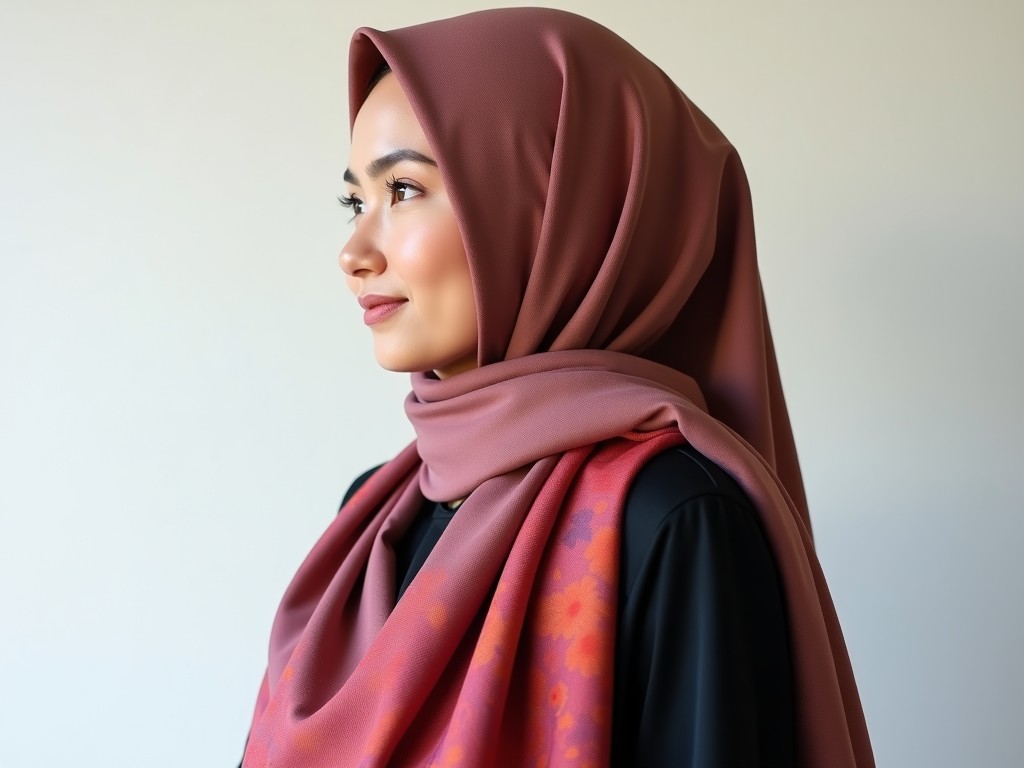
Malaysia Satin Silk Shawl Hijab Wholesale
Satin silk hijab shawls manufactured in Malaysia combine the natural protein fiber structure of mulberry silk with a specific satin weave that produces a smooth, lustrous surface on one face and a
Malaysia Satin Silk Shawl Hijab Wholesale
Satin silk hijab shawls manufactured in Malaysia combine the natural protein fiber structure of mulberry silk with a specific satin weave that produces a smooth, lustrous surface on one face and a duller reverse. This construction reduces surface friction against skin and hair while maintaining the inherent breathability and moisture-wicking properties of silk fibroin.
For industrial buyers, the key technical parameters include momme weight (typically 12–19 mm for shawl applications), filament density (measured in denier per filament), and weave tightness (ends per inch × picks per inch). These factors directly influence drape, durability under repeated handling, and colorfastness when exposed to light or washing cycles.
Wholesale procurement requires understanding how these specifications translate to end-use performance: higher momme weights improve opacity and resistance to snagging, while a balanced weave (e.g., 120 EPI × 80 PPI) ensures dimensional stability without excessive stiffness. Buyers should request fabric specifications sheets that include these metrics rather than relying solely on subjective hand-feel descriptions.
Material Composition and Construction Details
The silk used in Malaysian satin hijabs is predominantly Bombyx mori mulberry silk, processed through degumming to remove sericin and leave the triangular fibroin filaments. This results in a fiber with a refractive index of approximately 1.54, contributing to the characteristic sheen, and a tensile strength of 3.0–4.0 g/d denier, which supports durability in lightweight apparel.
The satin weave (typically 4-harness or 5-harness) floats warp or weft yarns over multiple opposing threads, creating long continuous surfaces that reflect light uniformly. This structure increases surface area exposed to light but also creates potential snag points if filament integrity is compromised; therefore, quality control focuses on minimizing breaks and neps during spinning and weaving.
Post-weaving processes such as calendaring (controlled heat and pressure) enhance the smoothness without altering the fiber’s intrinsic properties, while dyeing uses acid or metal-complex dyes selected for affinity to silk’s amine groups, ensuring wash fastness ratings of 4–5 on the grey scale under ISO 105-B02 testing.
Typical Technical Specifications
| Parameter | Typical Range | Relevance to End Use |
|---|---|---|
| Momme Weight | 12–19 mm | Determines opacity, drape, and resistance to tearing; 16 mm is common for balance of weight and coverage |
| Filament Denier | 10–15 d/f | Lower denier increases softness and luster but may reduce abrasion resistance; optimal for hijab is 12 d/f |
| Weave Density (EPI × PPI) | 100–130 × 60–90 | Affects stability and stretch; tighter counts improve shape retention but reduce flexibility |
| Width (Finished) | 100–110 cm | Standard for hijab shawls allows full coverage with minimal seaming; custom widths available |
| Length (Per Piece) | 180–200 cm | Sufficient for multiple wrapping styles; tolerances typically ±2 cm |
| Colorfastness to Light | Grade 4 (ISO 105-B02) | Indicates resistance to fading under indoor lighting; critical for pastel and dark shades |
Applications in End-Use Markets
In the modest fashion sector, satin silk hijabs are selected for occasions requiring a balance of coverage and visual refinement, such as formal events, professional settings, or cultural ceremonies. The fabric’s fluid drape allows it to conform to head and shoulder contours without adding bulk, while its natural thermal regulation helps maintain comfort across varying indoor climates.
Beyond personal wear, these shawls serve as components in layered garment systems where interfacing with other textiles (e.g., cotton underlayers or wool outerwear) demands low-friction surfaces to prevent chafing or pile damage. The silk’s protein structure also exhibits mild antimicrobial properties compared to synthetic alternatives, reducing odor accumulation during extended wear.
Industrial buyers sourcing for private label or contract manufacturing must consider how the fabric’s hygroscopic nature (regain of 11% at 65% RH) interacts with packaging and storage conditions; prolonged exposure to high humidity may require acclimatization periods before cutting or sewing to avoid dimensional shifts post-production.
Customization Options and Procurement Considerations
Wholesale suppliers typically offer customization in three primary areas: color matching via Pantone or textile-specific swatch books, edge finishing (such as rolled hem, serged edge, or flat-felled seam for added durability), and size scaling (adjusting width and length while maintaining proportional drape). These options require clear communication of technical tolerances, especially for color labs where metamerism under different light sources must be evaluated.
Minimum order quantities (MOQs) are often influenced by loom setup costs and dye batch consistency; for satin silk, dye lots exceeding 500 meters per shade are recommended to avoid visible variations. Buyers should request lab-dip approvals before bulk production and specify whether cutting will occur across or with the grain, as bias-cut pieces exhibit different stretch characteristics.
Packaging for wholesale shipment usually involves folding shawls with acid-free tissue to prevent creasing, then placing in polybags or cardboard cartons with humidity indicators. For long-distance export, vacuum-sealed bags with silica gel packs are advised to mitigate moisture regain during transit, particularly when shipping through tropical climates.
Quality Control and Inspection Protocols
Objective quality assessment begins with fabric inspection under standardized lighting (D65 or TL84) using 4-point or 10-point systems to score defects such as broken picks, snags, or staining. For hijab shawls, particular attention is paid to the face surface since any imperfection is highly visible due to the fabric’s reflective nature; acceptable levels are typically defined as ≤4 points per 100 square yards.
Dimensional stability is verified through relaxation testing: specimens are washed (per ISO 6330) and dried, then measured for skew and twist. Silk satin should exhibit less than 3% distortion after one cycle; higher values may indicate insufficient tension during weaving or incomplete degumming. pH testing of the finished fabric ensures compatibility with skin, targeting a range of 5.5–7.0 to avoid irritation.
Color consistency is monitored via spectrophotometer readings (ΔE < 2.0 for bulk versus approved lab-dip), especially critical for solid shades where even minor shifts are noticeable. Buyers should insist on receiving test reports for each batch, including rub fastness (wet and dry) and perspiration resistance, as these directly impact product lifespan and consumer satisfaction.
For technical inquiries, custom specifications, or to request a fabric data sheet including detailed construction parameters and test reports, contact our wholesale team.
Request Wholesale InformationProducts
Related Products
News
Related News

2026-11-02
Cotton Voile Scarf Manufacturing and Performance Analysis how to make a cotton voile scarfCreating a professional-grade cotton voile scarf requires a precise balance of textile engineering and artisanal finishing. Unlike standard cotton weaves, voile is defined by its p···

2026-10-28
chiffon hijab Technical Production and Performance AnalysisSelecting the right fabric for a hijab involves a delicate balance between modesty, breathability, and aesthetic drape. For many women in Southeast Asia and the Middle East, the ma···

2026-10-26
custom silk scarf textile manufacturing and performance analysisSelecting a high-quality scarf is no longer just about color matching; it is an exercise in understanding how textile weight, drape, and print scale interact with individual facial···
