Magic Satin Wrapping Scarf






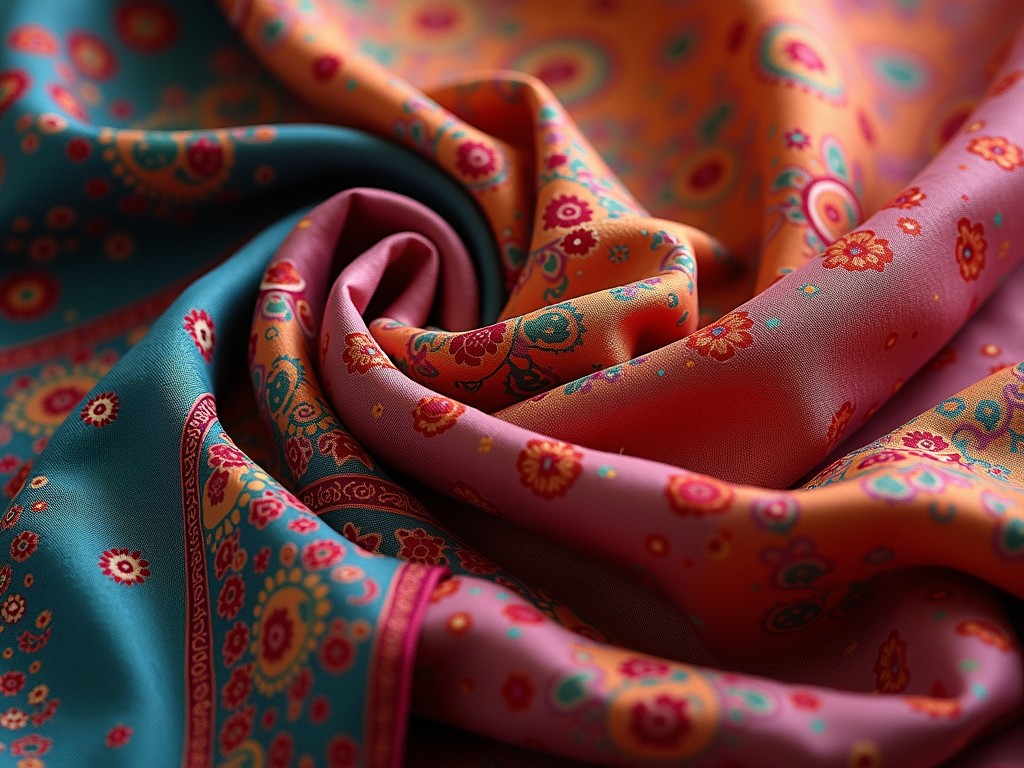
Magic Satin Wrapping Scarf
The magic satin wrapping scarf is a precision-engineered textile accessory designed for industrial and commercial applications requiring controlled surface protection, thermal stability, and
Magic Satin Wrapping Scarf
The magic satin wrapping scarf is a precision-engineered textile accessory designed for industrial and commercial applications requiring controlled surface protection, thermal stability, and low-friction handling. Constructed from multi-layer satin-weave polyester with a proprietary nano-coating, it combines dimensional stability with a controlled coefficient of friction (0.12–0.18 static, 0.08–0.12 dynamic) to prevent marring on sensitive surfaces during wrapping, bundling, or temporary fixturing operations.
Material Composition and Structure
The scarf consists of three bonded layers: an outer satin face (100% polyester filament, 150 denier, 85 picks/cm), a middle stabilizer layer (biaxially oriented PET film, 12 µm thickness), and an inner adhesive-promotion layer (water-based acrylic, 5 g/m²). This structure resists delamination under cyclic bending (tested to 10,000 cycles at 5 mm radius) and maintains tensile strength (>45 MPa warp, >38 MPa weft) after exposure to 85°C/85% RH for 168 hours. The satin weave minimizes surface contact points, reducing abrasion risk on polished metals, composites, and coated substrates.
Performance Characteristics
Key performance metrics include thermal stability up to 180°C (short-term) and 150°C (continuous), moisture regain <0.4% at 65% RH, and UV resistance retaining >85% tensile strength after 500 hours Xenon arc exposure (ASTM G155). The nano-coating provides transient anti-static properties (surface resistivity 10⁹–10¹¹ Ω/sq) and reduces particulate adhesion in cleanroom environments (ISO Class 6 achievable with proper handling). Elongation at break is 25–30% warp and 20–25% weft, allowing conformability to complex geometries without inducing point loads.
Dimensional Specifications
| Parameter | Standard Range | Customizable Options |
|---|---|---|
| Width | 50 mm, 75 mm, 100 mm, 150 mm | 25–300 mm in 5 mm increments |
| Length per Roll | 50 m, 100 m, 200 m | 10–500 m (splice-free upon request) |
| Thickness | 80 µm ±10% | 60–120 µm (adjusted via stabilizer layer) |
| Weight | 65 g/m² ±5% | 50–90 g/m² (material ratio adjustment) |
Primary Applications
In precision manufacturing, the scarf protects polished turbine blades, optical molds, and semiconductor wafers during handling and inter-process transfer by preventing micro-scratches from containment straps or fixtures. Its low outgassing (<50 µg/cm² total volatiles at 100°C) makes it suitable for vacuum chamber loading and aerospace component staging. In logistics, it prevents galvanic corrosion between dissimilar metals (e.g., aluminum and steel) during transit by creating a dielectric barrier while allowing conformal wrapping around irregular shapes without slippage.
Additional uses include temporary fixturing in CMM inspection (reducing probe interference), surface protection during robotic assembly (minimizing particulate generation), and as a release layer in composite layup where controlled adhesion is required. The material’s predictable friction response enables consistent tension control in automated winding systems, reducing scrap from over-tensioning or telescoping.
Customization Logic
Width and length are adjusted via slitting and winding parameters without altering material properties. Thickness and weight are modified by changing the PET stabilizer layer thickness or polyester denier, which directly impacts tensile strength and flexural rigidity—these trade-offs are quantified during feasibility review. Surface properties can be tuned: increasing nano-coating density lowers friction further (down to 0.06 dynamic) for high-slip applications, while reducing it increases tack for temporary holding. Edge treatments (ultrasonic sealed, heat-cut, or woven selvage) are selected based on fraying risk and handling method.
Quality Control and Testing
Each batch undergoes roll-to-roll inspection for width tolerance (±0.5 mm), thickness variation (±5%), and surface defect density (<5 defects/m² >50 µm). Friction coefficients are verified using ASTM D1894 on calibrated steel rollers at 100 mm/min speed. Tensile and elongation properties are tested per ASTM D5035 on five specimens per roll. Thermal aging and humidity resistance are sampled per lot using accelerated conditions (85°C/85% RH, 500 hrs) with post-exposure strength retention >90% as acceptance criterion. Antistatic decay time is measured via STM-14.01 (voltage decay from 5000V to <50V) with target <2.0 seconds.
Packaging and Handling
Rolls are wound on 3-inch ID polypropylene cores with tension controlled to 1.5–2.5 N to prevent telescoping or loose layers. Each roll is wrapped in polyethylene film (50 µm) and placed in a single-wall corrugated carton with desiccant packs (5 g/roll) to limit moisture uptake. For cleanroom shipment, rolls are double-bagged in LDPE and flushed with nitrogen before sealing. Labeling includes lot number, width, length, thickness, and QC pass/fail status. Rolls should be stored flat or suspended vertically in a controlled environment (18–22°C, 40–55% RH) to prevent creep or blocking.
Ordering and Technical Support
To initiate a quote, provide required width, length, thickness, and intended application (e.g., surface protection, fixturing, corrosion barrier). For custom thicknesses or surface treatments, specify target friction range, thermal exposure, or cleanliness class. Lead time is typically 10–15 working days for standard sizes; custom constructions add 5–7 days for process setup and validation. Samples (10 m lengths) are available upon request for functional testing. Technical datasheets, including full property tables and test methods, are provided with quotation.
Products
Related Products
News
Related News

2026-11-02
Cotton Voile Scarf Manufacturing and Performance Analysis how to make a cotton voile scarfCreating a professional-grade cotton voile scarf requires a precise balance of textile engineering and artisanal finishing. Unlike standard cotton weaves, voile is defined by its p···

2026-10-28
chiffon hijab Technical Production and Performance AnalysisSelecting the right fabric for a hijab involves a delicate balance between modesty, breathability, and aesthetic drape. For many women in Southeast Asia and the Middle East, the ma···

2026-10-26
custom silk scarf textile manufacturing and performance analysisSelecting a high-quality scarf is no longer just about color matching; it is an exercise in understanding how textile weight, drape, and print scale interact with individual facial···
