Lilac Satin Head Scarf Top Factory






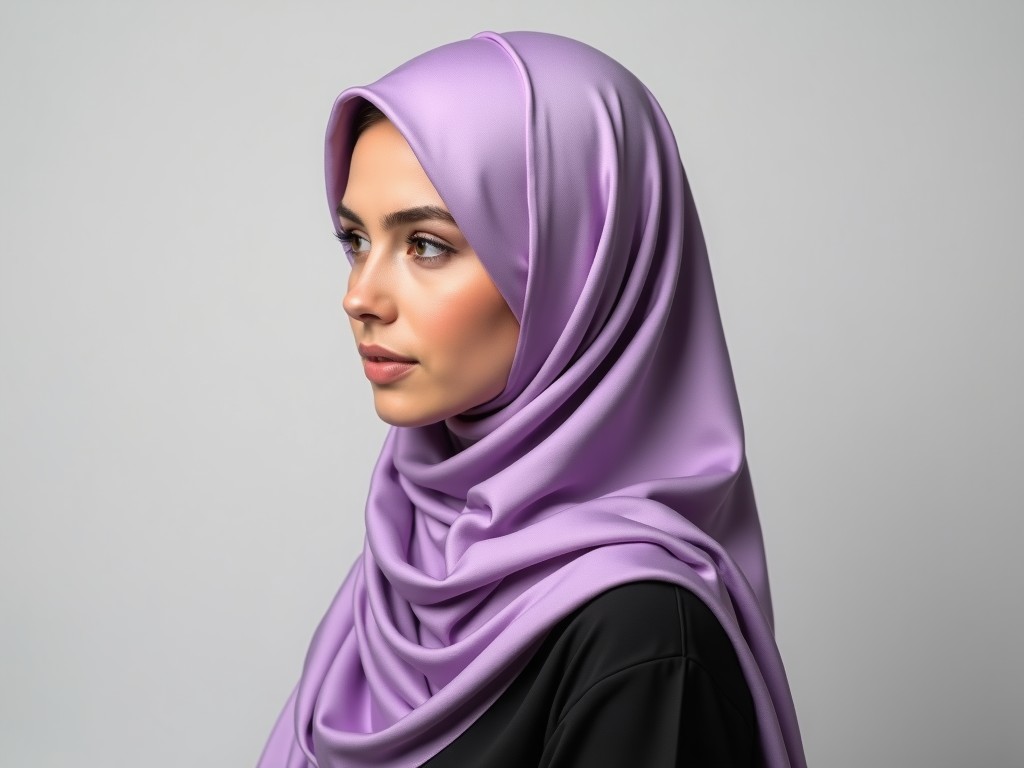
Lilac Satin Head Scarf Top Factory
This facility specializes in the production of headscarf tops constructed from lilac-colored satin fabric, engineered for consistent dimensional stability and surface finish in industrial textile
Lilac Satin Head Scarf Top Factory
This facility specializes in the production of headscarf tops constructed from lilac-colored satin fabric, engineered for consistent dimensional stability and surface finish in industrial textile applications. The manufacturing process integrates precision cutting, heat-setting, and controlled tensioning to minimize distortion during downstream use.
Output is tailored for clients requiring repeatable aesthetics and functional performance in apparel prototyping, uniform components, or decorative trims where color fidelity and fabric hand are critical to end-product specifications.
Material Construction and Fabric Properties
The base fabric is a 100% polyester satin weave with a nominal weight of 95 g/m², selected for its lustrous surface, low pilling tendency, and resistance to shrinkage under standard laundering conditions (30°C, mild detergent). The lilac hue is achieved through disperse dyeing at 130°C, ensuring colorfastness to washing (ISO 105 C06: grade 4-5) and light exposure (ISO 105 B02: grade 4).
Fabric width is consistently maintained at 150 cm ±1.5 cm during weaving, with tensile strength exceeding 25 N warp and 20 N weft (ISO 13937-2), providing sufficient durability for handling and sewing without tearing.
Dimensional Specifications and Tolerances
Headscarf tops are cut to a finished height of 22 cm ±0.3 cm and a circumferential length of 58 cm ±0.5 cm, measured flat before assembly. These dimensions are optimized for standard head circumferences (54–58 cm) with a 2 cm ease allowance for comfort and fit variability.
Seam allowances are set at 6 mm ±0.5 mm, reinforced with a 3-thread overlock stitch to prevent fraying. The finished product exhibits a maximum dimensional change of 1.5% after five wash cycles at 40°C, verified via AATCC TM135.
All critical dimensions are inspected using calibrated digital calipers and template gauges at 100% first-article inspection and 10% lot sampling, with control charts maintained for process stability.
Production Capabilities and Customization Logic
The factory operates three automated cutting lines with laser-guided pattern placement, capable of processing up to 12,000 units per shift. Each line includes real-time tension monitoring to prevent fabric stretch during cutting, ensuring batch-to-batch consistency in shape and drape.
Customization options include adjustable scarf height (18–26 cm), alternative seam finishes (flat-felled, bound, or ultrasonic weld), and incorporation of woven labels or heat-transfer logos at predefined locations (left temple, rear center, or both).
Color matching to Pantone or RAL standards is available upon submission of a physical swatch or spectral data; dye lot variation is controlled to ΔE < 2.0 under D65 lighting via spectrophotometer validation.
Quality Control and Inspection Protocol
| Inspection Point | Method | Acceptance Criteria |
|---|---|---|
| Fabric shade consistency | Spectrophotometer (Datacolor 800) | ΔE ≤ 1.5 from master standard |
| Seam integrity | Tensile tester (ISO 13937-2) | Minimum 18 N force to rupture |
| Dimensional accuracy | Digital caliper + template gauge | Height: ±0.3 cm; Length: ±0.5 cm |
| Surface defects | Visual inspection under 500 lux LED | No visible snags, runs, or stains in Zone A (front 70%) |
| Colorfastness to washing | ISO 105 C06 | Grade 4 or higher |
Inspection frequency follows ANSI/ASQ Z1.4-2020 Level II for major defects and Level I for minor defects. Non-conforming items are segregated, documented, and subjected to root cause analysis before corrective action is implemented.
Packaging and Logistics Preparation
Finished units are folded to a uniform 10 cm × 15 cm rectangle using automated fold boards, then packed in groups of 25 into polyethylene bags (50 μm thickness) with desiccant packets to control moisture during transit. Each bag is labeled with batch number, quantity, and care instructions in ISO 3758 symbols.
Master cartons are double-wall corrugated fiberboard (300 g/m²), sized to hold 400 units (16 bags), with edge crush testing ≥ 12 kN/m and humidity resistance to 80% RH. Internal cushioning is minimized through precise fill height to reduce shifting without excessive void space.
Export shipments comply with ISTA 3A standards for packaged products, including vibration and drop testing protocols. Lead time from approved sample to first production lot is typically 18–22 working days, contingent on fabric dye lot availability and machine scheduling.
Typical Industrial Applications
These headscarf tops are commonly used as subcomponents in healthcare uniforms where a consistent, professional appearance is required across large staff populations, and where frequent laundering necessitates color retention and dimensional stability.
In hospitality environments, they serve as standardized accessories for front-of-house personnel, contributing to brand cohesion while withstanding exposure to steam, light soils, and repeated handling during service cycles.
Additional applications include ceremonial attire for service industries, lightweight headwear for cleanroom adjunct use (where lint generation is minimized by the tight satin weave), and prototype development for fashion houses evaluating color and drape before full-scale cut-and-sew commitment.
To discuss technical requirements, request a sample swatch with dimensional report, or initiate a quotation for volume production, please contact our technical sales team.
Submit InquiryProducts
Related Products
News
Related News

2026-11-02
Cotton Voile Scarf Manufacturing and Performance Analysis how to make a cotton voile scarfCreating a professional-grade cotton voile scarf requires a precise balance of textile engineering and artisanal finishing. Unlike standard cotton weaves, voile is defined by its p···

2026-10-28
chiffon hijab Technical Production and Performance AnalysisSelecting the right fabric for a hijab involves a delicate balance between modesty, breathability, and aesthetic drape. For many women in Southeast Asia and the Middle East, the ma···

2026-10-26
custom silk scarf textile manufacturing and performance analysisSelecting a high-quality scarf is no longer just about color matching; it is an exercise in understanding how textile weight, drape, and print scale interact with individual facial···
