Designer Satin Head Scarf






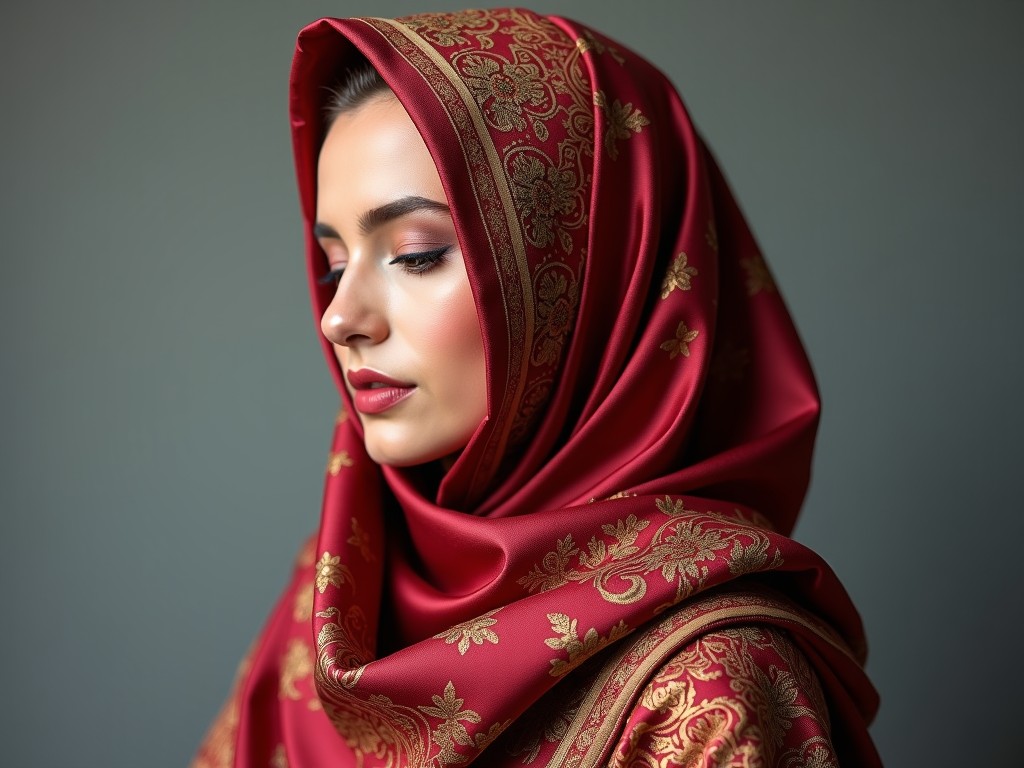
Designer Satin Head Scarf
A designer satin head scarf is a precision-engineered textile accessory fabricated from continuous filament polyester or silk-blend satin weave, designed for consistent drape, low-friction surface
Designer Satin Head Scarf
A designer satin head scarf is a precision-engineered textile accessory fabricated from continuous filament polyester or silk-blend satin weave, designed for consistent drape, low-friction surface interaction, and dimensional stability under repeated handling. Unlike casual fashion scarves, these are manufactured to tight tolerances for weight (typically 45–65 g/m²), thread count (120–180 TCI), and colorfastness (ISO 105-B02 ≥ 4), ensuring reliable performance in professional styling, theatrical production, and high-end retail environments where material predictability reduces waste and rework.
Material Construction and Performance Characteristics
The satin weave structure features a 4/1 or 5/1 float pattern, where warp threads dominate the face surface to create a smooth, lustrous finish with a coefficient of friction below 0.15 against skin and hair—critical for preventing snagging and minimizing traction alopecia during extended wear. Filament yarns (typically 150D–300D polyester or 20D–30D silk) are selected for tenacity (>4.5 cN/tex) and elongation at break (15–25%), providing resilience against tearing during folding, tying, or pinning without compromising the soft hand feel. Dyeing employs disperse or acid dyes at 130°C for polyester or 100°C for silk blends, achieving wash fastness of 4–5 and light fastness of 4+ under ISO 105-B02, ensuring color integrity after 20+ commercial launderings.
Dimensional Specifications and Tolerances
Standard dimensions are engineered for versatility across styling techniques: square formats range from 50×50 cm to 90×90 cm, while rectangular variants measure 180×50 cm or 200×70 cm, allowing for full-head wraps, turbans, or accent folds. Tolerances are held to ±3 mm in length and width during cutting, verified via laser-guided die systems, to ensure pattern alignment in printed designs and consistent fringe or hem execution. Hemming employs a 3mm double-fold with 10–12 stitches/cm using polyester core-spun thread, delivering tensile strength >18 N/cm at the seam—critical for preventing unraveling in high-use scenarios such as dance, performance, or daily professional wear.
Customization Options for Industrial Applications
Customization is driven by end-use requirements: corporate clients may specify Pantone-matched colors with lab-dipped samples for brand consistency, while theatrical houses request UV-reactive or phosphorescent treatments compliant with EN 71-3 safety standards for children’s accessories. Printing methods include digital sublimation (for polyester) or screen printing (for silk blends), achieving resolution ≥300 dpi with ink penetration >80% of yarn cross-section to prevent surface cracking. Additional options include woven jacquard logos (5–12 mm height), anti-static finishes (surface resistivity <10¹¹ Ω), or mild antimicrobial treatments (ZnPPT-based, 50–100 ppm) for healthcare or hospitality environments where hygiene and material longevity are procurement priorities.
Quality Control and Inspection Protocol
Each production lot undergoes 100% visual inspection under 5000 lux daylight simulation (D65) for shade variation, print registration, and surface defects such as snags, oil spots, or mispicks—defects are classified per ASTM D5430 and limited to AQL 1.0 for major and 2.5 for minor. Dimensional stability is tested via AATCC 135: samples are washed at 40°C, tumble dried, and measured for skew and torque; acceptable skew is <3° and torque <2%. Colorfastness to rubbing (wet/dry) is verified per ISO 105-X12, with minimum grade 4 required for professional use. Final audits include pilling resistance (ISO 12945-2, ≥3–4 after 5000 cycles) and seam strength validation to ensure conformity with stated performance claims.
| Property | Typical Value | Test Standard |
|---|---|---|
| Weight (gsm) | 45–65 | ASTM D3776 |
| Thread Count (TCI) | 120–180 | ASTM D3775 |
| Tensile Strength (warp/weft) | 25–35 / 18–25 N/cm | ASTM D5034 |
| Colorfastness to Washing | 4–5 | ISO 105-C06 |
| Seam Strength | >18 N/cm | ASTM D1683 |
| Skew After Washing | <3° | AATCC 135 |
Applications in Professional and Industrial Settings
In theatrical and film production, designer satin head scarves are selected for their light-reflective properties under stage lighting—specular gloss units (GSU) >70 at 60° angle enhance facial illumination without requiring additional makeup or lighting adjustments, reducing preparation time. For corporate uniform programs, the low-pilling surface and resistance to perspiration-induced staining (tested per AATCC 15) maintain appearance through 50+ wear cycles, lowering replacement costs versus cotton or rayon alternatives. In healthcare or food service environments, antimicrobial-treated variants inhibit odor-causing bacterial growth on the fabric surface, supporting hygiene protocols where head coverings are mandatory and laundered industrially at 75°C.
Retail buyers and distributors benefit from consistent foldability and drape recovery—measured via cantilever bend test (ASTM D1388)—ensuring scarves retain presentation quality after display handling or customer trial, reducing markdowns due to creasing. The fabric’s low static generation (<100 volts after conditioning at 21°C, 65% RH) prevents clinging to synthetic hairpieces or uniforms, a frequent complaint with nylon or acrylic substitutes. These technical attributes directly address procurement risks related to inconsistent performance, premature degradation, or user discomfort in high-volume, high-expectation environments.
Ordering and Lead Time Information
Minimum order quantities start at 100 units for standard colors and 500 units for custom Pantone matches or printed designs, reflecting setup efficiency in dyeing and printing lines. Sample production requires 5–7 business days after color approval, with lab drikes or strike-offs provided for spectral reflectance verification. Bulk production lead times are 14–21 days for stock fabrics and 25–35 days for custom orders, inclusive of cutting, sewing, inspection, and packaging. Export shipments use moisture-barrier polybags (50μm) inside corrugated cartons with edge protection, tested to ISTA 3A standards to prevent humidity-related staining or mildew during transit—critical for maintaining quality in tropical or long-haul logistics.
To request a technical datasheet, spectral reflectance report, or schedule a sample evaluation for your specific application, contact our technical sales team. Provide details on intended use, required dimensions, color specifications, and any functional finishes (e.g., antimicrobial, anti-static) to receive a precise quotation and lead time confirmation.
Contact Technical Sales for Specification SupportProducts
Related Products
News
Related News

2026-11-02
Cotton Voile Scarf Manufacturing and Performance Analysis how to make a cotton voile scarfCreating a professional-grade cotton voile scarf requires a precise balance of textile engineering and artisanal finishing. Unlike standard cotton weaves, voile is defined by its p···

2026-10-28
chiffon hijab Technical Production and Performance AnalysisSelecting the right fabric for a hijab involves a delicate balance between modesty, breathability, and aesthetic drape. For many women in Southeast Asia and the Middle East, the ma···

2026-10-26
custom silk scarf textile manufacturing and performance analysisSelecting a high-quality scarf is no longer just about color matching; it is an exercise in understanding how textile weight, drape, and print scale interact with individual facial···
