Custom Satin Silk Square Scarf






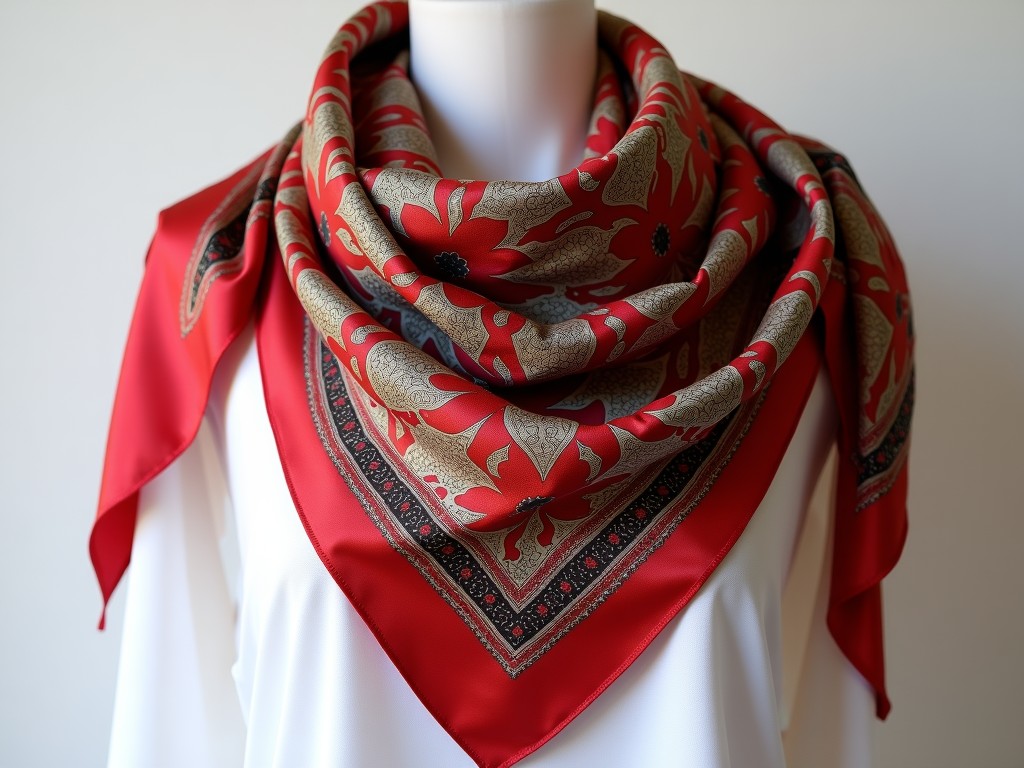
Custom Satin Silk Square Scarf
A custom satin silk square scarf is a precision textile product engineered for applications requiring controlled drape, consistent luster, and dimensional stability under repeated handling. Unlike
Custom Satin Silk Square Scarf
A custom satin silk square scarf is a precision textile product engineered for applications requiring controlled drape, consistent luster, and dimensional stability under repeated handling. Unlike generic fashion scarves, industrial-grade versions are manufactured to meet specific technical parameters including thread count, weight tolerance, and colorfastness, making them suitable for branded merchandise, uniform accents, or high-end packaging linings where appearance and durability must align with functional requirements.
Material Construction and Technical Specifications
The foundation of a custom satin silk square scarf lies in its weave structure and fiber composition. Satin weave, characterized by four or more fill yarns floating over a single warp yarn (or vice versa), creates the signature smooth, reflective surface by minimizing light-scattering interlacings. For industrial use, mulberry silk filament is typically selected due to its uniform diameter (10–14 μm), high tensile strength (3.0–5.0 g/den), and consistent refractive index, which together ensure even luster and resistance to surface distortion during folding or pressing.
Fabric weight is controlled within tight tolerances—commonly 8–12 momme (30–45 g/m²)—to balance drape with durability. Lower weights risk translucency and snagging; higher weights compromise the fluid hand essential to scarf applications. Thread count, measured as ends and picks per inch, typically ranges from 120×120 to 160×160, directly influencing surface smoothness and opacity. Dye penetration is optimized through pre-scouring and controlled pH baths to achieve ISO 105-B02 colorfastness ratings of 4 or higher for light and wash, critical for long-term appearance retention.
Dimensional Accuracy and Edge Finishing
Square scarves demand precise dimensional control to ensure symmetry when folded, draped, or displayed. Industrial cutting tolerances are maintained within ±1 mm per side using heated ultrasonic or laser systems that seal edges simultaneously to prevent fraying. This is critical for applications such as uniform accessories or gift packaging, where misalignment exceeds 2 mm is visually detectable and may trigger rejection in quality gates.
Edge finishes are selected based on end-use demands. A rolled hem, formed by folding the edge 2–3 mm and stitching with 60–80 wt polyester thread, provides a soft, flexible border suitable for skin contact. Alternatively, a heat-sealed edge using ultrasonic welding creates a permanent, 0.5-mm-wide bond without thread, eliminating lint generation and improving resistance to delamination—preferred in cleanroom-adjacent environments or when the scarf is laminated to rigid substrates.
Customization Parameters and Process Control
Customization extends beyond color and size to include technical attributes that affect performance. Clients specify momme weight, thread count, and dye lot consistency (ΔE < 1.5 under D65 lighting) to ensure batch-to-batch uniformity. For corporate branding, Pantone-matched dyes are applied using exhaust or pad-steam methods, with fixation verified via crocking (AATCC 8) and perspiration (AATCC 15) tests. Custom jacquard weaving allows for integrated logos or patterns without surface printing, preserving the scarf’s hand and avoiding cracking or peeling over time.
Size increments are typically offered in 2 cm steps from 40×40 cm to 90×90 cm, with squareness verified by measuring diagonal variance (< 3 mm). Custom shapes—such as rounded corners or notched edges—require CNC die-cutting or laser profiling, with edge sealing reapplied post-cut to maintain integrity. All customizations are documented in a technical spec sheet reviewed prior to sample approval, reducing the risk of misinterpretation during production.
Quality Inspection and Validation
Inspection protocols focus on measurable defects that impact function or appearance. Fabric is examined under 500 lux illumination at 45° angle for surface flaws: skipped picks, broken filaments, or dye streaks exceeding 0.5 mm in width are flagged. Dimensional checks occur at three points per scarf using calibrated optical comparators. Color consistency is validated via spectrophotometer across five zones (center, four corners), with Delta-E values recorded and compared against approved master.
Handling tests simulate end-use conditions: 100-fold cycles assess crease recovery and surface abrasion; pilling resistance is evaluated per ASTM D4976 after 5,000 Martindale cycles. For scarves intended for prolonged wear, burst strength (ASTM D3786) and seam slippage (ASTM D434) are tested to ensure durability under stress. All results are compiled into a batch-specific QC report, traceable to loom and dye lot numbers.
Applications in Industrial and Commercial Contexts
Custom satin silk square scarves serve functional roles beyond decoration. In luxury goods packaging, they act as protective interleaves between hard surfaces (e.g., watch cases, jewelry trays), preventing micro-scratches due to their low coefficient of friction (0.2–0.3 against polished metal) and non-abrasive surface. Their moisture regain (~11%) allows mild humidity buffering, reducing condensation risks in enclosed packaging during transit.
In corporate uniform programs, scarves function as identifiable accents where colorfastness and shape retention are critical. Unlike printed alternatives, woven or fully dyed silk maintains hue integrity under repeated dry cleaning (per ISO 3175-2) and UV exposure, supporting brand consistency over 12–24 month wear cycles. Their low thermal conductivity (0.04 W/m·K) provides comfort in temperature-varying environments without adding bulk.
High-end print and publishing houses use these scarves as protective covers for limited-edition books or portfolios, where the fabric’s anti-static properties (surface resistivity < 10¹¹ Ω) prevent dust attraction to delicate paper or vellum. The combination of dimensional precision, chemical stability, and tactile quality makes them a preferred material when presentation must endure handling without degradation.
Comparison: Satin Silk vs. Alternative Materials
When evaluating materials for square scarves, technical differences in structure and performance become decisive. Polyester satin offers lower cost and higher wrinkle resistance but exhibits higher thermal retention (0.15 W/m·K) and static buildup, limiting comfort in extended wear. Its refractive index produces a harder, less diffusive luster compared to silk’s soft glow. Acetate mimics silk’s drape but has lower tensile strength (1.2–1.8 g/den) and poor alkali resistance, making it unsuitable for environments requiring frequent washing.
Cotton voile or lawn provides breathability but lacks the inherent luster and fluid drape of silk satin; achieving comparable smoothness requires calendering, which washes out over time. Its higher moisture regain (7–8%) increases drying time and susceptibility to mildew in humid storage. For applications demanding both visual premium and long-term dimensional stability—such as reusable gift accessories or archival interleaving—mulberry silk satin remains the technically optimal choice despite higher material cost.
| Property | Satin Silk (Mulberry) | Polyester Satin | Acetate Satin |
|---|---|---|---|
| Tensile Strength (g/den) | 3.0–5.0 | 4.0–6.0 | 1.2–1.8 |
| Moisture Regain (%) | 10–12 | 0.4–0.8 | 6–8 |
| Thermal Conductivity (W/m·K) | 0.04 | 0.15 | 0.05 |
| Surface Resistivity (Ω) | < 10¹¹ | < 10¹³ | < 10¹² |
| UV Stability (ISO 105-B02) | 4–5 | 4–5 | 2–3 |
Packaging and Logistics Considerations
To preserve surface integrity during transit, scarves are folded using jigs that maintain exact geometry and reduce crease formation. Each unit is wrapped in acid-free tissue (pH 7–8.5) to prevent dye transfer or yellowing, then placed in polyethylene bags with <50 ppm volatile organic compounds to avoid off-gassing. For bulk shipments, cartons are lined with corrugated board and secured with desiccant packs (silica gel, 5 g per m³) to maintain relative humidity below 50%, mitigating risks of mold or fiber weakening.
Flat packing is standard for scarves under 60×60 cm; larger formats may be rolled on acid-free tubes (diameter ≥5 cm) to avoid sharp creases. Carton markings include handling symbols (umbrella, upward arrows) and QR codes linking to batch-specific QC data. Export documentation includes fiber content declarations (per ISO 1833) and care labeling compliant with ISO 3758, ensuring traceability and regulatory alignment for international distribution.
Ordering and Technical Support
Initiating a custom satin silk square scarf project requires submission of a technical brief specifying: intended use (e.g., packaging, uniform, gift), required dimensions, momme weight range, color references (Pantone or physical swatch), edge finish preference, and quantity. Sample development typically takes 7–10 business days after receipt of approved artwork and material confirmation, with lab-dips provided for color approval. Production lead times range from 14–21 days for orders under 500 units, scaling linearly with volume and complexity.
Engineering support includes guidance on material selection based on environmental exposure (UV, humidity, abrasion), optimization of fold patterns for automated insertion, and validation of colorfastness under specific end-use conditions (e.g., repeated dry cleaning, sunlight exposure). All technical documentation—including spec sheets, test reports, and material safety data—is provided upon request. To discuss your requirements or request a sample evaluation, visit our technical inquiry page: Contact Our Technical Team.
Products
Related Products
News
Related News

2026-11-02
Cotton Voile Scarf Manufacturing and Performance Analysis how to make a cotton voile scarfCreating a professional-grade cotton voile scarf requires a precise balance of textile engineering and artisanal finishing. Unlike standard cotton weaves, voile is defined by its p···

2026-10-28
chiffon hijab Technical Production and Performance AnalysisSelecting the right fabric for a hijab involves a delicate balance between modesty, breathability, and aesthetic drape. For many women in Southeast Asia and the Middle East, the ma···

2026-10-26
custom silk scarf textile manufacturing and performance analysisSelecting a high-quality scarf is no longer just about color matching; it is an exercise in understanding how textile weight, drape, and print scale interact with individual facial···
