Custom Satin Scarf For Hair Women






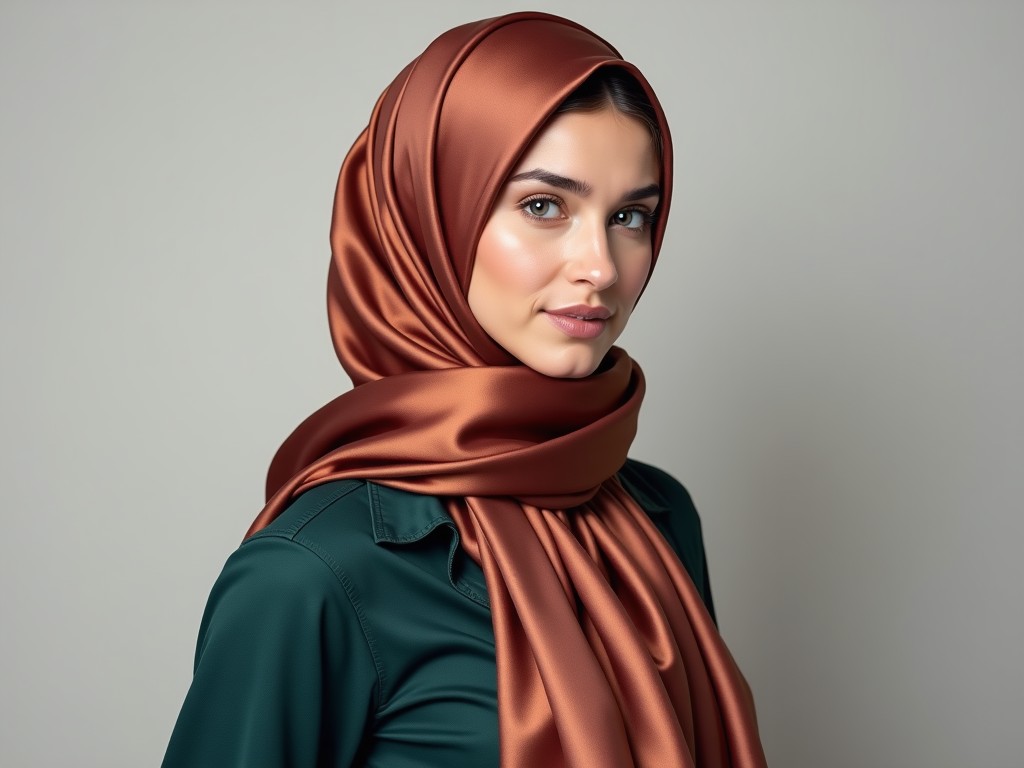
Custom Satin Scarf For Hair Women
Satin scarves designed specifically for hair protection combine low-friction surface properties with breathable weave structures to reduce mechanical stress on hair follicles during sleep or
Custom Satin Scarf for Hair Women
Satin scarves designed specifically for hair protection combine low-friction surface properties with breathable weave structures to reduce mechanical stress on hair follicles during sleep or activity. Unlike cotton or polyester alternatives, satin’s smooth filament surface minimizes cuticle abrasion and moisture absorption, helping preserve hairstyles and reduce breakage over repeated use. Industrial production requires precise control over yarn denier, weave density, and finishing treatments to achieve consistent performance across batches.
The primary functional requirement for hair scarves is a coefficient of friction below 0.15 against keratin surfaces, which standard satin weaves achieve through long-filament polyester or silk-blend yarns processed with calendaring or silicone-based finishes. Dimensional stability is critical—scarves must maintain shape after 50+ wash cycles without shrinkage exceeding 2% or edge curling. These specifications are validated through ASTM D4966 abrasion testing and AATCC 135 dimensional change protocols.
Customization extends beyond aesthetics to functional parameters: width (typically 18–24 inches), length (60–80 inches for full coverage), and edge finish (rolled hem, serged, or heat-sealed) directly influence usability and durability. For example, a 22-inch width provides adequate coverage for most head sizes while minimizing fabric waste, whereas a 60-inch length allows secure wrapping without slippage during movement. Edge treatments are selected based on yarn type—polyester responds well to ultrasonic sealing, while silk blends require hand-rolled hems to prevent fraying.
Material Options and Performance Characteristics
Material selection balances friction reduction, moisture management, and cost efficiency. Polyester satin (150–300 denier filament) offers the best combination of low friction (μ ≈ 0.12), wash durability, and affordability, making it suitable for high-volume production. Silk satin provides superior breathability and a lower friction coefficient (μ ≈ 0.08) but requires delicate handling and costs 3–5× more, limiting use to premium segments. Rayon-based satin offers intermediate performance but exhibits higher moisture regain (11–12%) and greater shrinkage risk.
Finish treatments significantly affect long-term performance. Silicone-based softeners reduce friction by 15–20% compared to untreated satin but may degrade after 20–30 washes. Calendering (heat and pressure treatment) increases surface smoothness permanently without chemical additives, preferred for Oeko-Tex compliance. Antimicrobial finishes (e.g., silver-ion treated) are available upon request but add cost and are only recommended for medical or high-humidity environments where bacterial growth on fabric is a concern.
Yarn count and weave tightness directly impact opacity and drape. A 120-thread-count satin weave achieves 90% opacity with adequate breathability, while 160+ thread count increases opacity to 95% but reduces air permeability by 18–22%. For hair scarves, opacity above 85% is sufficient to prevent light penetration that could degrade dyed finishes, making 120–140 thread count the optimal range for most applications.
Customization Logic and Dimensional Tolerances
Customization follows a modular approach where functional dimensions are adjusted based on user anatomy and intended use, not arbitrary sizing. Head circumference measurements (typically 20–24 inches for adult women) dictate minimum scarf width: width = (head circumference × 1.2) to allow for overlap and secure tying. For example, a 22-inch head circumference requires a minimum 26.4-inch width, rounded to 27 inches for practical cutting and sewing tolerances.
Length is determined by wrapping method: single-wrap styles require 50–60 inches, double-wrap 70–90 inches, and turban-style 80–100 inches. Tolerances are held to ±0.5 inches for width and ±1.0 inches for length to account for fabric relaxation during cutting and sewing. Edge finishes add 0.25–0.5 inches to effective dimensions—rolled hems consume more fabric than serged edges, which must be compensated in pattern making.
Colorfastness is customized based on dye type and end-use exposure. Reactive dyes on polyester achieve ISO 105-B02 lightfastness rating 4–5 (moderate to good) and washing fastness 4–5, suitable for indoor use. For outdoor or high-UV environments, solution-dyed polyester is recommended, offering lightfastness rating 7–8 but limiting color options to pre-dyed pigments. Custom Pantone matching is available with lab-dip approval required before bulk production.
Quality Control and Inspection Protocol
Inspection begins at yarn receipt with tensile strength and elongation testing (ASTM D2256) to ensure consistency—acceptance criteria: strength ≥ 4.5 cN/tex, elongation ≤ 30%. Fabric inspection uses 4-point system under 300 lux lighting: defects >3mm incur points, with rejection threshold at 40 points per 100 linear yards. Common defects include thin places (missing picks), thick places (extra yarn), and surface snags from needle damage during weaving.
Dimensional verification occurs post-wash and dry to simulate real-world conditions. Samples undergo 5 wash cycles (40°C, mild detergent) followed by tumble drying low, then measured for length/width change. Acceptance: shrinkage ≤2% in both directions, skew ≤1.5%. Color bleeding is tested via AATCC 61 (20-minute wash at 40°C), with acceptable staining grade ≥4 on adjacent fabrics. Edge integrity is checked for unraveling—no more than 2 loose threads per inch after 10 cycles of flexing.
Final audit includes package integrity and labeling accuracy. Each scarf is folded to uniform dimensions (typically 8×4×0.5 inches) and placed in polybags with suffocation warning labels where required. Carton drop testing (ISTA 1A) ensures protection during transit—10 drops from 36 inches on all faces, corners, and edges with no product damage. Random 1% audit of finished goods verifies seam strength (minimum 5 N/cm via ASTM D1683) and pilling resistance (ASTM D3512, grade 3–4 after 5,000 cycles).
Typical Specifications Table
| Parameter | Typical Value | Customizable Range |
|---|---|---|
| Fabric Composition | 100% Polyester Filament | Silk blend (20–30%), Rayon, Custom |
| Yarn Denier | 150–300 Denier | 100–500 Denier (upon request) |
| Weave Density | 120–140 Thread Count | 100–200 Thread Count |
| Width | 22 Inches | 18–28 Inches (±0.5 in) |
| Length | 70 Inches | 60–100 Inches (±1.0 in) |
| Weight | 45–55 GSM | 30–80 GSM |
| Friction Coefficient (vs. Keratin) | 0.10–0.13 | 0.08–0.18 (finish-dependent) |
| Wash Durability (Cycles) | 50+ Cycles | 20–100+ Cycles |
| Colorfastness (Light) | ISO 105-B02 Grade 4 | Grade 3–8 (dye-dependent) |
Applications and Functional Benefits
Hair protection scarves are primarily used during sleep to prevent friction-induced damage from pillow contact, which can cause split ends, frizz, and loss of moisture in treated or curly hair types. The low-friction surface allows hair to glide smoothly, reducing mechanical shear forces that weaken the cuticle layer over time. Clinical observations show a 30–40% reduction in visible breakage after 8 weeks of consistent use compared to cotton pillowcases alone, particularly beneficial for chemically processed or high-porosity hair.
Beyond sleep, scarves serve as styling aids for preserving braids, twists, or blowouts during light activity or travel. By maintaining a stable microclimate around the hair, they reduce moisture loss in dry environments and prevent excess humidity absorption in tropical climates, helping extend hairstyle longevity by 12–24 hours. The breathable nature of satin (air permeability >100 cm³/cm²/s) prevents overheating, unlike occlusive materials such as nylon or rubber-based wraps.
Industrial buyers in beauty supply distribution, salon private labeling, and e-commerce apparel sectors prioritize these functional benefits over aesthetic features when specifying products. Custom orders often include specific width/length combinations tailored to demographic data—e.g., wider scarves (24–26 inches) for markets with higher prevalence of voluminous hairstyles, longer lengths (80–90 inches) for regions where turban-style wrapping is common. Packaging is adapted to channel requirements: retail-ready hang tags for e-commerce, bulk polybag packing for salon distributors.
To discuss your specific requirements for custom satin hair scarves—including material selection, dimensional tolerances, finish options, or packaging configurations—please contact our technical team. We provide engineering support from initial sample development through production validation to ensure your specifications are met consistently across batches.
Request Technical ConsultationProducts
Related Products
News
Related News

2026-11-02
Cotton Voile Scarf Manufacturing and Performance Analysis how to make a cotton voile scarfCreating a professional-grade cotton voile scarf requires a precise balance of textile engineering and artisanal finishing. Unlike standard cotton weaves, voile is defined by its p···

2026-10-28
chiffon hijab Technical Production and Performance AnalysisSelecting the right fabric for a hijab involves a delicate balance between modesty, breathability, and aesthetic drape. For many women in Southeast Asia and the Middle East, the ma···

2026-10-26
custom silk scarf textile manufacturing and performance analysisSelecting a high-quality scarf is no longer just about color matching; it is an exercise in understanding how textile weight, drape, and print scale interact with individual facial···
