Curly Hair Satin Sleeping Scarf






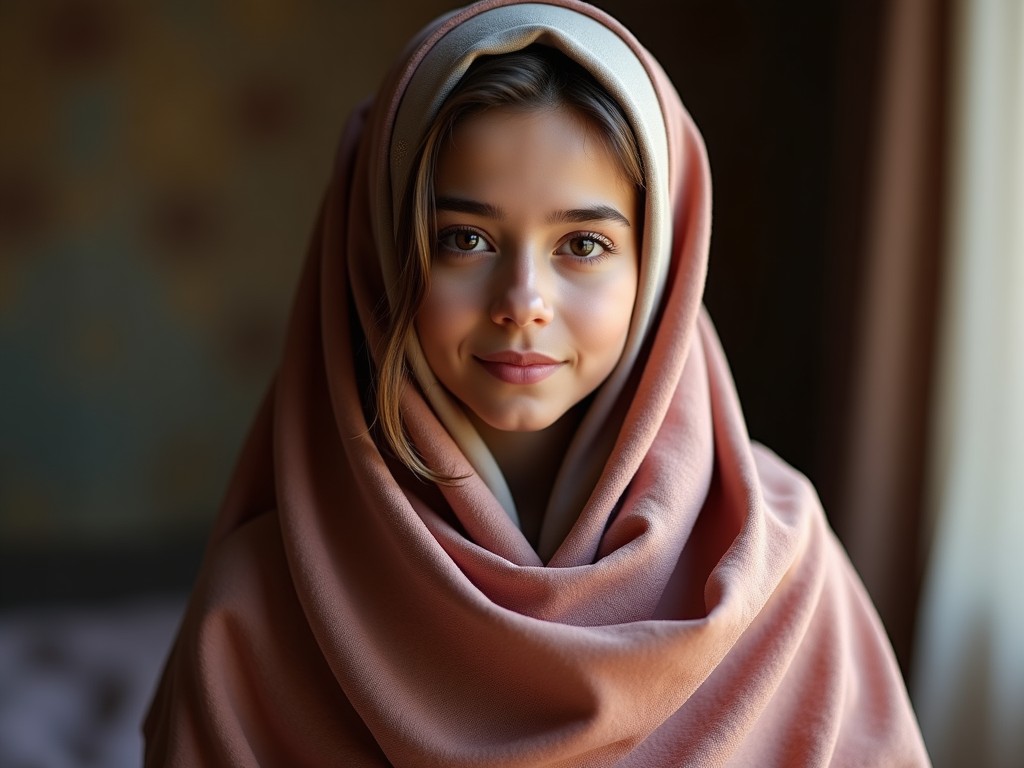
Curly Hair Satin Sleeping Scarf
A curly hair satin sleeping scarf is engineered to reduce mechanical friction between hair strands and pillow surfaces during sleep. For individuals with curly, coily, or textured hair types,
Curly Hair Satin Sleeping Scarf
A curly hair satin sleeping scarf is engineered to reduce mechanical friction between hair strands and pillow surfaces during sleep. For individuals with curly, coily, or textured hair types, prolonged contact with cotton or polyester fabrics can cause cuticle abrasion, leading to increased breakage, frizz, and loss of curl definition over time. This product addresses these issues through material selection and geometric design optimized for nocturnal hair protection.
The primary function relies on two key material properties: low coefficient of friction and moisture retention. Satin weave structures, particularly those made from filament polyester or silk, exhibit significantly lower frictional resistance compared to plain weave cotton—typically reducing drag forces by 40-60% under dynamic loading conditions. Simultaneously, the hydrophobic nature of synthetic satin minimizes transepidermal water loss from the hair shaft, helping maintain hydration levels critical for curl elasticity and pattern retention.
Design considerations include scarf dimensions, edge finishing, and closure mechanisms. Optimal coverage requires sufficient surface area to encapsulate the entire hair volume without creating pressure points. Standard dimensions range from 60x60 cm to 70x70 cm, allowing multiple wrapping techniques (pineapple, turban, or loose drape) while accommodating varying hair lengths and densities. Edges are typically hemmed or overlocked to prevent fraying, which could introduce abrasive fibers into the sleep environment.
Material Composition and Performance Characteristics
The performance of a satin sleeping scarf is directly determined by its fiber type, yarn count, and weave density. Filament polyester (often labeled as "satin" in consumer markets) provides a balance of durability, cost-effectiveness, and consistent frictional properties. Typical specifications include 75D/144F filament yarns woven at 120 picks per inch (PPI) and 90 ends per inch (EPI), resulting in a fabric weight of approximately 80-100 GSM. This construction yields a smooth surface with minimal fiber protrusion, reducing the likelihood of hair snagging.
Alternative materials include charmeuse silk (natural protein fiber) and rayon-based satin. Silk offers superior moisture-wicking and thermal regulation but comes at a 3-5x cost premium and requires delicate care. Rayon satin provides a middle ground in feel and price but exhibits lower tensile strength and potential shrinkage after washing. For industrial buyers prioritizing longevity and consistent performance, filament polyester remains the most practical choice due to its resistance to UV degradation, hydrolysis, and repeated laundering cycles.
Colorfastness and dye stability are critical for long-term usability. Reactive or disperse dyes used in polyester satin must achieve a minimum rating of 4 on the ISO 105-B02 scale for lightfastness and 3-4 on the ISO 105-C06 scale for washing fastness to prevent pigment transfer to hair or bedding. Post-production treatments such as heat setting stabilize the weave structure, reducing dimensional changes during use and maintaining the fabric’s low-friction characteristics over time.
Design Specifications and Functional Geometry
Beyond material properties, the scarf’s effectiveness depends on its ability to conform to the head and hair volume without exerting compressive forces that could impair circulation or cause discomfort. The ideal shape is a square or near-square rectangle, allowing symmetric folding and secure wrapping. Aspect ratios deviating significantly from 1:1 (e.g., 1:1.5) create uneven tension distribution, increasing the risk of slippage or localized pressure points during nocturnal movement.
Edge treatment directly impacts user safety and product lifespan. Unfinished edges release loose fibers that can embed in hair or irritate the scalp. Common finishing methods include:
- Double-fold hem (3mm width) with lockstitch sewing—provides durable edge retention
- Overlock (serged) edge—prevents fraying with minimal added bulk
- Ultrasonic welding (for synthetic fibers only)—creates a seamless, fray-resistant bond
Closure mechanisms, when present, must avoid creating hard contact points. Elastic bands, if used, should be covered with fabric sleeves to prevent direct skin contact. Adjustable toggles or ties made from the same satin material allow customization of fit without introducing metal or plastic components that could damage hair or disrupt sleep quality. For bulk procurement, scarves without closures are often preferred due to simplified manufacturing and universal applicability across head sizes.
Comparative Performance: Satin vs. Alternative Sleep Fabrics
| Property | Satin (Polyester Filament) | Cotton Percale | Jersey Knit (Cotton/Poly) |
|---|---|---|---|
| Coefficient of Friction (hair-fabric) | 0.15-0.20 | 0.35-0.45 | 0.25-0.30 |
| Moisture Regain (% at 65% RH) | 0.4-0.6 | 7.0-8.5 | 4.0-5.5 |
| Tensile Strength (MD/CD, N/tex) | 45-55 | 30-40 | 25-35 |
| Wash Cycles to 10% Property Degradation | 50+ | 20-30 | 15-25 |
The table above compares key performance indicators relevant to nocturnal hair protection. Satin’s low coefficient of friction directly translates to reduced mechanical stress on the hair cuticle during movement. Its low moisture regain prevents the fabric from acting as a wick that draws hydration from the hair shaft—a critical factor for maintaining curl integrity in humid or dry environments. Superior tensile strength and wash durability ensure consistent performance over extended use cycles, reducing replacement frequency and total cost of ownership for institutional or retail buyers.
Jersey knit fabrics, while softer than plain weave cotton, still exhibit higher friction and greater moisture absorption than satin due to their looped structure, which increases surface area and fiber exposure. Cotton percale, despite its tight weave, lacks the surface smoothness of satin and retains significantly more moisture, making it less suitable for overnight hair protection applications where minimizing both friction and hydration loss is essential.
Quality Control and Manufacturing Considerations
Consistent performance requires tight control over raw material specifications and in-process parameters. Yarn uniformity is assessed using Uster statistics, with a target coefficient of variation (CV%) below 8% for both linear strength and elongation to prevent weak points in the fabric. Greige fabric inspection includes picks per inch (PPI) and ends per inch (EPI) verification using a counting glass, with tolerances typically set at ±3 picks/ends per inch to ensure dimensional stability and surface consistency.
Post-weaving processes such as scouring, bleaching, and dyeing must be monitored for pH and temperature control to avoid fiber degradation. Polyester yarns are susceptible to hydrolysis above pH 9 and temperatures exceeding 80°C, which can reduce tensile strength by up to 20% over time. Heat setting temperatures are maintained between 180-200°C for 30-60 seconds to stabilize the crystalline structure without causing yellowing or embrittlement.
Final inspection includes dimensional stability testing after 5 wash cycles (per AATCC 135), colorfastness to washing and light (ISO 105-C06 and ISO 105-B02), and seam strength evaluation (ASTM D1683). For bulk orders, acceptable quality limits (AQL) are commonly set at 2.5% for major defects (e.g., holes, open seams, significant shade variation) and 4.0% for minor defects (e.g., loose threads, slight skewing). These protocols ensure that each unit delivers the expected low-friction, moisture-retentive performance required for effective curly hair protection during sleep.
Applications and Use Case Suitability
The primary application is nocturnal protection for individuals with curly, coily, wavy, or textured hair types (typically classified as Type 2A-4C in the Andre Walker system). These hair structures are more susceptible to mechanical damage due to their elliptical cross-section and tendency to interlock, making them prone to tangling and breakage when rubbed against rough surfaces. By minimizing friction and preserving moisture, the satin scarf helps maintain curl pattern definition, reduce split ends, and extend the time between wash-and-style cycles.
Secondary applications include use during deep conditioning treatments, where the scarf helps retain heat and prevent product transfer to bedding, and as a protective barrier during chemical processes such as relaxer or dye application (when used as a base layer under processing caps). In clinical or therapeutic settings, similar satin head coverings are sometimes recommended for patients undergoing chemotherapy to reduce scalp irritation and hair friction during sleep, although medical efficacy claims require separate validation.
For distributors and OEM buyers, the product’s simplicity enables integration into broader hair care kits or as a private-label offering. Its low SKU complexity—typically defined by size, color, and edge finish—supports efficient inventory management. Unlike electronics or mechanical components, there are no firmware updates, calibration requirements, or compatibility matrices to manage, simplifying after-sales support and warranty processing.
For technical specifications, customization options, or procurement inquiries regarding curly hair satin sleeping scarves, please contact our industrial sales team.
Request Quotation or Technical Data SheetProducts
Related Products
News
Related News

2026-11-02
Cotton Voile Scarf Manufacturing and Performance Analysis how to make a cotton voile scarfCreating a professional-grade cotton voile scarf requires a precise balance of textile engineering and artisanal finishing. Unlike standard cotton weaves, voile is defined by its p···

2026-10-28
chiffon hijab Technical Production and Performance AnalysisSelecting the right fabric for a hijab involves a delicate balance between modesty, breathability, and aesthetic drape. For many women in Southeast Asia and the Middle East, the ma···

2026-10-26
custom silk scarf textile manufacturing and performance analysisSelecting a high-quality scarf is no longer just about color matching; it is an exercise in understanding how textile weight, drape, and print scale interact with individual facial···
