China Satin Head Scarf Black Hair






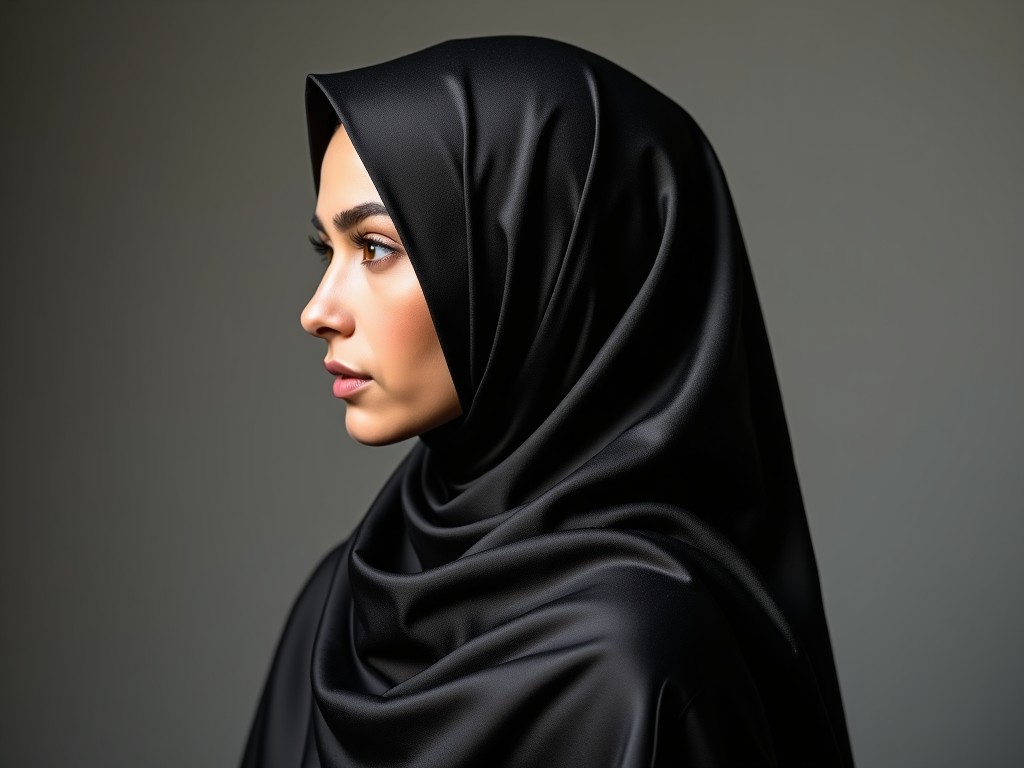
China Satin Head Scarf Black Hair
This document details the technical characteristics of satin head scarves manufactured in China for black hair applications, focusing on material properties, dimensional stability, and performance
China Satin Head Scarf for Black Hair: Industrial Specification Guide
This document details the technical characteristics of satin head scarves manufactured in China for black hair applications, focusing on material properties, dimensional stability, and performance factors relevant to bulk procurement and textile engineering evaluation.
Material Composition and Surface Properties
The scarf utilizes 100% polyester filament yarn with a satin weave structure, producing a smooth, low-friction surface on the face side. The yarn denier typically ranges from 75D to 150D, selected to balance drape, durability, and tactile comfort against hair fibers. The reverse side exhibits a matte finish due to the inherent structure of satin weave, which minimizes light reflection and reduces visual glare under industrial lighting.
Dimensional Stability and Construction Tolerances
Standard dimensions are 60 cm × 60 cm (±2 cm tolerance) for square formats and 70 cm × 180 cm (±3 cm) for rectangular variants, measured under ASTM D4964 conditioning (21°C, 65% RH). Hemming employs a 3-fold blind stitch with 2.5 mm stitch density to prevent fraying while maintaining a flat profile. Shrinkage after 5 home launderings (40°C, mild detergent) remains below 3% in both warp and weft directions, verified via iterative wash testing per AATCC 135.
Colorfastness and Dye Performance
Black coloration uses high-exhaustion disperse dyes formulated for polyester, achieving a minimum rating of 4 on the Gray Scale for staining after AATCC 61 (2A) accelerated laundering. Lightfastness meets Level 4+ on the Blue Wool Scale under 20 AFU xenon arc exposure, critical for maintaining color integrity in environments with indirect sunlight or fluorescent lighting. Surface resistivity measures between 10^9 and 10^11 ohms/sq, indicating static-dissipative properties that reduce hair cling and particulate attraction.
Mechanical Performance Characteristics
Tensile strength averages 18.5 N/cm in warp and 16.2 N/cm in weft (ASTM D5034), with elongation at break between 25%–35%, allowing conformability to head contours without inducing tension-induced hair breakage. Abrasion resistance exceeds 15,000 cycles (Martindale, 12 kPa pressure) before visible surface degradation, supporting repeated handling and folding cycles in distribution and end-use scenarios.
Comparison of Standard Variants
| Property | Square Scarf (60×60 cm) | Rectangular Scarf (70×180 cm) |
|---|---|---|
| Weight (gsm) | 45–55 | 45–55 |
| Thread Count (per inch) | 120 warp × 80 weft | 120 warp × 80 weft |
| Folded Volume (per 100 pcs) | 0.025 m³ | 0.060 m³ |
| Recommended Packaging | Polybag (50 pcs) | Flat bundle (25 pcs) |
Applications in Hair Care and Protective Styling
The low coefficient of friction (μ ≈ 0.18–0.22 against keratin) minimizes mechanical stress on hair cuticles during sleep or extended wear, reducing split ends and friction-induced fragility particularly relevant for textured or chemically treated black hair. The dimensional stability ensures consistent coverage without shifting, maintaining protective barrier integrity against pillowcase abrasion and environmental particulates. Industrial buyers in beauty supply distribution prioritize these properties when evaluating bulk textile inputs for private-label hair care accessories.
Quality Control and Inspection Protocol
Incoming yarn is tested for tenacity (≥4.5 g/den) and evenness (CV% <12%). Finished goods undergo 100% visual inspection for dye uniformity, hem alignment, and surface defects under 500 lux illumination. Random sampling (Level II, ANSI/ASQ Z1.4) evaluates colorfastness, dimensional stability, and seam strength. Batch traceability is maintained via lot numbers linking to dye bath, loom settings, and finishing parameters, supporting root-cause analysis in case of field performance queries.
Customization Parameters and Supply Chain Considerations
Yarn denier, width, and hem width are adjustable within ±15% of baseline specifications without requiring new tooling. Custom dye lots require minimum 500 kg substrate weight to ensure shade consistency across production runs. Lead time for standard black satin scarves averages 25–30 days from PO receipt to FOB port, inclusive of 7-day sample approval cycle. Packaging options include individual polybags, bulk flat packs, or cardboard dispenser boxes, all compliant with ISTA 1A vibration and drop test standards for export durability.
For technical datasheets, sample requests, or custom specification inquiries, contact our engineering team via the inquiry portal.
Products
Related Products
News
Related News

2026-11-02
Cotton Voile Scarf Manufacturing and Performance Analysis how to make a cotton voile scarfCreating a professional-grade cotton voile scarf requires a precise balance of textile engineering and artisanal finishing. Unlike standard cotton weaves, voile is defined by its p···

2026-10-28
chiffon hijab Technical Production and Performance AnalysisSelecting the right fabric for a hijab involves a delicate balance between modesty, breathability, and aesthetic drape. For many women in Southeast Asia and the Middle East, the ma···

2026-10-26
custom silk scarf textile manufacturing and performance analysisSelecting a high-quality scarf is no longer just about color matching; it is an exercise in understanding how textile weight, drape, and print scale interact with individual facial···
