Buy Diy Satin Head Scarf






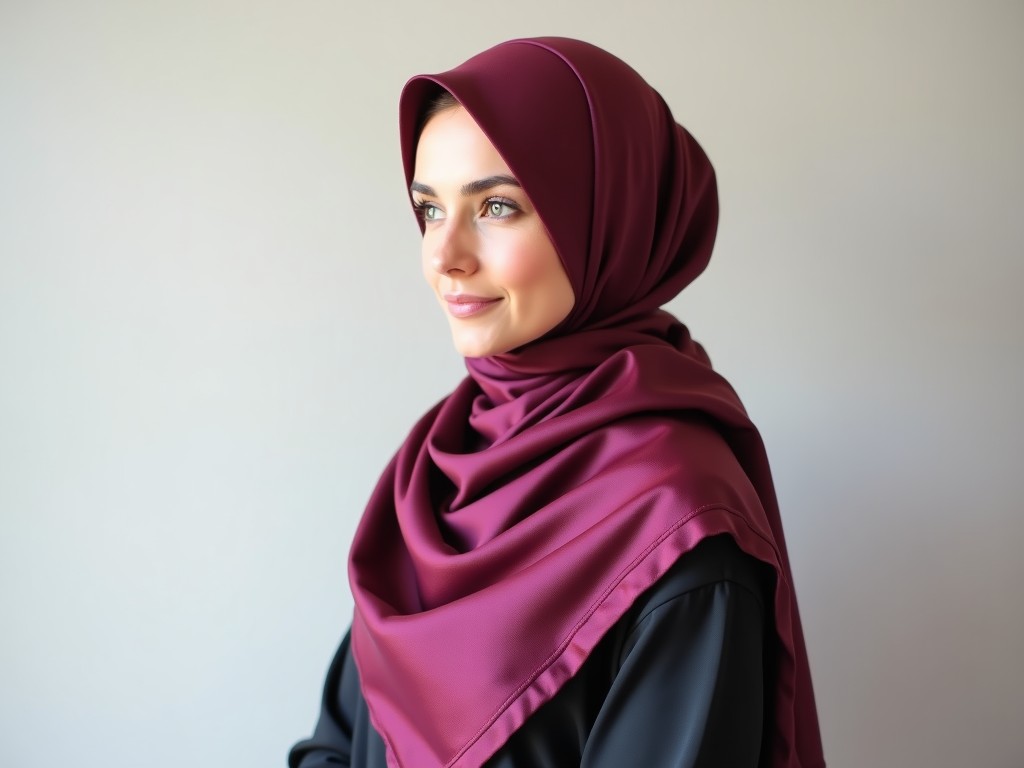
Buy Diy Satin Head Scarf
Satin head scarves designed for do-it-yourself projects offer a balance of smooth surface finish, dimensional stability, and ease of handling during cutting, sewing, and embellishment. Unlike woven
Buy DIY Satin Head Scarf
Satin head scarves designed for do-it-yourself projects offer a balance of smooth surface finish, dimensional stability, and ease of handling during cutting, sewing, and embellishment. Unlike woven cotton or polyester blends, satin weaves produce a lustrous face with reduced surface friction, which affects how the material behaves under needle tension and heat application. Understanding these technical traits helps users select the appropriate weight and width for specific crafting techniques, from basic hemming to intricate appliqué work.
Material Construction and Performance
The satin head scarves available for DIY use are typically constructed from 100% polyester filament yarns woven in a 4-harness satin pattern, resulting in a fabric weight ranging from 60 to 90 GSM depending on yarn denier and pick density. This construction yields a tensile strength of approximately 3.5 to 4.5 N/tex in the warp direction and 2.8 to 3.8 N/tex in the weft, providing sufficient resistance to tearing during seam stress while maintaining drape characteristics essential for headwear. The low moisture regain of polyester (0.4%) ensures dimensional stability under varying humidity conditions, minimizing shrinkage after washing or steaming.
Surface smoothness, measured by coefficient of friction (CoF), typically falls between 0.25 and 0.35 against stainless steel, which reduces needle heat buildup during high-speed sewing and allows for clean topstitching without puckering. The fabric’s thermal stability permits safe use with iron temperatures up to 150°C (300°F) without scorching or gloss loss, a critical factor when applying fusible interfacing or heat-transfer vinyl for decorative elements. These properties collectively support consistent results across multiple washing cycles, with colorfastness to washing rated at Grade 4 or higher under ISO 105-C06 standards.
Dimensional Options and Customization
Standard widths for DIY satin head scarves range from 18 inches to 28 inches, cut to lengths between 60 inches and 80 inches to accommodate various wrapping styles and head circumferences. The fabric is typically sold as full-width bolts or pre-cut panels with raw edges, allowing users to determine hem width based on seam allowance preferences—commonly 1/4 inch for rolled hems or 1/2 inch for double-fold finishes. Edge stability varies with weave tightness; looser constructions may require stabilizers during cutting to prevent fraying, while tighter weaves retain edge integrity longer under handling.
Customization options include dye lot matching for bulk orders, adjustable end finishes (such as tapered or square tips), and the integration of functional elements like internal elastic channels or adjustable toggle closures. For users incorporating embroidery or beadwork, the fabric’s low elongation at break (typically 15–25%) ensures minimal distortion under decorative stitch load, preserving pattern alignment. These specifications are adjustable based on project requirements, with sample evaluation recommended before full-scale cutting to validate hand feel and sewability.
Applications in Craft and Design
These scarves serve as foundational components in millinery, cosplay accessory creation, and cultural garment adaptation due to their ability to conform to curved surfaces without buckling. The fabric’s bias stretch—approximately 15% elongation at 45-degree angle—allows for smooth shaping around the head’s contours when wrapped or pleated, reducing pressure points compared to non-bias-cut materials. This property is particularly valuable in turban-style wraps or headband constructions where even distribution of tension enhances wearer comfort over extended periods.
In decorative applications, the high luster of the satin face provides optimal light reflection for photographic visibility, making it suitable for stage costumes or performance wear where fabric appearance under lighting is critical. The reverse side, while less reflective, offers a matte surface that can be used for contrast stitching or as a base for appliqué layers without visual competition. Users often leverage this dual-surface characteristic to create reversible designs, effectively doubling the utility of a single fabric piece within a project.
Quality Control and Consistency
Manufacturing controls focus on warp tension uniformity during weaving to prevent barre or streaking defects that could affect color consistency across large panels. Each batch undergoes visual inspection under 5000K lighting to detect surface imperfections such as snags, oil spots, or missing picks, with acceptance criteria limiting defects to no more than 2 per square meter. Dimensional stability is verified through relaxed length testing after steam conditioning, ensuring that delivered lengths remain within ±2% of specified values under standard atmospheric conditions (20°C, 65% RH).
Color matching is conducted using spectrophotometer analysis against Pantone or CIELAB standards, with Delta E values kept below 1.5 for bulk consistency—critical when matching scarves to other garments or accessories in a coordinated set. For customers requiring specific shades, lab-dip approval is available prior to production, allowing verification of hue, saturation, and brightness under multiple light sources (D65, TL84, CWF). These procedures reduce the risk of batch-to-batch variation, supporting reliable outcomes in multi-piece projects.
Packaging and Handling
To preserve surface integrity during transit, the satin panels are typically rolled onto rigid tubes with inner diameters of 2–3 inches, wrapped in polyethylene film, and placed in cardboard cartons with corner protection. This method minimizes creasing and abrasion compared to flat folding, which can cause permanent gloss variation along fold lines due to localized pressure. Each roll is labeled with length, width, weight, and care instructions, enabling quick verification upon receipt without unpacking.
Handling recommendations include storing rolls vertically in a cool, dry environment away from direct sunlight to prevent UV-induced yellowing, particularly relevant for pastel or light-colored variants. Before cutting, users are advised to acclimate the fabric to room temperature for 24 hours to equalize moisture content and reduce static cling, which can interfere with precise pattern placement. These practices help maintain the fabric’s original hand and appearance from storage to finished product.
Comparison with Alternative Materials
Compared to cotton voile or chiffon of similar weight, polyester satin offers superior resistance to water absorption and wrinkle recovery, making it more suitable for projects requiring frequent handling or storage in variable conditions. While silk satin provides a softer hand and higher natural luster, its cost and susceptibility to water spotting limit practicality for DIY workflows involving washing or moisture-based techniques like dyeing or steaming. The polyester variant balances performance and affordability, delivering consistent results across repeated use cycles.
Regarding sewability, polyester satin exhibits less seam puckering than nylon-based fabrics under identical thread tension due to its lower thermal expansion coefficient, reducing the need for frequent tension adjustments during long seams. However, it lacks the antimicrobial properties of certain treated natural fibers, so users prioritizing hygiene in wearable applications may consider post-production treatments. These trade-offs inform material selection based on end-use requirements rather than assuming universal superiority.
For technical specifications, sample requests, or custom quotation inquiries regarding DIY satin head scarves, please contact our engineering support team.
Request a Quote or SampleProducts
Related Products
News
Related News

2026-11-02
Cotton Voile Scarf Manufacturing and Performance Analysis how to make a cotton voile scarfCreating a professional-grade cotton voile scarf requires a precise balance of textile engineering and artisanal finishing. Unlike standard cotton weaves, voile is defined by its p···

2026-10-28
chiffon hijab Technical Production and Performance AnalysisSelecting the right fabric for a hijab involves a delicate balance between modesty, breathability, and aesthetic drape. For many women in Southeast Asia and the Middle East, the ma···

2026-10-26
custom silk scarf textile manufacturing and performance analysisSelecting a high-quality scarf is no longer just about color matching; it is an exercise in understanding how textile weight, drape, and print scale interact with individual facial···
