Bandana Satin Head Scarf






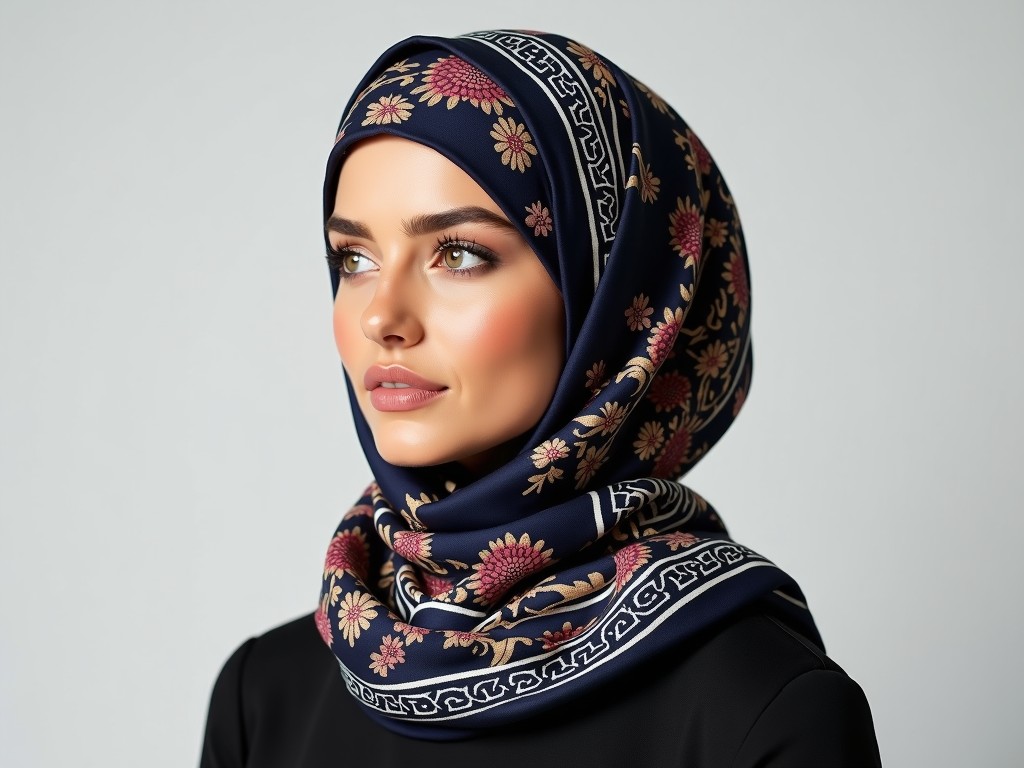
Bandana Satin Head Scarf
A bandana satin head scarf combines the traditional square silhouette of a bandana with the smooth, low-friction surface of satin weave fabric. This construction reduces hair breakage and friction
Bandana Satin Head Scarf
A bandana satin head scarf combines the traditional square silhouette of a bandana with the smooth, low-friction surface of satin weave fabric. This construction reduces hair breakage and friction during wear, making it suitable for industrial environments where prolonged head covering is required. The fabric’s dimensional stability and resistance to pilling support repeated use in demanding conditions.
Material Composition and Construction
The scarf is typically constructed from 100% polyester filament yarn woven in a 4-harness satin pattern, yielding a fabric weight between 80 and 120 GSM. This weave structure creates a lustrous face and a dull reverse, with thread counts ranging from 120 to 160 ends per inch. The synthetic fiber resists moisture absorption, maintaining shape and surface integrity in humid or wet conditions.
Edge finishing options include overlock stitching, heat sealing, or ultrasonic bonding to prevent fraying. These methods maintain edge tensile strength above 18 N/mm after 50 wash cycles at 40°C. The absence of cotton or natural fibers eliminates shrinkage variability, ensuring consistent dimensions across production batches.
Dimensional Specifications
Standard bandana satin head scarves are cut to a square dimension of 55 cm ± 2 mm on each side, measured after relaxation under 0.5 N tension. This size provides sufficient coverage for full hair containment while allowing multiple folding configurations. Tolerances are maintained through die-cutting or laser trimming to minimize material waste and edge distortion.
For specialized applications, custom dimensions ranging from 45 cm to 70 cm are available upon request. Larger sizes accommodate bulky hairstyles or additional layers of protective undergarments, while smaller variants suit constrained workspace environments. All custom cuts retain the same satin weave construction and edge treatment standards.
Performance Characteristics
The satin surface exhibits a coefficient of friction below 0.3 against keratin, reducing mechanical stress on hair follicles during movement. This property is particularly beneficial in settings requiring prolonged wear, such as cleanrooms, food processing lines, or pharmaceutical manufacturing. Low friction also minimizes lint generation, supporting contamination control protocols.
Thermal resistance testing shows the fabric retains structural integrity up to 180°C under dry heat, with no melting or deformation observed. Colorfastness ratings exceed 4 on the grayscale scale after 20 hours of xenon arc exposure, ensuring visual consistency in outdoor or UV-exposed workspaces. These characteristics support reuse cycles without degradation in appearance or function.
Industrial Applications
In semiconductor fabrication facilities, the scarf’s low-lint surface and static-dissipative treatment options help meet ISO 14644-1 Class 5 requirements. Workers wear it under bouffant caps to contain stray hairs without introducing particulate risks. The smooth surface prevents snagging on equipment or wiring during intricate assembly tasks.
Food processing plants utilize the scarf as a secondary barrier over beard nets or hairnets, particularly in ready-to-eat production zones. Its moisture-wicking properties reduce sweat accumulation during extended shifts, while the non-absorbent surface simplifies sanitation procedures. Compliance with FDA 21 CFR Part 110 is supported through documented material safety data.
Pharmaceutical compounding laboratories adopt the scarf for its compatibility with gowning protocols and ease of sterilization via ethylene oxide or gamma irradiation. The absence of natural fibers eliminates biofilm retention risks, and the fabric withstands multiple sterilization cycles without loss of tensile strength or color. These traits align with USP <797> and <800> containment guidelines.
Customization Options
Color customization follows Pantone or RAL standards, with dye lots controlled to ΔE < 1.5 for batch consistency. Custom printing via sublimation or screen methods allows logos, safety symbols, or identification codes to be applied without compromising fabric breathability or hand feel. Print adhesion exceeds 3M tape test levels after 10 industrial launderings.
Edge treatments can be tailored to specific needs: heat-sealed edges for minimal particle release, overlocked seams for enhanced durability, or raw edges with laser sealing for lightweight applications. Each option undergoes tensile and abrasion testing to verify performance under expected wear conditions. Custom labels or RFID tags can be integrated for inventory tracking in controlled environments.
Packaging configurations include flat-folded polybags, vacuum-sealed packs for cleanroom transfer, or bulk cartons with interleaving tissue to prevent creasing. Labeling includes batch numbers, material composition, care instructions, and country of origin. All packaging materials are low-outgassing and compatible with ISO 14644-1 standards when required.
Quality Assurance and Testing
Incoming filament yarn is tested for tenacity (≥ 4.5 cN/dtex), elongation at break (≥ 25%), and linear density consistency (± 2%). Fabric inspection includes width measurement, weight verification, and visual defect scoring under 500 lux illumination. AQL 1.0 standards are applied for critical defects such as holes, stains, or misprints.
Finished goods undergo dimensional stability testing after 5 wash cycles at 40°C, with size change limited to ± 1%. Colorfastness to washing, rubbing, and light is evaluated per ISO 105 standards. Each batch includes a test report covering fiber content, weave structure, edge strength, and surface friction coefficient, available upon request.
Care and Maintenance
Machine washing at 40°C with mild detergent is recommended, avoiding bleach or fabric softeners that may degrade surface finish. Tumble drying should be conducted at low heat (< 60°C) or air-dried to preserve fiber integrity. Ironing, if required, uses a pressing cloth at temperatures below 110°C to prevent scorching.
For environments requiring sterilization, the scarf withstands up to 10 cycles of ethylene oxide exposure or 25 kGy gamma irradiation without significant loss of strength or color. Repeated industrial laundering (up to 50 cycles) shows minimal pilling or thinning, confirming suitability for long-term use. Care instructions are labeled on each unit for end-user clarity.
Storage in a cool, dry place away from direct sunlight prevents UV degradation and yellowing. When not in use, flat folding is preferred over rolling to avoid crease setting. Proper maintenance extends service life and maintains compliance with hygiene and safety standards in regulated industries.
Products
Related Products
News
Related News

2026-11-02
Cotton Voile Scarf Manufacturing and Performance Analysis how to make a cotton voile scarfCreating a professional-grade cotton voile scarf requires a precise balance of textile engineering and artisanal finishing. Unlike standard cotton weaves, voile is defined by its p···

2026-10-28
chiffon hijab Technical Production and Performance AnalysisSelecting the right fabric for a hijab involves a delicate balance between modesty, breathability, and aesthetic drape. For many women in Southeast Asia and the Middle East, the ma···

2026-10-26
custom silk scarf textile manufacturing and performance analysisSelecting a high-quality scarf is no longer just about color matching; it is an exercise in understanding how textile weight, drape, and print scale interact with individual facial···
