Yashmagh White Cotton Arab Scarf






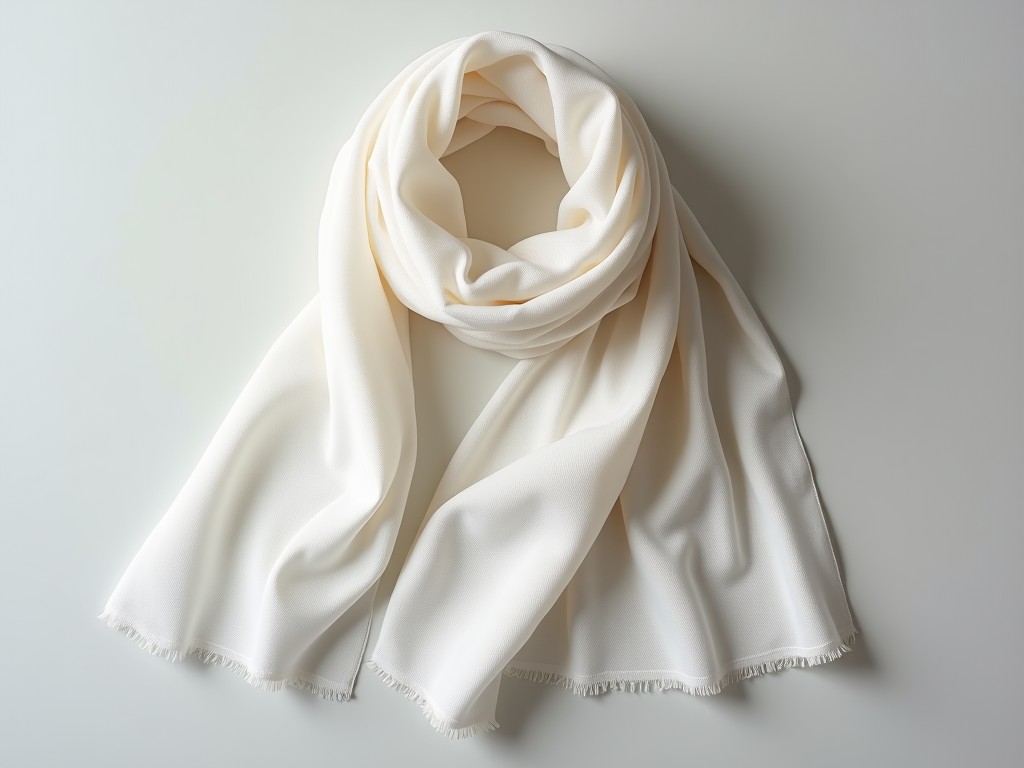
Yashmagh White Cotton Arab Scarf
The Yashmagh white cotton Arab scarf is a traditional head covering woven from 100% combed cotton with a thread count of 40s/2, designed for consistent drape, breathability, and dimensional stability
Yashmagh White Cotton Arab Scarf
The Yashmagh white cotton Arab scarf is a traditional head covering woven from 100% combed cotton with a thread count of 40s/2, designed for consistent drape, breathability, and dimensional stability in arid and variable climates. Unlike synthetic blends, this construction prioritizes moisture absorption and air permeability, critical for prolonged wear in high-temperature environments where thermal regulation affects comfort and focus.
Each scarf measures 110 cm × 110 cm with a hem tolerance of ±3 mm, ensuring uniform folding and secure positioning when worn as a ghutra or shemagh. The fabric undergoes a controlled bleaching process using hydrogen peroxide to achieve a stable white shade (CIE L*a*b* values: L>92, a<-1, b<2) without compromising fiber tensile strength, which remains above 3.5 cN/tex after processing.
Industrial buyers specifying this product typically require reliable performance in protective wear, hospitality uniforms, or cultural attire where consistent appearance and minimal maintenance are operational priorities. The cotton construction allows for repeated industrial laundering at 60°C without significant shrinkage (<2%) or yellowing, supported by ISO 6330 test protocols for dimensional stability.
Material Properties and Construction
The scarf is manufactured from carded and combed cotton fibers with a micronaire value between 3.7 and 4.2, selected for optimal balance between softness and durability. Combing removes short fibers below 12.5 mm, reducing pilling and surface fuzz during use, which maintains a clean appearance over extended wear cycles.
The plain weave structure uses 68 ends per inch (epi) and 52 picks per inch (ppi), creating a stable lattice that resists distortion under tension while allowing sufficient air flow (measured porosity: 48%). This specific count prevents excessive transparency while maintaining lightweight characteristics (fabric weight: 115 g/m² ±5%).
Hemming is performed with a 3-thread overlock stitch at 6 stitches per cm, providing edge integrity without adding stiffness. This method prevents fraying after 50+ wash cycles, a critical factor for inventory longevity in high-turnover operational settings.
Typical Applications
In industrial environments, the Yashmagh functions as a sweat-absorbing underlayer beneath hard hats or face shields, where cotton’s hygroscopic properties (moisture regain: 8.5% at 65% RH) help manage perspiration without causing skin irritation. This is particularly relevant in metal fabrication, mining, and construction zones where PPE is worn for extended shifts.
Hospitality and service sectors utilize the scarf as part of standardized uniforms where a neutral, non-reflective appearance is required under bright lighting. The stable white shade minimizes glare and maintains visual consistency across staff, supporting brand presentation without the need for frequent replacement due to discoloration.
Cultural and ceremonial applications benefit from the fabric’s natural drape and breathability, allowing comfortable wear during prolonged outdoor events. The absence of synthetic additives reduces static buildup and cling, which can interfere with layered garments or headwear in dry conditions.
Quality Control and Testing
Each batch undergoes spectrophometric color verification to ensure whiteness consistency across production lots, with Delta E values kept below 1.5 against the master standard. This precision supports uniform appearance in bulk orders where visual matching is essential for institutional procurement.
Fabric strength is validated using grab tensile tests (ASTM D5034) in both warp and weft directions, with minimum breaking force maintained at 180 N. Elongation at break is controlled between 8% and 12%, ensuring the scarf resists tearing while retaining enough flexibility for comfortable folding and wrapping.
pH testing confirms the final product remains within the skin-safe range of 5.5 to 7.5, critical for direct contact wear. Residual peroxide levels are verified below 10 ppm through titration, eliminating risks of irritation or fiber degradation over time.
Comparison: Cotton vs. Polyester Blends
| Property | 100% Cotton (Yashmagh) | 65/35 Polyester-Cotton |
|---|---|---|
| Moisture Regain (65% RH) | 8.5% | 4.2% |
| Air Porosity | 48% | 32% |
| Shrinkage after 5x Wash (60°C) | <2% | <1% |
| Yellowing after 30 UV Hours | None (with proper bleaching) | Visible (Δb>3) |
| Thermal Conductivity | 0.06 W/m·K | 0.08 W/m·K |
The table above highlights functional differences that directly impact wearer comfort and garment longevity. Cotton’s superior moisture regain and air porosity enhance thermal comfort in hot conditions, while its lower thermal conductivity reduces heat transfer to the skin. Although polyester blends show less shrinkage, they trade off breathability and are prone to oil-based staining and static retention, which can compromise hygiene and appearance in active use.
Customization Options
While the standard offering is 110 cm × 110 cm in white, dimensional adjustments are available upon request, including larger formats (up to 120 cm × 120 cm) for alternative wrapping styles or smaller sizes for youth sizing. All custom dimensions maintain the same 40s/2 combed cotton construction and hem tolerance (±3 mm).
Color variations beyond white can be produced using reactive dyeing processes that achieve CIE L*a*b* stability comparable to the bleached white standard, with colorfastness to washing (ISO 105 C06) rated at grade 4 or higher. However, note that dyed variants may exhibit slightly different moisture characteristics due to dye polymer interaction with cotton fibrils.
Packaging options include flat-folded bundles of 10, 25, or 50 units with polyethylene inner lining and corrugated outer cartons, designed to prevent moisture ingress during storage and transit. Custom labeling, including barcodes and size markings, can be integrated into the hem or packaging per client specifications.
For technical specifications, sample requests, or to discuss custom dimensions, colorfastness requirements, or packaging configurations, contact our engineering team to review your application details.
Products
Related Products
News
Related News

2026-11-02
Cotton Voile Scarf Manufacturing and Performance Analysis how to make a cotton voile scarfCreating a professional-grade cotton voile scarf requires a precise balance of textile engineering and artisanal finishing. Unlike standard cotton weaves, voile is defined by its p···

2026-10-28
chiffon hijab Technical Production and Performance AnalysisSelecting the right fabric for a hijab involves a delicate balance between modesty, breathability, and aesthetic drape. For many women in Southeast Asia and the Middle East, the ma···

2026-10-26
custom silk scarf textile manufacturing and performance analysisSelecting a high-quality scarf is no longer just about color matching; it is an exercise in understanding how textile weight, drape, and print scale interact with individual facial···
