Wholesale Scarf Head Wrap For Men






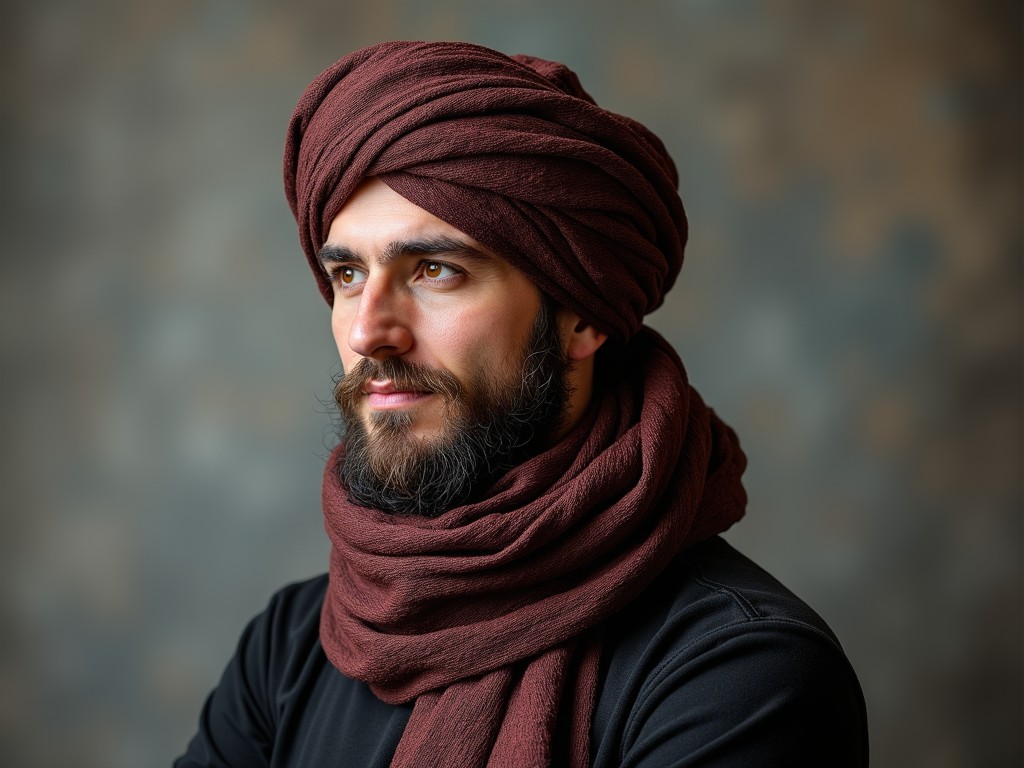
Wholesale Scarf Head Wrap For Men
Industrial buyers sourcing headwear for workforce uniformity, safety compliance, or branded apparel programs require precise specifications to ensure functional performance and wearer acceptance.
Wholesale Scarf Head Wrap for Men
Industrial buyers sourcing headwear for workforce uniformity, safety compliance, or branded apparel programs require precise specifications to ensure functional performance and wearer acceptance. This guide details the technical characteristics, material considerations, and manufacturing variables that determine suitability for occupational and commercial use in men’s scarf head wraps.
Material Composition and Functional Properties
The primary material determines breathability, moisture management, and durability under repeated washing and environmental exposure. Common constructions include 100% combed ring-spun cotton for softness and absorbency, polyester-cotton blends (typically 65/35) for wrinkle resistance and shape retention, and performance synthetics like recycled polyester for moisture-wicking in high-activity settings. Fabric weight, measured in GSM (grams per square meter), typically ranges from 140 to 180 for balanced drape and durability; lighter weights (120 GSM) increase airflow but may reduce opacity, while heavier constructions (200+ GSM) enhance longevity at the cost of thermal retention.
Weave structure influences stretch and recovery. Single-jerk knit provides moderate bidirectional stretch ideal for conforming to head contours without binding, while interlock knit offers greater dimensional stability and reduced curling at edges. For applications requiring flame resistance or static dissipation, specialized finishes or inherently protective fibers (e.g., modacrylic blends) may be specified, though these alter hand feel and require validation against end-use hazards.
Dimensional Specifications and Fit Logic
Head wrap dimensions are defined by finished length and width, which directly affect wrapping versatility and coverage. Standard men’s sizes range from 180–220 cm in length and 25–30 cm in width, allowing multiple wrapping styles (e.g., bandana fold, turban wrap, neck gaiter conversion). Length tolerance is typically ±2% to accommodate cutting and sewing variability; width tolerance is tighter (±1%) to maintain consistent edge alignment during assembly. Finished dimensions are measured after relaxation (24 hours post-wash at 40°C) to reflect real-world dimensions, not relaxed loom state.
Seam placement and construction method impact comfort during extended wear. Flatlock or coverstitch seams minimize ridge profile and chafing risk, particularly along the temples and occipital area. Bar tack reinforcement at stress points (e.g., end tips, fold creases) increases tear resistance by 30–50% compared to standard stitching, validated via ASTM D2261 tear testing. Hem width (usually 6–8 mm) affects edge curl; narrower hems reduce bulk but may increase fraying over time without proper stitch density (minimum 8 stitches/cm).
Colorfastness and Dye Stability
Color retention under UV exposure, perspiration, and industrial laundering is critical for branded apparel and safety identification. Reactive dyes on cellulose fibers (cotton, viscose) provide excellent wash fastness (typically 4–5 on Grey Scale) but moderate light fastness (3–4). Disperse dyes on polyester offer superior UV resistance (4–5+), making them preferable for outdoor operations. Azo-free and heavy-metal-free dye formulations are standard for compliance with OEKO-TEX® Standard 100 or similar restrictions, verifiable via supplier documentation.
Perspiration fastness (acid and alkaline) is particularly relevant for high-heat environments; values below 3–4 risk staining or skin irritation. Chlorine fastness indicates resistance to bleach degradation in institutional laundry; polyester blends typically achieve 4–5, while cotton may degrade to 2–3 without chlorine-resistant finishes. Sublimation printing on polyester allows full-color graphics without hand feel alteration, though it requires minimum 80% polyester content for optimal transfer efficiency.
Customization Variables and Manufacturing Constraints
Beyond base specifications, buyers often require branding integration, size grading, or functional add-ons. Embroidery placement is limited to areas with sufficient fabric stability (e.g., front panel, side flap); stitch density should not exceed 20 stitches/cm² to avoid puckering on lightweight knits. Screen printing requires flat surfaces and minimum ink coverage thresholds (typically 15% area) to prevent cracking; discharge inks on dark cotton provide soft-hand results but require precise pH control during processing.
Size grading for workforce programs typically involves two to three variants (e.g., S/M, L/XL) based on head circumference measurements from target demographics. Custom labels (woven, printed, or heat-transfer) add 0.5–1.5 cm to back neck height and must be positioned to avoid irritation. Lead time increases with customization complexity: solid-color stock items ship in 7–10 days, while custom-dyed, printed, or graded orders require 14–21 days for sample approval and 25–35 days for production, assuming approved artwork and material availability.
Quality Control and Acceptance Criteria
Industrial procurement relies on objective, repeatable testing to minimize batch variability. Key inspection points include fabric weight verification (±5% tolerance), dimensional stability after three wash cycles (length change <2%, width change <1%), seam strength (minimum 10 N via ASTM D1683), and color difference (ΔE < 3.0 against Pantone or lab dip standard). Visual inspection under 6500K daylight simulation checks for shade consistency, fabric defects (per 4-point system), and labeling accuracy.
Packaging for bulk shipment affects handling efficiency and product integrity. Standard packing uses polybags (50–100 units per bag) inside master cartons (dimensions optimized for palletization, e.g., 40x30x25 cm). Carton markings include PO number, SKU, size, color, quantity, and country of origin. For moisture-sensitive materials, desiccant packs and humidity indicators may be included; anti-static treatments are optional for electronics assembly environments. Export compliance requires accurate HS code declaration (typically 6213.90 for other made-up headgear of textile materials) and origin documentation.
Applications in Industrial and Commercial Settings
Men’s scarf head wraps serve distinct functions across sectors where hair containment, sweat management, or identification is required. In food processing, they prevent hair fall under beard nets or as standalone PPE where hair length exceeds containment limits; 100% cotton is preferred for absorbency and frequent boil-wash compatibility. In construction and logistics, high-visibility variants (fluorescent yellow/orange with reflective tape) meet ANSI/ISEA 107 requirements for low-risk environments, though they are not substitutes for Class 2 or 3 garments.
In hospitality and retail, branded head wraps reinforce uniform identity while allowing personal style expression; moisture-wicking blends improve comfort during extended shifts. For outdoor work (landscaping, agriculture), UPF-rated fabrics (minimum UPF 30) provide UV protection, with darker colors and tighter weaves offering higher blockage. Thermal variants using fleece-lined or double-layer constructions are used in cold storage or winter outdoor operations, though they add bulk and may interfere with hard hat fit.
Typical Specification Ranges
| Parameter | Typical Range | Notes |
|---|---|---|
| Fabric Weight (GSM) | 140–180 | Balanced drape and durability |
| Length | 180–220 cm | Finished, relaxed state |
| Width | 25–30 cm | Cut width before sewing |
| Seam Strength | ≥10 N | ASTM D1683, stitched seam |
| Colorfastness to Wash | 4–5 Grey Scale | After 5 cycles at 40°C |
Specifying the correct combination of material, dimensions, and finish ensures the head wrap performs reliably in its intended role while meeting cost and compliance targets. Buyers should validate samples against actual use conditions before committing to volume orders, particularly when functional claims (e.g., moisture-wicking, flame resistance) are part of the specification.
To request a quotation or discuss custom requirements for wholesale scarf head wraps for men, provide your target specifications including material preference, dimensions, color, quantity, and any branding or functional needs. Our technical team will respond with detailed options, lead times, and pricing based on your inputs.
Request Technical Specification SheetProducts
Related Products
News
Related News

2026-11-02
Cotton Voile Scarf Manufacturing and Performance Analysis how to make a cotton voile scarfCreating a professional-grade cotton voile scarf requires a precise balance of textile engineering and artisanal finishing. Unlike standard cotton weaves, voile is defined by its p···

2026-10-28
chiffon hijab Technical Production and Performance AnalysisSelecting the right fabric for a hijab involves a delicate balance between modesty, breathability, and aesthetic drape. For many women in Southeast Asia and the Middle East, the ma···

2026-10-26
custom silk scarf textile manufacturing and performance analysisSelecting a high-quality scarf is no longer just about color matching; it is an exercise in understanding how textile weight, drape, and print scale interact with individual facial···
