Wholesale Mens Western Neck Scarf Bandana






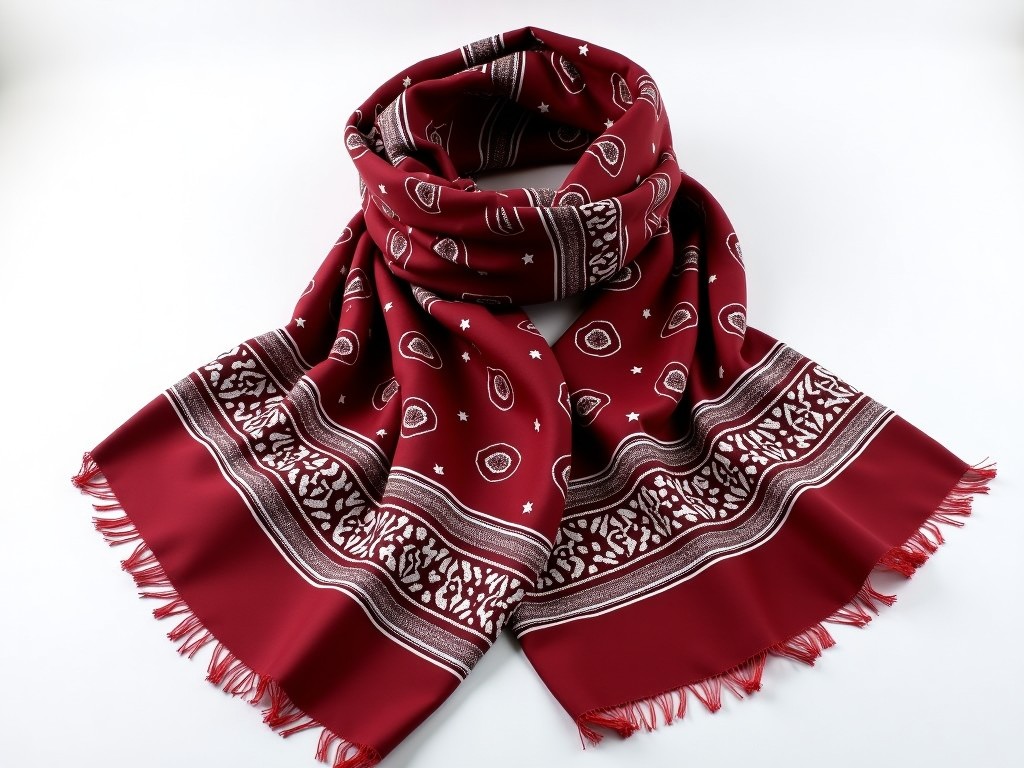
Wholesale Mens Western Neck Scarf Bandana
Industrial buyers sourcing wholesale men's western neck scarf bandanas require clear technical specifications to ensure consistent performance across bulk orders. This product page details material
Wholesale Men's Western Neck Scarf Bandana
Industrial buyers sourcing wholesale men's western neck scarf bandanas require clear technical specifications to ensure consistent performance across bulk orders. This product page details material properties, dimensional tolerances, manufacturing considerations, and application-specific factors that influence purchasing decisions. Understanding these elements reduces uncertainty and supports informed supplier evaluation.
Material Composition and Performance Characteristics
The primary material for western neck scarf bandanas is 100% combed ring-spun cotton, selected for its balance of breathability, absorbency, and dimensional stability. Combed ring-spinning removes short fibers and aligns longer filaments, resulting in a yarn with lower hairiness and higher tensile strength compared to carded alternatives. Typical fabric weight ranges from 140 to 160 GSM, providing sufficient opacity for single-layer use while maintaining flexibility for folding and tying. Cotton's hygroscopic nature allows moisture absorption up to 8% of its weight under standard conditions, contributing to comfort in variable environments.
Colorfastness is a critical performance metric, particularly for outdoor or industrial use. Reactive dyeing is commonly employed to achieve covalent bonding between dye molecules and cellulose fibers, improving wash and light resistance. Typical wash fastness ratings achieve 4-5 on the Gray Scale after 10 cycles at 40°C, while light fastness reaches 4-5 on the Blue Wool Scale under prolonged UV exposure. Shrinkage is controlled through sanforization or pre-shrinking processes, limiting residual dimensional change to under 3% in both warp and weft directions after washing.
Edge finishing influences both durability and aesthetics. Overlock or serged seams are standard, using 3- or 4-thread configurations to prevent fraying. Stitch density typically ranges from 8 to 10 stitches per centimeter, providing seam strength sufficient to withstand repeated handling and tension during use. Some variants feature hemmed edges with a double-fold, 3mm-wide hem secured by lockstitch sewing, offering a cleaner profile at the cost of slightly reduced edge flexibility.
Dimensional Specifications and Tolerances
Standard dimensions for men's western neck scarf bandanas are 55 cm × 55 cm (±1 cm tolerance in both length and width). This square format allows versatile folding techniques—triangle, rectangle, or strip—accommodating different wearing styles and functional needs. The 55 cm size provides adequate coverage for neck wrapping while minimizing excess fabric that could impede movement or catch on equipment. Tolerances are maintained through precise die-cutting or laser cutting during production, with dimensional checks performed at multiple stages: post-dyeing, pre-cutting, and post-finishing.
For buyers requiring non-standard sizes, customization is possible within loom constraints. Minimum width is typically 40 cm due to edge finishing limitations, while maximum width rarely exceeds 70 cm without compromising fabric stability during cutting and sewing. Length adjustments follow similar limits. Custom dimensions may affect pricing due to changes in material yield, setup time, and potential need for specialized cutting dies. Buyers should specify exact dimensions and tolerances during quotation to avoid sampling discrepancies.
Thickness, measured as caliper, averages 0.35 mm for single-layer fabric at standard GSM. When folded into a triangle for neck wear, effective thickness increases to approximately 1.05 mm at the fold point. This measurement influences compatibility with collar closures, helmet liners, or layered PPE systems. Buyers integrating bandanas into safety uniforms should evaluate cumulative thickness against clearance requirements in headgear or neckwear assemblies.
Manufacturing Considerations for Bulk Orders
Consistent color matching across large production runs depends on dye lot control. Industrial buyers should request lab dips or swatch approvals before full-scale production, particularly for corporate colors or branded shades. Spectrophotometric analysis (e.g., using CIELAB coordinates) ensures Delta E values remain below 2.0 between approved standard and bulk output, minimizing perceptible variation. Without pre-approval, acceptable variation may extend to Delta E 3.0–4.0, which could be noticeable under direct comparison.
Packaging configurations impact handling and distribution efficiency. Standard wholesale packing uses polybags of 12, 24, or 50 units, sealed and placed in master cartons. Carton dimensions are optimized for palletization—typically 40 cm × 30 cm × 25 cm for 50 units—maximizing truck and container utilization. Each carton includes a label with SKU, quantity, size, color, and country of origin. For moisture-sensitive environments, optional silica gel desiccant packets or humidity-indicating cards can be included upon request.
Quality control follows AQL (Acceptable Quality Level) standards, with common inspection levels II for general appearance and dimensions. Critical defects include holes, stains, misprints, and severe shading variations, typically governed by AQL 0.65. Minor defects such as loose threads or slight shade variation may use AQL 1.5 or 2.5. Inspection occurs at random during in-line production and pre-shipment, with reports detailing defect classification and quantity. Buyers can tighten AQL requirements based on end-use risk, though this may affect unit pricing and lead time.
Application-Specific Selection Logic
In outdoor work environments—such as agriculture, ranching, or construction—the bandana functions as a sweat management tool and dust barrier. Cotton’s absorbency allows it to wick moisture from the neck and face, while its tight weave filters larger particulates. When folded and worn beneath a hard hat or helmet liner, it adds a layer of friction-reducing interface, decreasing abrasion from prolonged equipment contact. The material’s low static propensity reduces cling to synthetic fabrics, improving comfort during extended wear.
For branding or uniform programs, surface characteristics determine printability. Smooth, combed cotton surfaces support high-resolution screen printing or discharge printing for detailed logos. Ink adhesion depends on surface energy and dye reactivity; pre-treatment may be required for certain pigment systems. Buyers should specify print area location (e.g., center, corner, border) and method during design review to ensure compatibility with folding patterns. Embroidery is less common due to fabric thinness but feasible with stabilizer backing for small, low-stitch-count designs.
In colder climates, layering potential influences selection. A single bandana offers minimal thermal resistance (approx. 0.08 m²·K/W), but multiple layers or use with insulating liners can increase effective warmth. Buyers seeking cold-weather performance may opt for blended fabrics (e.g., cotton-polyester) to enhance moisture-wicking and drying speed, though this alters breathability and feel. Pure cotton remains preferred in high-heat or flame-adjacent scenarios due to its natural char resistance and absence of melt risk.
Comparison of Common Variants
| Variant | Material | Typical GSM | Edge Finish | Best Use Case |
|---|---|---|---|---|
| Standard Western | 100% Combed Cotton | 140–160 | Overlocked | General outdoor work, uniform base |
| Premium Finish | 100% Combed Cotton | 150–170 | Double Hemmed | Branded uniforms, retail resale |
| Economy Weight | Carded Cotton | 120–130 | Overlocked | High-volume, short-term use |
| Blended Performance | 65% Cotton / 35% Polyester | 140–155 | Overlocked | Moisture-wicking, faster drying |
The table above outlines common variants to assist in evaluating trade-offs between cost, durability, and performance. Standard Western remains the most widely specified for industrial wholesale due to its proven balance of comfort and durability. Premium Finish variants incur higher costs due to additional labor for hemming but offer improved edge longevity and a refined appearance suitable for customer-facing roles. Economy Weight options reduce material cost but may exhibit lower tear resistance and increased transparency. Blended variants improve drying speed but sacrifice some of cotton’s natural breathability and skin compatibility.
Customization and Ordering Process
Customization options include color matching (Pantone, RAL, or custom lab dip), size adjustment, edge finish type, and packaging configuration. Buyers seeking private labeling can add woven labels, printed tags, or barcode stickers during final packaging. Minimum order quantities typically start at 600 units for standard colors and 1,200 units for custom dyes, reflecting setup costs for dye vats and screen preparation. Lead times range from 14 to 21 days for stock colors and 28 to 40 days for custom shades, inclusive of dyeing, cutting, sewing, and quality inspection.
To initiate a quotation, provide: exact dimensions (if non-standard), color references (Pantone preferred), desired edge finish, packaging requirements, and target quantity. Including intended use case (e.g., uniform, promotional, resale) helps suppliers recommend appropriate material grades and testing standards. Sample approval is strongly recommended before bulk production; samples should represent final specifications, including color, finish, and packaging. Approval seals or signed spec sheets prevent misunderstandings during mass production.
Payment terms commonly involve 30% deposit upon order confirmation and 70% against copy of bill of lading or prior to shipment. Letters of credit are accepted for international orders. FOB and CIF incoterms are standard, with freight arrangements manageable by either party. All pricing is quoted in USD unless otherwise negotiated. Buyers should confirm whether pricing includes packaging, labeling, and documentation fees to avoid unexpected charges.
Ready to specify your wholesale men's western neck scarf bandana requirements?
Submit your technical specifications for a detailed quotation and sample arrangement.
Request QuotationProducts
Related Products
News
Related News

2026-11-02
Cotton Voile Scarf Manufacturing and Performance Analysis how to make a cotton voile scarfCreating a professional-grade cotton voile scarf requires a precise balance of textile engineering and artisanal finishing. Unlike standard cotton weaves, voile is defined by its p···

2026-10-28
chiffon hijab Technical Production and Performance AnalysisSelecting the right fabric for a hijab involves a delicate balance between modesty, breathability, and aesthetic drape. For many women in Southeast Asia and the Middle East, the ma···

2026-10-26
custom silk scarf textile manufacturing and performance analysisSelecting a high-quality scarf is no longer just about color matching; it is an exercise in understanding how textile weight, drape, and print scale interact with individual facial···
