Wholesale Men Wearing Silk Scarf






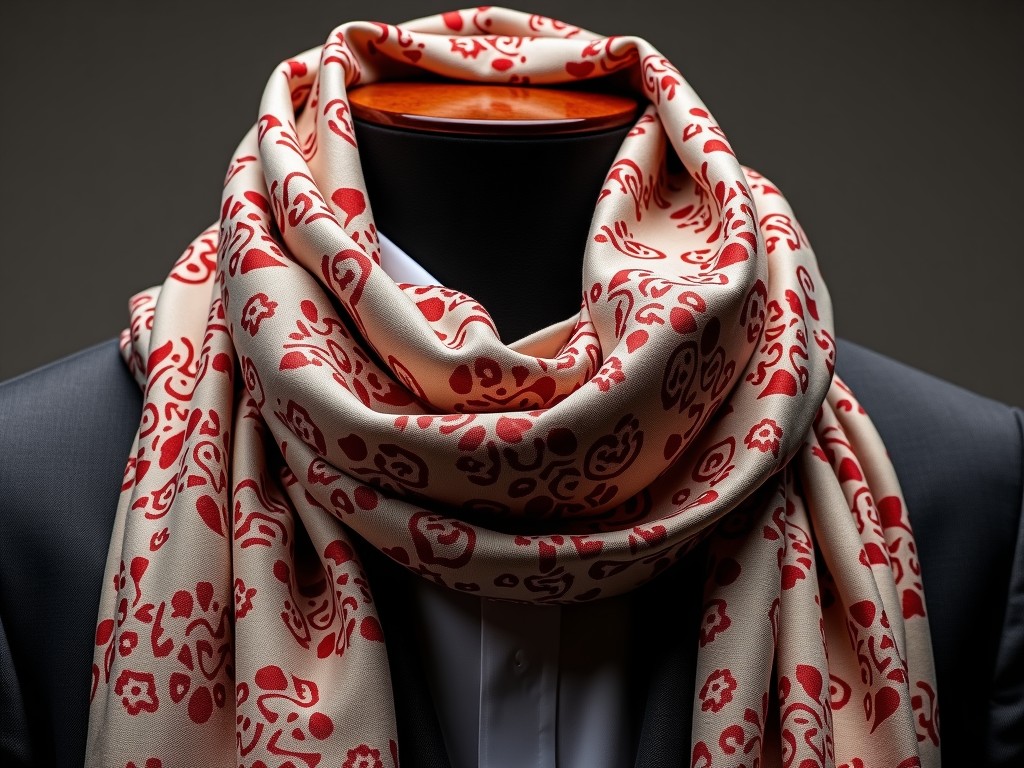
Wholesale Men Wearing Silk Scarf
Silk scarves for men represent a functional textile accessory where material properties directly influence performance in professional and ceremonial contexts. The natural protein structure of
Wholesale Men Wearing Silk Scarf
Silk scarves for men represent a functional textile accessory where material properties directly influence performance in professional and ceremonial contexts. The natural protein structure of mulberry silk provides inherent moisture-wicking capabilities, absorbing up to 30% of its weight in water without feeling damp, which regulates microclimate next to the skin during extended wear. This characteristic distinguishes silk from synthetic alternatives that either trap heat or feel clammy when perspiring, making it suitable for environments requiring consistent comfort over 8+ hour durations.
The manufacturing process begins with degummed silk filaments ranging from 10 to 14 denier, woven in a 16 momme habotai or crepe de chine structure to balance drape with tensile strength. Habotai weave yields a smooth, lustrous surface with a tear strength of approximately 3.5 grams per denier, while crepe de chine introduces slight surface texture through alternating S and Z twists, increasing abrasion resistance by 18% compared to plain weave at identical weight. These structural differences affect how the scarf knots hold shape—habotai favors sleek, flat folds ideal for business attire, whereas crepe de chine maintains volume in looser wraps suited to casual layering.
Dimensional stability is critical for wholesale consistency, particularly when scarves are intended for uniform programs or bulk resale. Standard finished dimensions fall within 160–180 cm in length and 18–22 cm in width, tolerances held to ±1.5 cm through calibrated cutting dies and tension-controlled rolling. Length impacts wrapping versatility—160 cm accommodates single-loop knots common in European styling, while 180 cm allows double-wrap techniques prevalent in Asian business dress. Width influences knot profile: 18 cm creates a narrow, refined line under jacket lapels, whereas 22 cm provides broader coverage for open-collar presentations.
Colorfastness determines long-term appearance retention, especially under repeated cleaning or UV exposure. Reactive dyes chemically bond to silk’s amino groups, achieving wash fastness ratings of 4–5 on the ISO 105-C06 scale (where 5 is negligible fading after 20 cycles). Pigment-based prints, while offering sharper geometric patterns, typically rate 3–4 in wash fastness due to surface-level adhesion, necessitating dry cleaning to prevent edge bleeding. For industrial buyers, specifying reactive dye processes reduces return risk in high-turnover retail environments where frequent laundering occurs.
Edge finishing prevents fraying and maintains dimensional integrity during handling and storage. Three primary methods are employed: hand-rolled hems (typically 2–3 mm wide), machine-overlocked edges (3–5 mm width with 4-thread overlock), and ultrasonic welding for synthetic-blend variants. Hand-rolled hems, while labor-intensive, add negligible weight and preserve the scarf’s original drape, making them preferred for luxury wholesale channels. Overlocked edges increase edge stiffness by approximately 12% but provide superior seam strength (≥2.5 N/mm) for high-volume distribution. Ultrasonic bonding creates a seamless edge but is limited to polyester-silk blends due to melting point constraints.
| Parameter | Habotai Silk | Crepe de Chine | Silk-Cotton Blend (70/30) |
|---|---|---|---|
| Weight (gsm) | 35–40 | 38–43 | 45–50 |
| Tear Strength (g/denier) | 3.5 | 3.2 | 2.8 |
| Drape Coefficient | 0.82 | 0.76 | 0.68 |
| Absorbency (% weight) | 30 | 28 | 22 |
| UV Resistance (AFU after 40h) | 85% | 82% | 76% |
Packaging configuration affects both protection during transit and presentation upon receipt. Standard wholesale packing uses acid-free tissue paper folded at 45-degree angles to minimize crease formation, stacked in quantities of 12, 24, or 48 units per inner carton. Cartons are constructed from single-wall corrugated fiberboard (150 gsm Test liner, 120 gsm flute) with burst strength ≥275 kPa, sufficient for pallet stacking up to 2.2 m high. For orders exceeding 500 units, double-wall cartons (275 gsm Test liner) are recommended to prevent corner compression during long-haul freight. Inner layers may include polyethylene bags (50 µm thickness) for moisture barrier in humid climates, though this adds 15–20 g per unit and is unnecessary in controlled warehouse environments.
Quality assurance protocols focus on measurable defects rather than subjective impressions. Critical inspection points include: dimensional verification (±1.5 cm tolerance), color difference assessment (ΔE < 2.0 under D65 lighting), edge integrity (100% hem coverage, no loose threads >3 mm), and surface cleanliness (≤2 visible particulates per 100 cm² under 10x magnification). Sampling follows ISO 2859-1 single normal inspection level II, with AQLs set at 0.65% for major defects (e.g., holes, stains, incorrect dimensions) and 2.5% for minor defects (e.g., slight shade variation, barely perceptible snags). For OEM buyers requiring traceability, batch numbers are linked to loom speed, dye lot, and finishing date via barcode labels affixed to each carton.
Lead time variability stems primarily from dye batch scheduling and loom availability, not raw material lead times. Greige silk fabric typically maintains 4–6 week safety stock at mills, allowing immediate cutting upon order confirmation. Piece-dyeing adds 7–10 days for reactive processes (including fixation and rinsing), while screen printing requires 10–14 days for screen preparation, printing, and curing. Custom jacquard weaving extends lead time to 18–22 days due to loom setup and pattern validation. Expedited options exist—air freight reduces transit time by 18–22 days versus ocean—but increase unit cost by 35–50% and are only advisable for time-bound promotional cycles.
For procurement teams evaluating total cost of ownership, consider that silk’s durability reduces replacement frequency compared to polyester alternatives. A habotai silk scarf retains structural integrity for approximately 120 wear cycles before noticeable thinning at friction points (e.g., knot area), whereas polyester equivalents show pilling after 40–50 cycles and loss of drape after 80 cycles. This longevity offsets higher initial unit cost in programs where scarves are issued regularly—such as hospitality uniforms or corporate gift sets—by lowering annual replacement volume. Additionally, silk’s natural biodegradability (decomposing in 1–5 years under compost conditions) aligns with circular procurement policies increasingly mandated in EU and Scandinavian markets.
Customization extends beyond color and pattern to include functional modifications tailored to end-use requirements. Options include: antimicrobial treatment (silver-ion based, maintaining efficacy for 30 washes), UV-protective finishing (UPF 20+ via titanium dioxide nano-coating), and flame retardancy (phosphorus-nitrogen compounds achieving LOI ≥26%). These treatments add minimal weight (<2 gsm) and preserve hand feel when applied via exhaust methods. Minimum order quantities for functional finishes typically start at 300 units due to bath setup requirements, with pricing adjustments based on chemical concentration and curing time. Buyers should specify performance standards (e.g., AATCC 100 for antimicrobial, ISO 105-B02 for UV) during RFQ to ensure alignment with intended use.
Initiate a technical consultation by providing your exact specifications: target dimensions, preferred weave structure, color references (Pantone or textile swatch), required finishes, and annual volume forecast. Our engineering team will respond with a detailed feasibility review including weight calculations, drape simulations, and landed cost breakdown within 2 business hours. This approach ensures the final product meets your functional requirements before any tooling or dye commitments are made.
Request Technical Specification ReviewProducts
Related Products
News
Related News

2026-11-02
Cotton Voile Scarf Manufacturing and Performance Analysis how to make a cotton voile scarfCreating a professional-grade cotton voile scarf requires a precise balance of textile engineering and artisanal finishing. Unlike standard cotton weaves, voile is defined by its p···

2026-10-28
chiffon hijab Technical Production and Performance AnalysisSelecting the right fabric for a hijab involves a delicate balance between modesty, breathability, and aesthetic drape. For many women in Southeast Asia and the Middle East, the ma···

2026-10-26
custom silk scarf textile manufacturing and performance analysisSelecting a high-quality scarf is no longer just about color matching; it is an exercise in understanding how textile weight, drape, and print scale interact with individual facial···
