Wholesale Men Muslim Head Scarf






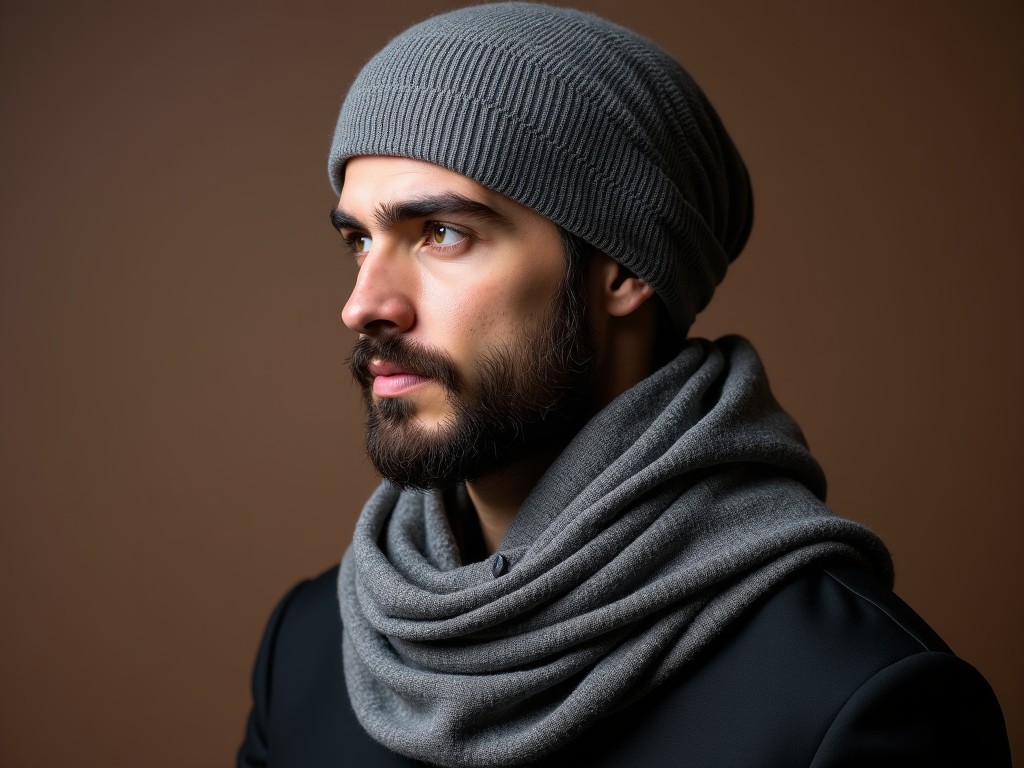
Wholesale Men Muslim Head Scarf
This product page details the technical specifications, material options, and manufacturing considerations for wholesale men's Muslim head scarves (kufis or taqiyahs) intended for B2B procurement.
Wholesale Men's Muslim Head Scarf
This product page details the technical specifications, material options, and manufacturing considerations for wholesale men's Muslim head scarves (kufis or taqiyahs) intended for B2B procurement. The information focuses on measurable characteristics relevant to industrial buyers, including fabric composition, dimensional tolerances, stitching standards, and bulk packaging logic.
Material Composition and Performance Characteristics
The primary materials used in wholesale men's Muslim head scarves are selected for breathability, moisture management, and dimensional stability under repeated washing. Common fabric constructions include 100% combed cotton, polyester-cotton blends (typically 65/35 or 50/50), and bamboo viscose blends. Each material is evaluated for shrinkage rate (<5% after 5 wash cycles at 40°C), pilling resistance (minimum 3.5/5 on Martindale test), and air permeability (minimum 150 mm/s for cotton-based variants).
For applications requiring enhanced durability — such as institutional use in mosques, schools, or humanitarian supply chains — reinforced stitching at stress points and colorfastness ratings (minimum 4/5 on ISO 105-B02) are standard specifications. Antimicrobial treatments or moisture-wicking finishes are available upon request but require validation testing for bulk orders.
Dimensional Standards and Tolerance Controls
Standard wholesale men's Muslim head scarves are produced in three primary size categories based on head circumference measurements: Small (52–54 cm), Medium (55–57 cm), and Large (58–60 cm). These dimensions are measured flat, unstretched, and perpendicular to the fabric grain. Tolerance for finished diameter is ±1.5 cm to accommodate fabric elasticity and sewing variance.
Depth (vertical measurement from temple to crown) typically ranges from 10 to 14 cm depending on style (e.g., flat knit, ribbed, or layered). Crown height is controlled to ensure adequate coverage without excessive bulk. Custom sizing — such as extended depths for specific regional preferences or adjusted circumferences for pediatric or geriatric cohorts — is available with revised pattern grading and minimum order quantities.
Stitching and Construction Specifications
Construction methods prioritize seam integrity and comfort. Most wholesale units use overlock stitching (3-thread or 4-thread) along the inner edge to prevent fraying and reduce skin irritation. Seam width is maintained at 3–4 mm with stitch density of 8–10 stitches per cm. Bar tacking or double-stitching is applied at the temple and rear junctions where tensile stress is highest during donning and doffing.
For premium or institutional orders, flatlock seams may be specified to eliminate raised edges. Thread type is typically polyester-wrapped polyester for UV resistance and color consistency. All stitching undergoes tensile strength testing (minimum 15 N/cm seam strength) as part of in-line quality checks.
Bulk Packaging and Logistics Optimization
Wholesale packaging is designed to minimize volume, prevent creasing, and maintain hygiene during transit. Standard packing configurations include:
- Polybags of 10–25 units (LDPE, 50-micron thickness) for moisture barrier
- Carton packs of 100–200 units (single-wall corrugated, 150 gsm)
- Palletized loads (1.2m × 1.0m base) with stretch film and corner protection
Each unit is folded using a standardized tri-fold method to ensure consistent orientation and ease of inspection. Cartons are labeled with SKU, size, material code, batch number, and country of origin. Vacuum sealing or anti-static lining is available for high-humidity environments or electrostatic-sensitive distribution channels.
Quality Control and Inspection Protocol
Quality assurance follows a multi-stage inspection protocol aligned with AQL 2.5 standards for general consumer textiles. Critical checkpoints include:
- Fabric inspection (4-point system) upon receipt
- In-line monitoring of stitching tension and seam alignment
- Pre-shipment random sampling for dimensions, colorfastness, and pilling
- Final audit of packaging labels and carton integrity
Non-conforming items are segregated and documented. Test reports for shrinkage, colorfastness, and seam strength are available upon request for orders exceeding 5,000 units. Third-party verification (e.g., SGS, Bureau Veritas) can be arranged at buyer expense.
Comparison of Common Material Options
| Material | Shrinkage (5 washes @40°C) | Air Permeability (mm/s) | Typical Use Case |
|---|---|---|---|
| 100% Combed Cotton | 3–5% | 180–220 | Standard retail, warm climates |
| 65/35 Polyester-Cotton | 2–4% | 120–160 | Institutional bulk, frequent washing |
| 50/50 Bamboo Viscose-Cotton | 4–6% | 200–250 | Moisture-wicking, sensitive skin |
| 100% Polyester (Recycled) | <1% | 90–130 | Low-cost, high-volume distribution |
Values in the table represent typical ranges based on industry testing protocols. Actual performance may vary with dye lot, finish application, and washing conditions. Custom material blends or performance enhancements (e.g., UV protection, odor control) require separate validation and may impact lead time and pricing.
Customization and Ordering Considerations
Wholesale orders support customization in material, size, color, and labeling. Common options include:
- Pantone-matched dye lots (minimum 1,000 units per color)
- Woven or printed logos (left temple or rear center, max 40 mm width)
- Custom care labels or hangtags (recycled paper or satin)
- Size-assorted packs (e.g., 50% Medium, 30% Large, 20% Small)
Lead time for standard stock items is 7–14 business days after payment confirmation. Custom orders require 21–35 days depending on material sourcing and dye approval. Sample production (2–5 units) is available for evaluation, with costs credited toward the first bulk order.
To initiate a quotation, provide: target quantity, preferred material, size breakdown, color requirements, and any labeling or packaging specifications. FOB pricing is standard; CIF or DDP terms available upon request. All quotations include validity period, payment terms, and sample policy.
For technical inquiries, sample requests, or to discuss custom specifications for your wholesale men's Muslim head scarf requirements, contact our industrial sales team.
Request a QuotationProducts
Related Products
News
Related News

2026-11-02
Cotton Voile Scarf Manufacturing and Performance Analysis how to make a cotton voile scarfCreating a professional-grade cotton voile scarf requires a precise balance of textile engineering and artisanal finishing. Unlike standard cotton weaves, voile is defined by its p···

2026-10-28
chiffon hijab Technical Production and Performance AnalysisSelecting the right fabric for a hijab involves a delicate balance between modesty, breathability, and aesthetic drape. For many women in Southeast Asia and the Middle East, the ma···

2026-10-26
custom silk scarf textile manufacturing and performance analysisSelecting a high-quality scarf is no longer just about color matching; it is an exercise in understanding how textile weight, drape, and print scale interact with individual facial···
