Wholesale Fancy Scarf For Men






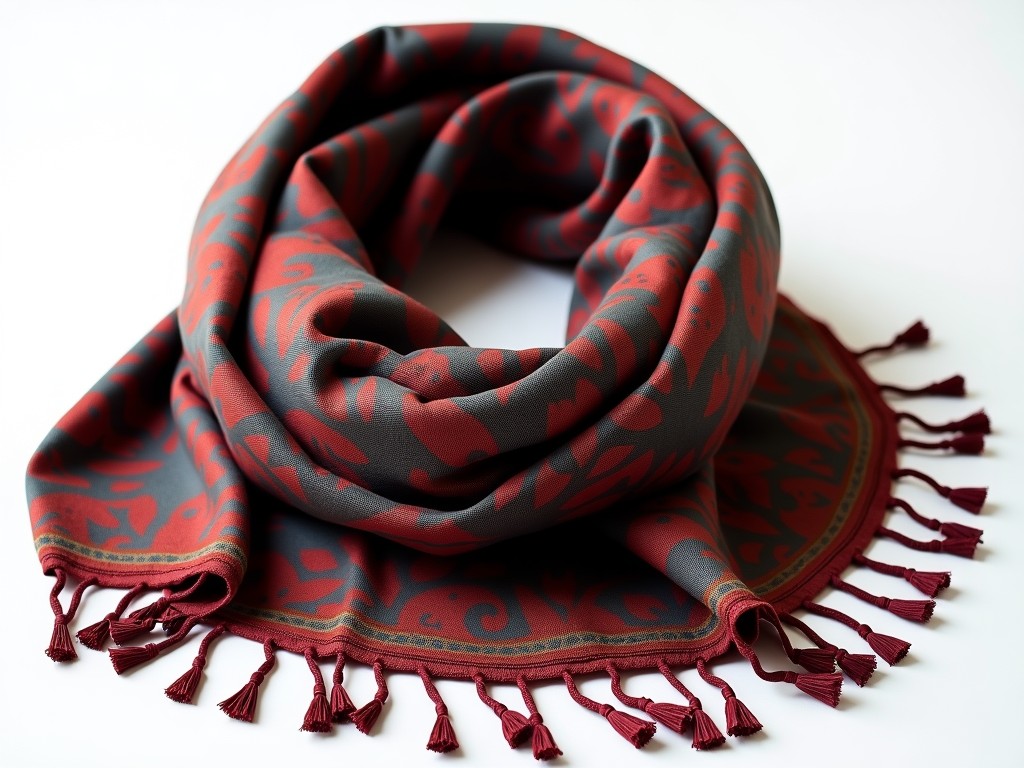
Wholesale Fancy Scarf For Men
Understanding the technical specifications of men’s fashion scarves helps procurement teams evaluate material performance, dimensional stability, and aesthetic consistency across production batches.
Wholesale Fancy Scarf for Men
Understanding the technical specifications of men’s fashion scarves helps procurement teams evaluate material performance, dimensional stability, and aesthetic consistency across production batches. This page details the construction, material options, and quality parameters relevant to wholesale sourcing of fancy men’s scarves.
Material Composition and Fiber Properties
The performance of a men’s scarf begins with fiber selection. Common materials include merino wool (18.5 micron), acrylic blends (70/30 wool-acrylic), and modal-viscose mixes. Each fiber type influences thermal regulation, drape, and pilling resistance. Merino wool offers natural moisture wicking and odor resistance, while synthetic blends enhance durability and color retention under repeated washing.
Fiber fineness directly affects hand feel and bulk. Merino wool below 19 micron provides softness without irritation, suitable for direct skin contact. Acrylic fibers, when solution-dyed, maintain color fastness to UV exposure (grade 4-5 on Blue Wool Scale). Modal fibers, derived from beechwood pulp, provide a silky luster and improved moisture absorption compared to cotton.
Dimensional Standards and Construction Tolerances
Standard dimensions for men’s fancy scarves range from 140cm to 180cm in length and 20cm to 30cm in width. These proportions ensure adequate coverage when wrapped once or twice around the neck while maintaining proportionality with average male torso dimensions. Length tolerance is typically ±2cm, width tolerance ±1cm, measured under relaxed conditions after 24 hours of conditioning at 20°C and 65% RH.
Construction methods include plain weave, twill, and jacquard. Jacquard weaving allows intricate patterns without compromising structural integrity, as the design is integrated into the weave rather than printed. End finishes such as hand-rolled hems or fringed edges add 1.5–3cm to effective length and require additional yarn consumption, which must be accounted for in material yield calculations.
Colorfastness and Dyeing Considerations
Color consistency is critical in wholesale fancy scarves, especially for seasonal collections. Reactive dyes are used on cellulose-based fibers (modal, viscose) for strong covalent bonding, achieving wash fastness ratings of 4–5. Acid dyes are applied to wool and nylon blends, providing excellent chromatic vibrancy and resistance to fading. Disperse dyes are used for polyester components in blended fabrics.
Dye lot variation can cause visible differences between batches. To minimize this, industrial buyers should request lab-dip approvals and specify maximum allowable Delta E values (typically <2.0 for visual match under D65 lighting). Spectrophotometric testing ensures batch-to-batch consistency across production runs.
Quality Control Parameters
Inspection protocols focus on four key areas: dimensional accuracy, surface quality, color uniformity, and seam integrity. AQL (Acceptable Quality Level) standards are applied, with Level II sampling common for wholesale orders. Critical defects include holes, runs, mispick, and shade variation exceeding limits. Minor defects such as slight slubs or neps may be acceptable depending on end-use.
Dimensional stability is tested after washing and drying cycles. Scarves should not exceed 5% length change or 3% width change after ISO 6330 wash procedure 4A. Pilling resistance is assessed via Martindale test, with a minimum of 2000 cycles acceptable for fashion accessories. Tensile strength is measured per ASTM D5034, with typical values >15 N for wool blends and >25 N for acrylic-rich fabrics.
Packaging and Logistics Considerations
Proper packaging prevents deformation and soiling during transit. Standard methods include individual polybagging (50–70 micron LDPE) followed by bulk packing in corrugated cartons. Each carton typically holds 50–100 pieces depending on scarf thickness and folding method. Carton dimensions are optimized for palletization (e.g., 40x30x20cm), with gross weight kept under 15kg for manual handling safety.
To prevent creasing, scarves are folded along the length axis with a width fold of 10–15cm, then rolled or flat-stacked. Tissue paper interleaving may be used for delicate finishes. Humidity indicators and desiccant packs are recommended for shipments to high-moisture climates to prevent mildew on natural fibers.
Customization Options for Wholesale Buyers
Wholesale orders allow customization of material blend, dimensions, pattern, and finish. Buyers can specify yarn count (e.g., 2/28nm wool, 120d viscose), construction type (jacquard vs. printed), and end treatment (fringe, selvage, or hemmed). Minimum order quantities typically start at 300 pieces per SKU, with sample development taking 7–10 days after technical package approval.
Color customization requires Pantone or Lab* references. For seasonal trends, buyers may request gradient effects, ombre dyeing, or mélange yarn effects. Pattern placement (e.g., border vs. all-over) affects yarn consumption and must be confirmed during sampling. Lead time for production is usually 25–35 days after deposit and sample confirmation.
| Parameter | Typical Range | Test Method |
|---|---|---|
| Length | 140–180 cm | ISO 3018 |
| Width | 20–30 cm | ISO 3018 |
| Weight per unit | 80–180 g | ISO 3801 |
| Pilling resistance | >2000 cycles | ASTM D4970 |
| Colorfastness to washing | Grade 4–5 | ISO 105 C06 |
| Tensile strength | >15 N (wool blend) | ASTM D5034 |
Technical buyers should evaluate scarf performance based on end-use requirements. For corporate gifting or retail resale, dimensional consistency and color accuracy are paramount. For outdoor or active use, moisture management and abrasion resistance become critical factors. Communicating these priorities early in the quotation process ensures alignment between supplier capabilities and buyer expectations.
To request a quotation or technical spec sheet for wholesale fancy men’s scarves, provide details on target material, quantity, dimensions, and any customization needs. Inquiries are reviewed by product specialists who will respond with lead times, pricing tiers, and sample availability.
Request Wholesale Pricing & SamplesProducts
Related Products
News
Related News

2026-11-02
Cotton Voile Scarf Manufacturing and Performance Analysis how to make a cotton voile scarfCreating a professional-grade cotton voile scarf requires a precise balance of textile engineering and artisanal finishing. Unlike standard cotton weaves, voile is defined by its p···

2026-10-28
chiffon hijab Technical Production and Performance AnalysisSelecting the right fabric for a hijab involves a delicate balance between modesty, breathability, and aesthetic drape. For many women in Southeast Asia and the Middle East, the ma···

2026-10-26
custom silk scarf textile manufacturing and performance analysisSelecting a high-quality scarf is no longer just about color matching; it is an exercise in understanding how textile weight, drape, and print scale interact with individual facial···
