Wholesale Extra Long Mens Scarf






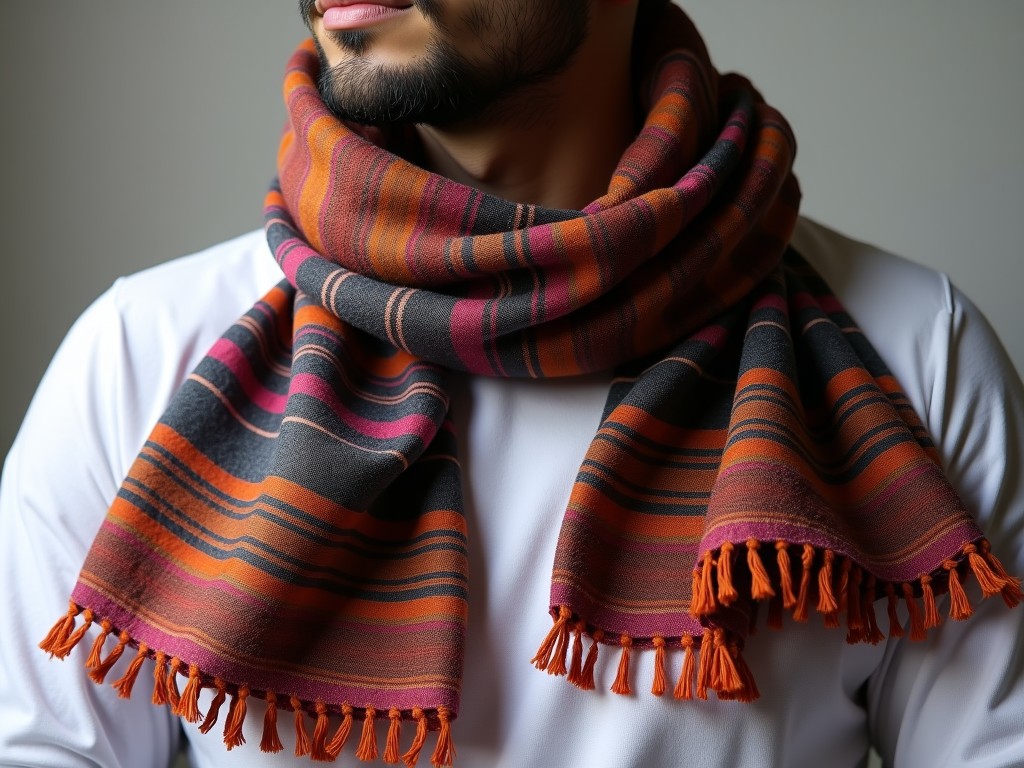
Wholesale Extra Long Mens Scarf
When sourcing bulk menswear accessories for seasonal inventory, dimensional consistency and material behavior directly impact retail performance and customer satisfaction. This guide explains the
Wholesale Extra Long Men's Scarf
When sourcing bulk menswear accessories for seasonal inventory, dimensional consistency and material behavior directly impact retail performance and customer satisfaction. This guide explains the technical specifications of wholesale extra long men's scarves to support informed procurement decisions.
Dimensional Specifications and Tolerance Ranges
Extra long mens scarves are defined by a minimum finished length of 180 cm (70.9 inches), with common production lengths ranging from 190 cm to 210 cm to accommodate varied styling preferences and layering needs. Width is standardized at 30 cm ± 2 cm to ensure adequate coverage without excessive bulk when wrapped. These dimensions are measured flat, relaxed, and perpendicular to the weft direction after steam conditioning to eliminate measurement variance from fabric memory.
Length tolerance is maintained within ±1.5% through precision cutting tables and laser-guided marking systems, critical for maintaining uniform presentation in bundled retail displays. Width control relies on calibrated loom tension and regular shuttle inspection to prevent bias distortion during weaving. Finished edges are typically overlocked or hemmed with a 3 mm double-fold stitch to prevent fraying while preserving dimensional stability.
Material Composition and Performance Characteristics
Wholesale extra long mens scarves are predominantly produced using acrylic, polyester, wool blends, or modal-viscose combinations, each selected based on end-use requirements. Acrylic (100%) offers the highest dimensional stability under humid conditions with less than 2% length change after 24 hours at 90% RH, making it suitable for consistent retail display. Polyester blends (65% polyester/35% viscose) provide enhanced wrinkle resistance and colorfastness, with ISO 105-B02 ratings typically exceeding 4 after 20 xenon arc hours.
Wool-rich blends (50% merino wool/50% acrylic) balance thermal retention with reduced pilling, measured via Martindale abrasion testing at 15,000 cycles before noticeable surface change. Modal-viscose combinations (70% modal/30% viscose) deliver superior drape and softness, with a bending length under 2.0 cm in the warp direction, ideal for fashion-forward retail segments. All materials undergo pilling resistance testing per ASTM D3512, with acceptable grades of 3 or higher after 5 hours of random tumbling.
Construction Methods and Quality Control Points
Manufacturing begins with warp preparation where yarn tension is monitored via load cells set to 0.8–1.2 cN/tex to prevent streaking or tight bands. Weft insertion uses rapier or air-jet looms operating at 180–220 picks per minute, with electronic weft feelers detecting missing picks in real time. Fabric width is monitored every 15 meters using optical sensors linked to automatic take-up rollers to maintain consistent beat-up.
Post-weaving, fabrics undergo relaxation drying for 24 hours at 23°C and 50% RH to stabilize internal stresses before cutting. Each scarf is inspected under 500 lux daylight simulation lighting for shade variation, with ΔE values kept below 1.5 compared to the approved master swatch. End-to-end length verification occurs via conveyor-based laser measurement, rejecting any piece outside the ±1.5% tolerance band before packaging.
Packaging and Logistics Considerations for Bulk Orders
Wholesale extra long mens scarves are typically packed in polyethylene inner bags (50 μm thickness) to prevent moisture ingress during transit, then folded into corrugated cartons with a burst strength of at least 275 kPa. Standard pack configurations include 25, 50, or 100 units per carton, optimized for palletization at 1.2 m × 1.0 m footprint. Each carton is labeled with a barcode containing SKU, length, color code, and production batch for traceability.
To prevent creasing during long-haul shipping, cartons are stacked no higher than 1.4 m on pallets and secured with horizontal straps every 30 cm vertical rise. For containerized exports, desiccant packets (50g per carton) are included to maintain internal RH below 60%. Carton dimensions are calculated based on folded scarf dimensions (typically 45 cm × 30 cm × 5 cm), allowing 120–160 cartons per 20-foot container depending on pack size.
Applications in Retail and Uniform Programs
Extra long mens scarves serve distinct functional roles depending on the retail environment. In fashion retail, lengths exceeding 200 cm enable multiple wrapping styles—such as the European loop or waterfall drape—directly influencing perceived value and styling versatility. For corporate uniform programs, the standardized width ensures compatibility with collar types and jacket lapels, while the length allows for secure tucking under overcoats without bulk accumulation at the neck.
In cold-weather workwear, acrylic or wool-blend versions provide measurable thermal insulation, with CLO values ranging from 0.3 to 0.5 depending on weave density and fiber composition, sufficient for mild to moderate winter conditions when layered. Retail buyers prioritize colorfastness and dimensional stability to reduce returns, while uniform coordinators focus on shrinkage control and laundering durability, often specifying ISO 6330 test results for 5+ cycles at 40°C.
| Parameter | Typical Range | Test Method |
|---|---|---|
| Finished Length | 180–210 cm | ISO 3018 (relaxed state) |
| Width | 28–32 cm | ISO 3801 |
| Length Tolerance | ±1.5% | Internal laser measurement |
| Pilling Resistance | Grade ≥3 (after 5 hrs) | ASTM D3512 |
| Colorfastness to Light | ISO 105-B02 ≥4 | Xenon arc, 20 hrs |
Technical specifications are provided as typical values; actual properties may vary based on fiber blend, yarn count, and weave structure. For projects requiring certified test reports or specific performance thresholds, request documentation during quotation. All wholesale orders include batch-level traceability and compliance with OEKO-TEX Standard 100 upon request.
Products
Related Products
News
Related News

2026-11-02
Cotton Voile Scarf Manufacturing and Performance Analysis how to make a cotton voile scarfCreating a professional-grade cotton voile scarf requires a precise balance of textile engineering and artisanal finishing. Unlike standard cotton weaves, voile is defined by its p···

2026-10-28
chiffon hijab Technical Production and Performance AnalysisSelecting the right fabric for a hijab involves a delicate balance between modesty, breathability, and aesthetic drape. For many women in Southeast Asia and the Middle East, the ma···

2026-10-26
custom silk scarf textile manufacturing and performance analysisSelecting a high-quality scarf is no longer just about color matching; it is an exercise in understanding how textile weight, drape, and print scale interact with individual facial···
