Wholesale Arabic Shawl For Men






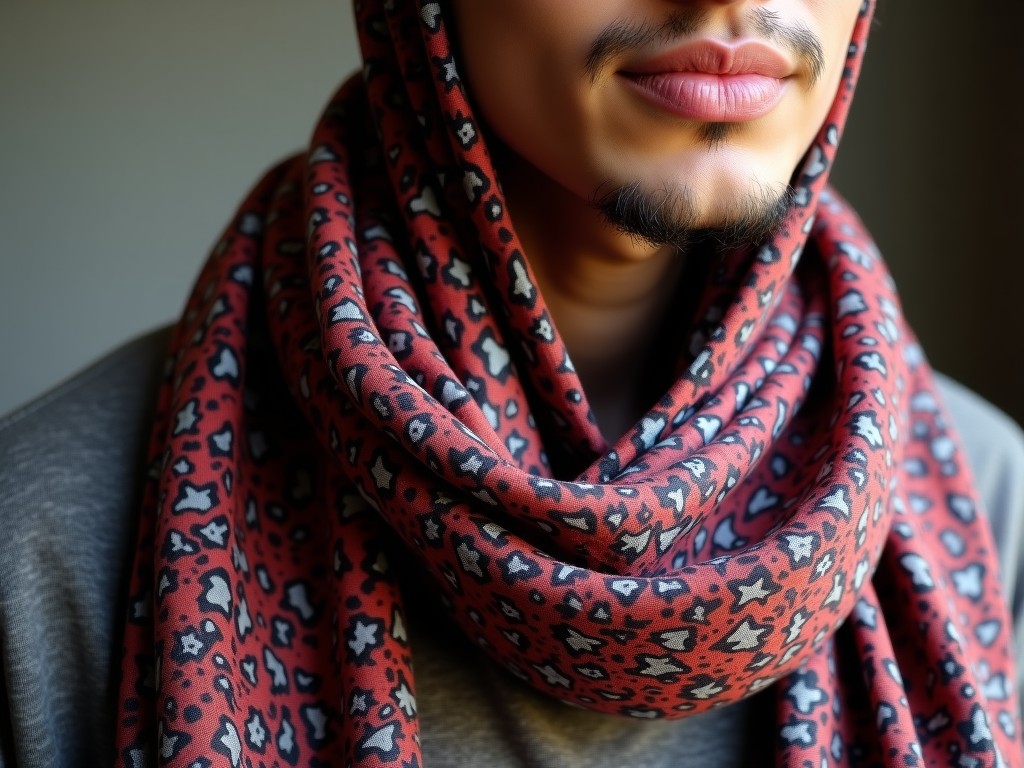
Wholesale Arabic Shawl For Men
An Arabic shawl for men, commonly known as a ghutra or shemagh, is a traditional head covering worn across the Middle East and North Africa. Its primary functions include protection from sun, wind,
Wholesale Arabic Shawl for Men
An Arabic shawl for men, commonly known as a ghutra or shemagh, is a traditional head covering worn across the Middle East and North Africa. Its primary functions include protection from sun, wind, and sand, while also serving as a cultural identifier. In wholesale contexts, these shawls are sourced for distribution to retailers, uniform suppliers, and institutional buyers requiring consistent quality and bulk availability.
The construction of a standard men’s Arabic shawl relies on a square or rectangular cut of woven fabric, typically measuring between 110 cm and 130 cm per side. This dimension allows for multiple wrapping styles—folded into a triangle and secured with an agal (black cord), or draped loosely over the shoulders. The size is standardized to accommodate various head sizes and wrapping techniques without excess material that could impede movement or comfort.
Fabric composition directly influences performance in outdoor conditions. Cotton is the most common base material due to its breathability, moisture absorption, and ease of washing. For enhanced durability in harsh climates, blends with polyester (typically 65% cotton / 35% polyester) are used to reduce shrinkage and improve wrinkle resistance. The yarn count generally falls between 20s and 40s Ne, balancing softness with sufficient tensile strength to resist tearing during regular use.
Material Specifications and Weave Characteristics
The weave structure determines both the shawl’s drape and its functional performance. A plain weave is standard, providing dimensional stability and uniform texture. However, some variants incorporate a twill weave (particularly in higher-end versions) to increase soil resistance and create a subtle diagonal pattern that masks light soiling. Thread density typically ranges from 80 to 120 ends per inch (EPI) in both warp and weft, ensuring adequate coverage without excessive weight.
Fringe finishing is a defining feature of authentic Arabic shawls. Unlike machine-hemmed edges, traditional shawls feature hand-tied or knotted fringes along two opposite sides, measuring 2–3 cm in length. This detail prevents fraying and adds to the garment’s aesthetic authenticity. In wholesale production, fringe consistency is monitored through sample checks to ensure uniformity across batches, as irregular knotting can affect perceived quality.
Colorfastness is critical for dyed shawls, especially those in traditional patterns like red-and-white or black-and-white checks. Reactive dyes are preferred for cotton-based fabrics due to their strong molecular bond with cellulose fibers, resulting in wash fastness ratings of 4–5 (on the ISO 105 scale) after 20+ industrial laundering cycles. Pigment dyes, while cheaper, are avoided in bulk orders due to tendency to bleed or fade under prolonged UV exposure.
Standard Dimensions and Packaging for Bulk Orders
Wholesale Arabic shawls are packed to optimize space and minimize damage during transit. The most common packaging method involves folding each shawl into a uniform rectangle (approximately 30 cm × 40 cm) and stacking 25–50 units per polybag, depending on fabric weight. These polybags are then placed into export cartons sized at 50 cm × 40 cm × 30 cm, holding 100–200 shawls per carton. This configuration balances handling efficiency with protection against moisture and dirt.
Labeling follows international trade standards: each carton includes a printed label with SKU, quantity, fabric composition, country of origin, and care instructions. Barcodes (EAN-13 or UPC) are applied to facilitate inventory scanning. For customs compliance, a detailed packing list accompanies every shipment, listing carton numbers, gross/net weight, and HS code (typically 6214.20 for cotton shawls or 6214.30 for man-made fiber blends).
To prevent creasing during long-haul shipping, shawls are often interleaved with acid-free tissue paper in premium orders, though this adds cost. Standard wholesale shipments rely on tight folding and polybag sealing to maintain appearance. Upon receipt, buyers typically inspect a random sample of 5% of the total order for dimensional accuracy, color consistency, and fringe integrity before approving bulk acceptance.
Quality Control Checkpoints in Wholesale Production
Quality assurance begins at the yarn stage, where tensile strength and elongation are tested to ensure the fabric can withstand repeated stretching during wear. For cotton-polyester blends, a minimum breaking strength of 18 N/tex in warp and 15 N/tex in weft is typically required. These values are verified using a universal testing machine on yarn samples taken from each batch before weaving.
During weaving, real-time monitoring of loom tension and weft insertion helps prevent defects such as missing picks, broken ends, or uneven density. Fabric width is monitored continuously to maintain tolerance within ±1.5 cm of the target (e.g., 115 cm ±1.5 cm). Any deviation beyond this threshold triggers an automatic stop for correction, reducing waste and ensuring batch uniformity.
Post-weaving inspection includes a 4-point system under 6500K daylight simulation lighting, where defects are scored based on size and length. A fabric roll passes only if the total defect points per 100 square yards remain below 40. Final product checks verify dimensional stability after washing (shrinkage <3%), color matching to Pantone or physical sample, and fringe attachment strength (minimum 2.5 N pull force to resist detachment).
Customization Options for B2B Buyers
Wholesale buyers often require modifications to meet regional preferences or branding needs. The most common customization is altering the check pattern—adjusting stripe width, color ratio, or introducing a third color (e.g., navy instead of black). These changes are implemented at the yarn dyeing stage and require a minimum order quantity (MOQ) of 500 units per variant due to setup costs on the dye line.
Size adjustments are possible but less common; increasing dimensions beyond 130 cm may affect draping behavior and require re-evaluation of fold efficiency. Some buyers request reinforced corners (double-layered fabric at the edges) for increased durability in high-wear environments, which adds approximately 15–20% to the unit cost due to extra material and stitching.
Private labeling is available through woven tags or printed labels sewn into the side seam. Woven labels (typically 50 mm × 20 mm) offer longer durability than printed versions and are recommended for garments intended for frequent washing. Embroidery of logos is generally avoided on the main field of the shawl to preserve the traditional aesthetic, but small logos (under 20 mm diameter) can be placed near the corner fringe upon request.
| Parameter | Typical Range | Notes |
|---|---|---|
| Fabric Width | 110–130 cm | Cut to square; tolerance ±1.5 cm |
| Yarn Count (Ne) | 20s–40s | Higher count = finer, softer fabric |
| Thread Density (EPI) | 80–120 | Warp and weft balanced |
| Fringe Length | 2–3 cm | Hand-tied; inspected for uniformity |
| Shrinkage (Wash) | <3% | After 5 industrial wash cycles |
| Colorfastness (Wash) | 4–5 (ISO 105) | Reactive dyes on cotton |
Lead time for standard wholesale orders depends on fabric availability and customization complexity. For stock items (solid colors, standard checks), production typically begins within 3–5 business days after purchase order confirmation, with total delivery (including shipping) ranging from 15–25 days for sea freight to major ports. Custom-dyed or patterned orders add 7–10 days to the timeline due to dye lab approval and lab-dip matching.
Sample approval is a standard step before bulk production. Buyers receive a physical sample (cut from actual fabric roll) for evaluation of color, hand feel, and construction. Once approved, the sample becomes the benchmark for mass production. Any deviation beyond acceptable tolerances (e.g., color ΔE > 3, width > ±2 cm) triggers a rework or rejection at the manufacturer’s expense.
Payment terms for wholesale transactions commonly follow a 30% T/T deposit upon PO confirmation, with the balance 70% paid against copy of bill of lading or before container loading. Letters of credit (LC) at sight are also accepted for larger orders. All pricing is quoted FOB or CIF, with explicit inclusion of packing, labeling, and export documentation costs to avoid surprise charges.
Applications Across Industries and Use Cases
Beyond personal wear, wholesale Arabic shawls are specified in sectors where environmental protection and cultural alignment are both required. In security and defense contracts, they are issued to personnel operating in arid regions as part of standard uniform kits, providing sun protection without hindering situational awareness. The breathable cotton construction prevents overheating during prolonged outdoor duty, while the neutral color options (white, beige, sand) reduce visual signature in desert terrain.
Hospitality providers in luxury resorts and cultural heritage sites use these shawls as guest amenities or staff uniforms to reflect local traditions. For example, desert camps in Saudi Arabia or Jordan often provide guests with a shawl upon arrival for use during evening gatherings or camel treks, enhancing cultural immersion. In these cases, the shawl’s lightweight nature and ease of laundering make it suitable for high-turnover use.
Institutional buyers such as refugee relief organizations and peacekeeping missions source Arabic shawls in bulk for distribution in displacement camps. Here, the garment’s dual function as head cover and lightweight blanket increases its utility value. The ease of washing and quick-drying properties are essential in settings with limited laundry facilities, and the absence of complex fasteners ensures usability across age groups and literacy levels.
For wholesale inquiries, technical specifications, or to request a sample kit with fabric swatches and construction details, contact our export department. We provide full documentation including Oeko-Tex certificates, material safety data sheets, and country-of-origin forms upon request.
Products
Related Products
News
Related News

2026-11-02
Cotton Voile Scarf Manufacturing and Performance Analysis how to make a cotton voile scarfCreating a professional-grade cotton voile scarf requires a precise balance of textile engineering and artisanal finishing. Unlike standard cotton weaves, voile is defined by its p···

2026-10-28
chiffon hijab Technical Production and Performance AnalysisSelecting the right fabric for a hijab involves a delicate balance between modesty, breathability, and aesthetic drape. For many women in Southeast Asia and the Middle East, the ma···

2026-10-26
custom silk scarf textile manufacturing and performance analysisSelecting a high-quality scarf is no longer just about color matching; it is an exercise in understanding how textile weight, drape, and print scale interact with individual facial···
