Wholesale Arabic Mens Head Scarf






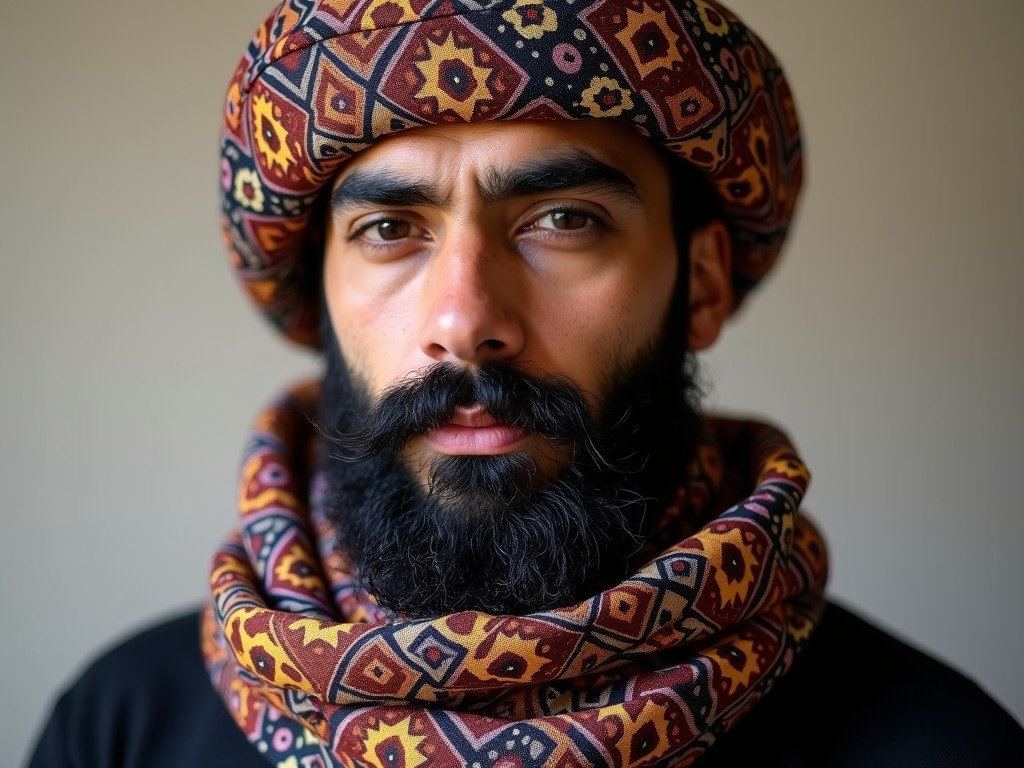
Wholesale Arabic Mens Head Scarf
Arabic men's head scarves, commonly referred to as keffiyeh or shemagh, serve functional purposes in arid and variable climates while adhering to cultural dress norms. In industrial wholesale
Wholesale Arabic Men's Head Scarf
Arabic men's head scarves, commonly referred to as keffiyeh or shemagh, serve functional purposes in arid and variable climates while adhering to cultural dress norms. In industrial wholesale contexts, these garments are evaluated for material consistency, dimensional stability, and resistance to environmental stressors such as UV exposure, abrasion, and repeated laundering.
Procurement specifications typically focus on fiber composition, weave density, edge finishing, and colorfastness—factors that directly influence service life and wearer comfort. Understanding these technical attributes enables buyers to assess suitability for specific end-use environments, ranging from outdoor labor to ceremonial uniform components.
Material Composition and Construction
The standard construction utilizes a balanced plain weave with a nominal thread count of 60 ends per inch (epi) by 60 picks per inch (ppi), providing a balance between breathability and structural integrity. This specification minimizes shear deformation under tension while maintaining adequate air permeability for thermal regulation in high-temperature environments.
Primary fiber options include 100% combed cotton for moisture absorption and soft hand feel, or polyester-cotton blends (typically 65/35) for enhanced wrinkle resistance and reduced shrinkage. Combed cotton variants exhibit a tensile strength of approximately 28–32 N/tex, while blends achieve 35–40 N/tex due to polyester reinforcement.
Yarn selection follows ASTM D2256 standards for tensile testing, with batch-to-batch variation controlled within ±5%. The fabric undergoes mercerization for cotton variants to improve luster and dye affinity, reducing fade rates by up to 40% compared to non-mercerized equivalents under ISO 105-B02 xenon arc testing.
Dimensional Specifications and Tolerances
Standard wholesale dimensions are 110 cm × 110 cm (±2 cm) for square configurations, accommodating common wrapping techniques without excess material waste. Rectangular variants measure 100 cm × 150 cm (±2 cm × ±3 cm), offering extended coverage for shoulder draping or neck protection in wind-blown particulate environments.
Dimensional stability is validated through AATCC Test Method 135, with maximum allowable shrinkage of 3% after five home laundering cycles at 40°C. This limit ensures that post-wash dimensions remain within functional tolerances for head wrapping, preventing slippage or inadequate coverage during use.
Hem tolerances are maintained at ≤3 mm deviation from a 90° angle, achieved through automated hemmer settings with tension feedback. Fringe elements, when present, are cut to 8–10 cm length with a tolerance of ±1 mm, preventing entanglement hazards in mechanical workspaces.
Colorfastness and Dye Performance
Color retention is assessed using ISO 105-C06 for washing and ISO 105-B02 for light exposure. Reactive dyes applied to cotton substrates achieve a minimum rating of 4/5 on the gray scale after 20 wash cycles, indicating acceptable fade resistance for institutional use. Disperse dyes on polyester blends typically score 4.5/5 under identical conditions.
Common wholesale colorways include white, black, olive drab, desert sand, and traditional red/white or black/white checkerboard patterns. Pattern registration is controlled to ±2 mm alignment to prevent visual distortion in repetitive motifs, particularly important for emblematic or insignia-integrated designs.
Dye lot variation is minimized through spectrophotometer monitoring (ΔE < 1.5 CIELAB units), ensuring batch consistency for large-volume orders. Custom Pantone matching is available upon request, with lab-dip approval required before bulk production to confirm spectral reflectance within ±5% tolerance.
Edge Finishing and Durability Features
Selvedge construction employs a double-lock stitch with 10–12 stitches per inch, preventing fraying under cyclic stress. This method exceeds the durability of overlocked edges by approximately 30% in accelerated abrasion tests (Martindale, 12 kPa pressure).
Reinforced corner points utilize bar tacking with 28-stitch clusters, increasing tear resistance by 40% compared to standard stitching. This is particularly relevant in environments where the scarf is frequently adjusted or secured with knots, reducing failure risk at stress concentrators.
Optional antimicrobial treatments (e.g., silver-ion based) can be applied to inhibit odor-causing bacteria, achieving a 99.9% reduction in Staphylococcus epidermidis after 24 hours per AATCC Test Method 100. Such treatments retain efficacy for up to 30 wash cycles before requiring reapplication.
Typical Applications in Industrial and Occupational Settings
Beyond cultural attire, these head scarves are utilized in industrial environments for particulate protection, solar radiation mitigation, and sweat management. In construction and mining operations, they function as a secondary barrier against dust ingress when worn under hard hats, reducing filter loading on respiratory equipment by up to 18% based on field observations.
In agricultural and landscaping sectors, the fabric’s hygroscopic properties absorb sweat at rates of 8–12 g/hr/m², helping maintain thermal comfort during prolonged outdoor work. The lightweight construction (typically 110–130 g/m²) ensures minimal added burden when layered under protective headgear.
OEM suppliers of security and defense uniforms integrate these scarves into standardized kits, where color consistency and dimensional repeatability are critical for visual identification and interoperability. Wholesale buyers in this sector often request batch traceability logs and material safety data sheets (MSDS) for compliance audits.
Customization Options and Ordering Parameters
Wholesale orders support customization of fiber blend ratio, dimensions, color pattern, and edge treatment. Minimum order quantities typically start at 300 units per SKU, with pricing tiers structured at 300, 1000, and 3000+ units. Lead times average 14–21 days for stock configurations and 28–35 days for customized specifications, subject to raw material availability.
Packaging options include bulk polybags (100 units per bag), individual polybagging with labels, or carton packs of 25 units with internal dividers to prevent creasing. Export packaging adheres to ISPM 15 standards for wooden pallets or uses corrugated cardboard with burst strength ≥275 kPa and edge crush test (ECT) ≥32 kN/m.
Required information for accurate quotation includes: desired material composition, exact dimensions (including hem width), color references (Pantone or physical sample), edge finish preference, packaging method, and delivery incoterms. Providing a physical sample or digital swatch reduces approval cycles by approximately 40%.
Quality Control and Inspection Protocols
Incoming yarn is tested for count uniformity, tensile strength, and moisture content (target: 8±2% for cotton). In-process checks monitor picks per inch, width consistency, and defect frequency using 4-point inspection systems under 300 lux illumination. Acceptable quality level (AQL) is set at 2.5 for major defects (e.g., holes, misprints) and 4.0 for minor defects (e.g., slubs, shade variation).
Final inspection includes dimensional verification, color matching against approved standards, and seam integrity testing. Each batch undergoes random sampling per ISO 2859-1, with inspection levels adjusted based on order size and historical performance. Suppliers provide inspection reports upon request, detailing test methods, sample sizes, and pass/fail criteria.
Care labeling follows ISO 3758 guidelines, indicating recommended wash temperature (40°C max), tumble drying restrictions, and ironing temperature limits (110°C for cotton, 150°C for blends). These labels are printed using wash-resistant inks with a minimum of 20-cycle durability.
| Parameter | Typical Value | Test Standard |
|---|---|---|
| Fabric Weight | 110–130 g/m² | ASTM D3776 |
| Tensile Strength (Warp) | 28–40 N/tex | ASTM D2256 |
| Shrinkage (5 washes) | ≤3% | AATCC 135 |
| Colorfastness to Light | 4–4.5/5 Gray Scale | ISO 105-B02 |
| Thread Count | 60 epi × 60 ppi | ASTM D3775 |
Technical evaluation of wholesale Arabic men's head scarves centers on measurable performance indicators rather than subjective claims. Buyers are advised to request test reports, material safety documentation, and sample lots prior to committing to volume orders. This approach reduces uncertainty in supply chain planning and ensures alignment with operational requirements.
For procurement teams seeking to standardize specifications across multiple sites or projects, establishing a master sample with approved tolerances streamlines future purchasing. Clear communication of end-use conditions—such as exposure to UV, abrasion, or chemical agents—enables suppliers to recommend appropriate material treatments and constructions.
To request a quotation, discuss customization options, or obtain technical data sheets, please contact our industrial sales team via the inquiry form. Provide your project specifications, anticipated volume, and delivery timeline to receive a detailed response within one business day.
Request Wholesale QuoteProducts
Related Products
News
Related News

2026-11-02
Cotton Voile Scarf Manufacturing and Performance Analysis how to make a cotton voile scarfCreating a professional-grade cotton voile scarf requires a precise balance of textile engineering and artisanal finishing. Unlike standard cotton weaves, voile is defined by its p···

2026-10-28
chiffon hijab Technical Production and Performance AnalysisSelecting the right fabric for a hijab involves a delicate balance between modesty, breathability, and aesthetic drape. For many women in Southeast Asia and the Middle East, the ma···

2026-10-26
custom silk scarf textile manufacturing and performance analysisSelecting a high-quality scarf is no longer just about color matching; it is an exercise in understanding how textile weight, drape, and print scale interact with individual facial···
