Traditional Arab Male Headdress






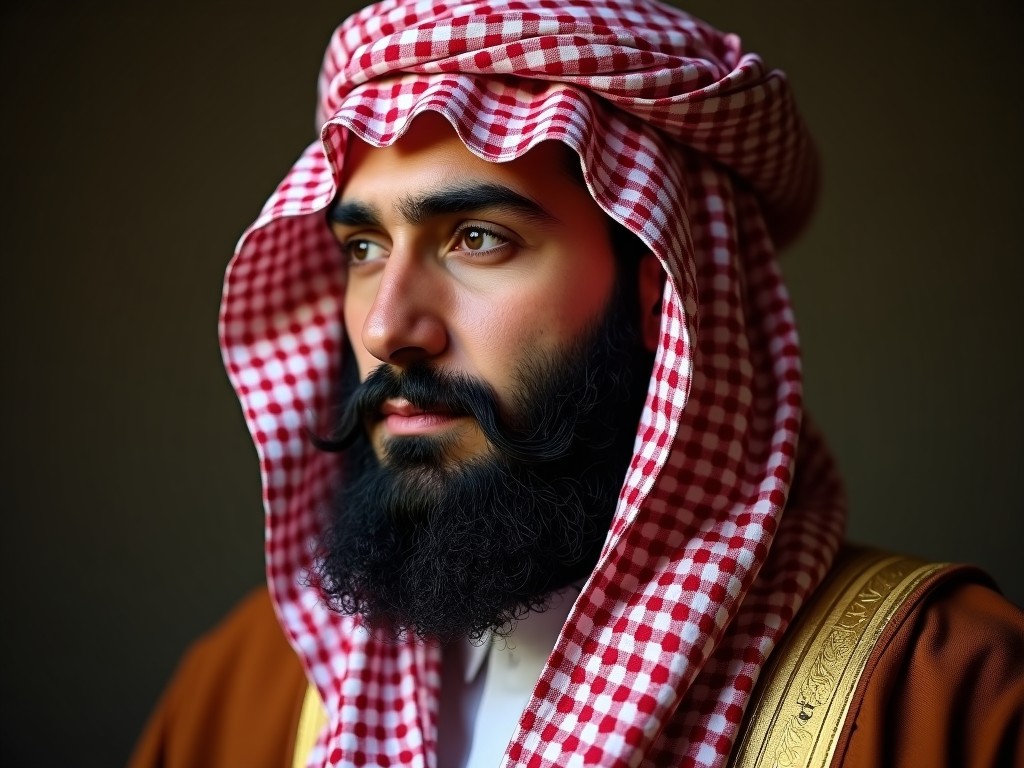
Traditional Arab Male Headdress
The traditional Arab male headdress, commonly known as the keffiyeh or ghutra, serves both cultural and functional purposes in arid environments. Its design originates from practical needs for sun
Traditional Arab Male Headdress: Technical Specification and Industrial Application Guide
The traditional Arab male headdress, commonly known as the keffiyeh or ghutra, serves both cultural and functional purposes in arid environments. Its design originates from practical needs for sun protection, sand filtration, and thermal regulation across desert regions of the Middle East and North Africa.
Industrial procurement of this garment requires understanding its material composition, weave structure, and dimensional stability—factors that directly influence performance in occupational settings such as construction, oil and gas exploration, and desert logistics operations.
Material Composition and Fabric Properties
The most common base material is 100% combed cotton, selected for its breathability, moisture absorption, and resistance to static buildup. Typical yarn count ranges from 20s to 40s Ne, with a plain weave construction producing a weight between 120–160 gsm.
For enhanced durability in abrasive environments, variants incorporate 5–15% polyester or aramid blends, increasing tear strength by approximately 20–35% while maintaining air permeability above 150 mm/s. Colorfastness to light and washing is critical; industrially specified versions meet ISO 105-B02 (light) and ISO 105-C06 (washing) standards with a minimum rating of 4.
Fringe detailing, when present, uses the same yarn as the base fabric to prevent differential shrinkage. Hemming is typically a 3-fold double-stitch with 6–8 stitches per cm to resist fraying under repeated laundering and field use.
Dimensional Standards and Functional Design
Standard dimensions for the square-cut ghutra are 110 cm × 110 cm, with a tolerance of ±2 cm. This size allows for multiple wrapping configurations—single-layer for ventilation, double-layer for insulation, or folded into a triangular shape for facial coverage.
The keffiyeh variant often features a rectangular shape measuring 130 cm × 150 cm, enabling greater coverage when worn as a head and neck wrap. The distinctive woven pattern—typically a black or red checkerboard on a white ground—is not merely decorative; the high-contrast design improves visibility in low-light conditions and aids in identifying team members during coordinated operations.
Edge selvages are reinforced to prevent curling, and the fabric exhibits minimal skew (<3°) after 5 industrial wash cycles at 60°C, ensuring consistent drape and fit over time.
Performance Characteristics in Industrial Use
In high-temperature environments (>40°C), the headdress reduces radiant heat gain to the head and neck by up to 30% compared to bare skin, based on textile thermal resistance (RCT) measurements. Its hygroscopic nature allows absorption of up to 8% of its weight in sweat without significant discomfort, delaying the onset of heat stress.
Air permeability testing shows values between 180–220 mm/s for standard cotton variants, sufficient to prevent microclimate buildup under prolonged wear. When treated with UV-protective finishes (optional), UPF ratings exceed 30, blocking over 96% of harmful UV radiation.
For sand and particulate resistance, the tight weave (typically 68–72 ends per inch × 50–54 picks per inch) filters particles above 50 microns, reducing inhalation risk during sandstorms or in bulk material handling zones.
Customization Options for Industrial Clients
Industrial buyers frequently request modifications to enhance safety, identification, or operational compatibility. Common customizations include:
- Incorporation of reflective strips (50 mm width) along one or two edges for night-time visibility, compliant with EN ISO 20471.
- Addition of company logos or zone identifiers via screen printing or embroidery on a corner panel, using plastisol inks rated for 50+ wash cycles.
- Substitution of standard cotton with flame-resistant modacrylic blends for use in petrochemical zones, meeting NFPA 2112 performance criteria.
- Adjustment of dimensions to 100 cm × 100 cm or 120 cm × 120 cm to accommodate specific headgear integration (e.g., hard hats, communication headsets).
All customizations are subject to minimum order quantities and require technical consultation to ensure compliance with end-use requirements.
Quality Control and Inspection Protocol
Each production lot undergoes systematic inspection to verify conformance with specifications. Key checkpoints include:
- Fabric weight and width measured at 3 points per roll using calibrated GSM gauges and width scales.
- Yarn count and twist verified via ASTM D1059 and D1422 methods.
- Color matching against Pantone or CIELAB standards under D65 lighting, with ΔE < 3.0 acceptable.
- Dimensional stability assessed after 3 wash cycles at 60°C; length and width change must not exceed ±3%.
- Seam strength tested via ASTM D1683; minimum requirement of 15 N for hems and 25 N for seams.
Lot traceability is maintained through barcoded tags linking to test reports, raw material certificates, and process parameters. Third-party verification is available upon request for regulated industries.
Applications in Industrial Sectors
Beyond cultural use, the headdress finds practical application in industries where workers face prolonged exposure to sun, wind, and particulate matter. In solar farm construction, crews wear light-colored variants to mitigate heat stress during panel installation, with site supervisors noting reduced incidence of heat-related fatigue.
In offshore oil platforms operating in Middle Eastern waters, the garment is worn under safety helmets to absorb sweat and prevent salt accumulation, improving comfort during 12-hour shifts. Logistics teams in desert freight corridors use darker-colored versions to mask dust accumulation while maintaining breathability.
Additionally, mining operations in arid regions specify the headdress as part of PPE ensembles to reduce glare from reflective surfaces and minimize sand ingress into eyewear and respiratory protection systems.
Packaging, Labeling, and Logistics
Standard packaging consists of folded units packed in polyethylene bags (50 µm thickness), with 10–20 pieces per carton depending on weight. Cartons are typically 3-ply corrugated fiberboard, dimensions 40 × 30 × 20 cm, printed with handling instructions and origin markings.
Each unit includes a sewn-in label detailing fiber content, care instructions (machine wash 60°C, tumble dry low), and size. For export shipments, cartons are marked with ISPM 15-compliant wood pallets or slip sheets, and fumigation certificates are provided as required.
Lead time for standard orders is 3–4 weeks from PO confirmation; customized orders require an additional 7–10 days for sample approval and tooling setup. Volume discounts apply at 500+, 1000+, and 2000+ unit thresholds.
| Parameter | Typical Value | Notes |
|---|---|---|
| Fabric Weight | 120–160 gsm | Dependent on yarn count and weave density |
| Air Permeability | 180–220 mm/s | Measured per ISO 9237 |
| UV Protection (UPF) | >30 (with finish) | Optional treatment; blocks >96% UV |
| Dimensional Change (Wash) | <±3% | After 3 cycles at 60°C |
| Tear Strength (Warp/Weft) | 8–12 N | Baseline cotton; increases with blends |
| Colorfastness to Light | Grade 4 minimum | ISO 105-B02 |
For technical inquiries, customization requests, or to request a material sample pack, contact our industrial textiles team. Provide your application details, required quantities, and any compliance standards (e.g., ISO, NFPA, EN) for a tailored quotation.
Request Technical ConsultationProducts
Related Products
News
Related News

2026-11-02
Cotton Voile Scarf Manufacturing and Performance Analysis how to make a cotton voile scarfCreating a professional-grade cotton voile scarf requires a precise balance of textile engineering and artisanal finishing. Unlike standard cotton weaves, voile is defined by its p···

2026-10-28
chiffon hijab Technical Production and Performance AnalysisSelecting the right fabric for a hijab involves a delicate balance between modesty, breathability, and aesthetic drape. For many women in Southeast Asia and the Middle East, the ma···

2026-10-26
custom silk scarf textile manufacturing and performance analysisSelecting a high-quality scarf is no longer just about color matching; it is an exercise in understanding how textile weight, drape, and print scale interact with individual facial···
