Shemagh Scarf For Arab Men






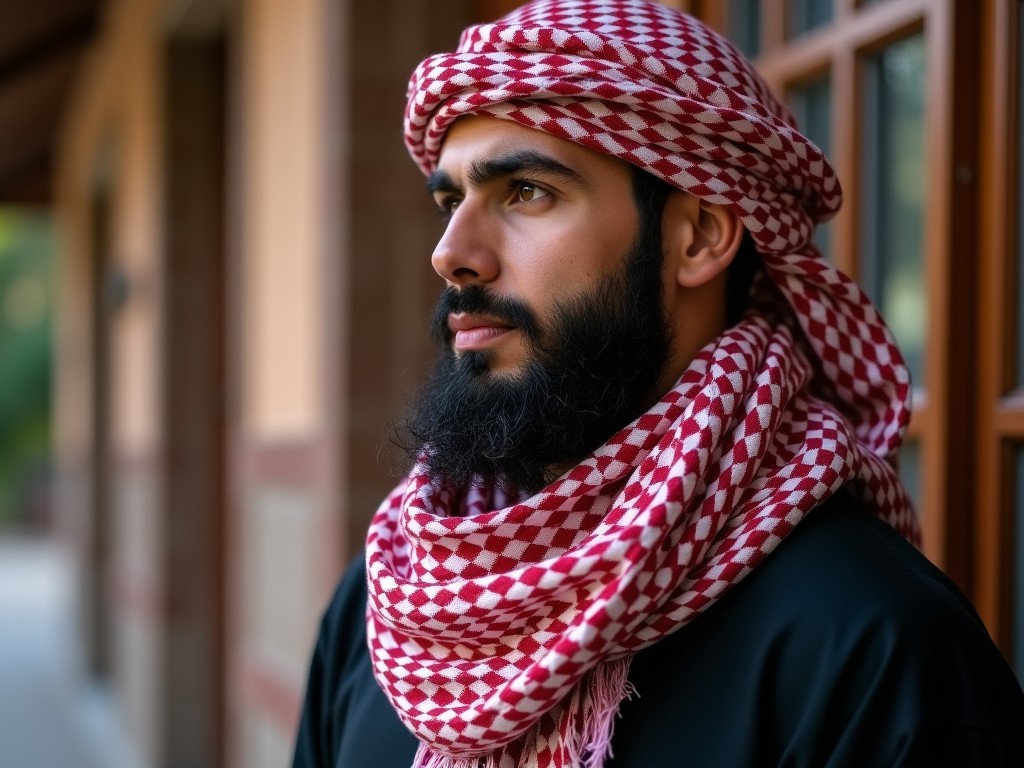
Shemagh Scarf For Arab Men
The shemagh, also known as a keffiyeh, is a traditional Middle Eastern headscarf worn by Arab men for protection against sun, wind, and sand. Beyond cultural significance, it serves as functional
Shemagh Scarf for Arab Men
The shemagh, also known as a keffiyeh, is a traditional Middle Eastern headscarf worn by Arab men for protection against sun, wind, and sand. Beyond cultural significance, it serves as functional workwear in arid environments, commonly used in construction, agriculture, military, and outdoor industries. Industrial buyers seeking bulk supplies prioritize material consistency, dimensional accuracy, and weave stability to ensure performance across diverse climatic conditions.
Material Composition and Weave Structure
Standard shemaghs are woven from 100% cotton or cotton-blend fabrics, typically in a plain or twill weave. Cotton provides breathability, moisture absorption, and durability under prolonged sun exposure. For industrial use, a minimum yarn count of 20s Ne (Ne = Number English) ensures sufficient tensile strength to resist tearing during active use. Blends with polyester (up to 30%) may be specified to enhance wrinkle resistance and reduce shrinkage after repeated washing, though pure cotton remains preferred for skin comfort and heat dissipation.
Fabric weight ranges from 120 to 180 GSM (grams per square meter), with 150 GSM being the most common for balanced protection and airflow. Lower weights (<120 GSM) offer greater ventilation but reduced abrasion resistance; higher weights (>180 GSM) increase durability at the cost of thermal retention. Industrial specifications often require tensile strength testing per ASTM D5034, with minimum warp and weft values of 150 N and 120 N respectively to ensure reliability in demanding conditions.
Dimensional Standards and Tolerances
The standard shemagh is a square fabric, typically measuring 110 cm × 110 cm (43 in × 43 in) after hem finishing. This size allows for multiple wrapping styles—covering the head, neck, and face—while maintaining usability as a neck scarf or shoulder drape. Dimensional tolerance is controlled to ±2% in both length and width to ensure consistency across production batches, critical for bulk procurement where uniform folding and packaging are required.
Hemming is performed with a 3-thread overlock stitch or a folded double-hem, reducing fraying and extending service life. Hem width averages 6 mm (±1 mm), contributing minimally to overall dimensions while preventing edge unraveling. For specialized applications, such as integration with helmets or protective gear, custom dimensions (e.g., 100 cm × 100 cm or 120 cm × 120 cm) are available upon request, subject to loom setup constraints and minimum order quantities.
Colorfastness and Dyeing Standards
Traditional shemaghs feature a white base with colored checkerboard or striped patterns in red, black, or white. Industrial buyers require colorfastness to withstand frequent washing, UV exposure, and abrasion. Reactive dyes are commonly used for cotton substrates due to their covalent bond with fibers, offering superior wash and light fastness compared to direct or vat dyes. Minimum standards include:
- Wash fastness: Grade 4 or higher (ISO 105 C06)
- Light fastness: Grade 5 or higher (ISO 105 B02)
- Rubbing fastness (dry/wet): Grade 3–4 (ISO 105 X12)
These benchmarks ensure minimal fading or bleeding after 20+ industrial wash cycles. Custom color matching (Pantone or RAL) is available for corporate or uniform applications, though minimum dye lot sizes (typically 500 kg) apply due to vat dyeing economics.
Quality Control and Inspection Protocol
Industrial buyers rely on objective quality control to reduce rejection risks. Inspection follows AQL (Acceptable Quality Level) standards, typically Level II for major defects and Level I for minor. Critical checkpoints include:
- Fabric weight and thickness (GSMDigital scale)
- Dimensional accuracy (caliper measurement)
- Seam integrity (tensile testing of hem)
- Color consistency ( spectrophotometer, ΔE < 3)
- Presence of foreign yarns, stains, or holes (visual inspection under 2x magnification)
AQL limits are set at 2.5% for major defects (e.g., holes, incorrect dimensions, severe color mismatch) and 4.0% for minor (e.g., slight shade variation, loose threads). Full inspection reports, including test data from accredited laboratories, are available upon request for qualifying orders.
Packaging and Logistics Considerations
Bulk shemaghs are packaged to prevent contamination, moisture absorption, and creasing during transit. Standard packaging uses polyethylene bags (50–70 μm thickness) containing 25 or 50 units, sealed and placed in corrugated cartons. Carton dimensions are optimized for palletization: typically 300 mm × 400 mm × 500 mm (L×W×H), holding 200–250 units depending on fold method. Each carton is labeled with SKU, quantity, material specs, and country of origin.
For export shipments, cartons are stacked on fumigation-treated wooden pallets (EPAL-certified) and secured with PET strapping. Moisture barrier sheets (aluminum-coated polyethylene) are included in high-humidity routes. Lead times average 3–4 weeks for standard items after PO confirmation, subject to fabric availability and dye lot scheduling. Custom colors or dimensions may extend lead time to 6–8 weeks.
Applications in Industrial and Professional Settings
While culturally significant, the shemagh’s industrial value lies in its multifunctional utility. In construction and infrastructure projects across the Gulf and North Africa, it protects workers from UV radiation, sand abrasion, and wind-blown particulates. Its absorbent nature aids in sweat management during prolonged outdoor labor, reducing heat stress when worn correctly. Unlike synthetic alternatives, cotton shemaghs do not melt or drip under high heat, enhancing safety near welding or hot work zones.
In military and security operations, the shemagh serves as camouflage, dust protection, and a versatile tool—for straining liquids, securing equipment, or creating improvised slings. Agricultural workers use it to shield against pesticide drift and sun exposure during harvesting. Its reusability and low lifecycle cost make it a sustainable alternative to disposable face masks or neck gaiters in environments where laundering is feasible.
| Parameter | Typical Value | Customizable? |
|---|---|---|
| Fabric Weight | 120–180 GSM | Yes (±20 GSM) |
| Dimensions | 110 cm × 110 cm | Yes (±10 cm) |
| Yarn Count | 20s Ne (cotton) | Yes (16s–30s Ne) |
| Colorfastness (Wash) | ISO 105 C06 Grade 4+ | No (standard process) |
| Packaging Unit | 25 or 50 pcs/bag | Yes (per request) |
All technical specifications are based on standard manufacturing practices. Actual values may vary depending on raw material sourcing, loom calibration, and finishing processes. For mission-critical applications, buyers are advised to request pre-production samples and third-party test reports to validate compliance with operational requirements.
To discuss bulk ordering, custom specifications, or sample evaluation, contact our technical sales team. Provide details on intended use, required quantities, delivery timeline, and any regulatory or uniform standards applicable to your operation. We will respond with a formal quotation, lead time confirmation, and documentation package within one business day.
Request Technical Specification SheetProducts
Related Products
News
Related News

2026-11-02
Cotton Voile Scarf Manufacturing and Performance Analysis how to make a cotton voile scarfCreating a professional-grade cotton voile scarf requires a precise balance of textile engineering and artisanal finishing. Unlike standard cotton weaves, voile is defined by its p···

2026-10-28
chiffon hijab Technical Production and Performance AnalysisSelecting the right fabric for a hijab involves a delicate balance between modesty, breathability, and aesthetic drape. For many women in Southeast Asia and the Middle East, the ma···

2026-10-26
custom silk scarf textile manufacturing and performance analysisSelecting a high-quality scarf is no longer just about color matching; it is an exercise in understanding how textile weight, drape, and print scale interact with individual facial···
