Shawl Scarf For Men

Shawl Scarf For Men
Men’s industrial shawl scarves are engineered textile components designed for thermal regulation, particulate protection, and wear resistance in demanding environments. Unlike fashion-oriented
Shawl Scarf for Men: Industrial-Grade Technical Textile
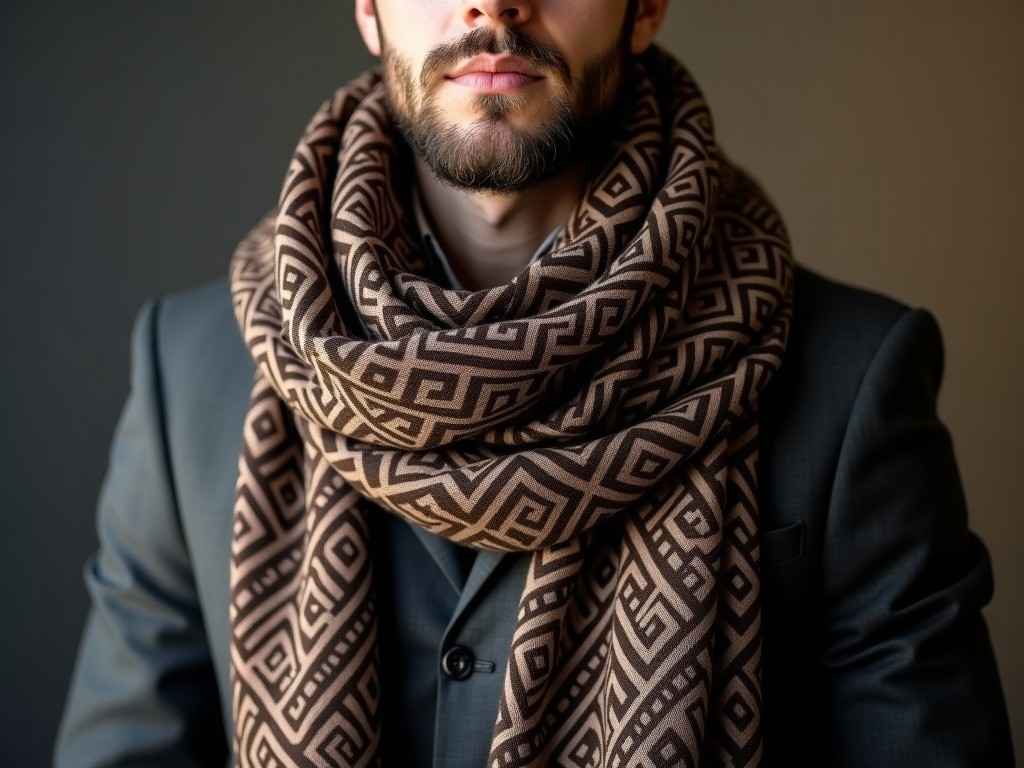
Men’s industrial shawl scarves are engineered textile components designed for thermal regulation, particulate protection, and wear resistance in demanding environments. Unlike fashion-oriented variants, these products prioritize material performance, dimensional stability, and compliance with workplace safety protocols. Construction focuses on fiber selection, weave density, and finish treatments to meet specific operational thresholds rather than aesthetic trends.
Material Composition and Fiber Performance
Primary materials include modacrylic blends, aramid fibers, and treated cotton with flame-retardant (FR) additives. Modacrylic offers inherent FR properties with a limiting oxygen index (LOI) typically ≥28%, while aramid provides tensile strength >3.5 g/den and thermal stability up to 400°C. Cotton variants undergo phosphorus-based FR treatment to achieve NFPA 70E Class 1 compliance, with afterflame time ≤2 seconds in vertical flame tests (ASTM D6413).
Moisture-wicking finishes are applied via hydrophilic polymer coatings, increasing sweat transport rate by 40–60% compared to untreated fibers. Antimicrobial treatments using silver-ion or zinc-pyridine compounds reduce bacterial colonization by >99% over 24 hours (AATCC 100). These finishes are engineered to withstand ≥50 industrial wash cycles without significant degradation in performance.
Weave Structure and Dimensional Stability
Common weaves include 2x2 twill, plain weave with ripstop reinforcement, and jacquard patterns for logo integration. Twill weaves provide 15–20% higher tear resistance than plain weave due to diagonal fiber interlacing, while ripstop patterns incorporate heavier yarns at 5–8 mm intervals to prevent tear propagation. Jacquard sections maintain ≥95% base fabric strength when incorporating ≤15% polyester binder yarns.
Dimensional stability is controlled through heat-setting at 180–220°C for 60–90 seconds, limiting shrinkage to ≤3% after 5 wash cycles at 75°C. Width tolerance is maintained within ±2% of nominal dimensions (typically 150–180 cm) to ensure consistent coverage. End finishes use overlock or ultrasonic sealing to prevent fraying, with seam strength ≥25 N/mm when tested per ASTM D1683.
Thermal and Protective Performance Metrics
Thermal protective performance (TPP) is measured per ASTM F2700, with values ranging from 8–12 cal/cm² for single-layer FR scarves and 15–22 cal/cm² for layered systems. Convective heat resistance (RCT) exceeds 0.15 m²·K/W in FR-treated cotton blends, while radiant heat reflection reaches 60–70% when aluminized finishes are applied. These metrics determine suitability for arc flash, weld splatter, or flash fire exposure zones.
Particulate filtration efficiency is evaluated using NaCl aerosol testing (ASTM F2299), with tightly woven variants achieving ≥85% efficiency for 0.3–1.0 µm particles. Air permeability is maintained between 50–150 mm²/s to balance protection with breathability, preventing excessive heat buildup during prolonged use. These parameters are critical in grinding, sanding, or powder handling operations.
Customization Options for Industrial Integration
Length customization ranges from 140 cm to 200 cm to accommodate varying torso sizes and layering requirements with PPE systems. Width adjustments (120–200 cm) allow integration with harnesses, vests, or helmets without interference. Custom dye lots are available for color-coding zones (e.g., red for hot work areas, blue for clean rooms) using AATCC 161-rated dyes with ≥4.0 colorfastness to washing and light.
Edge reinforcements include bar-tacked corners, Kevlar®-wrapped hems, or silicone-coated edges for chemical splash resistance. Attachment points such as snap tabs, Velcro® loops, or woven straps can be integrated at specified intervals (e.g., every 25 cm) to secure the scarf under hard hats or hoods. Logo placement uses sublimation or embroidery with thread counts ≥100 stitches/cm² to avoid compromising FR integrity.
Quality Control and Testing Protocols
Incoming fiber lots are tested for LOI, moisture content, and tensile strength before production. In-process monitoring includes yarn tension control (±5% variation) and pick density verification (≤2 defects/100 cm²). Final inspection requires 100% visual checks for holes, stains, or finish defects, coupled with AQL 2.5 sampling for dimensional accuracy and seam strength.
Batch testing includes vertical flame resistance (ASTM D6413), horizontal flame (ASTM D1230), and thermal shrinkage after 5 laundering cycles. Chemical resistance is assessed via immersion in common industrial solvents (e.g., isopropyl oil, sodium hydroxide) with visual and tensile retention checks. Reports include test date, lot number, and reference to applicable standards (NFPA, ASTM, EN ISO).
Typical Applications in Industrial Environments
In metal fabrication, these scarves protect against radiant heat from furnaces and spatter during MIG/TIG welding, reducing neck and shoulder burn risk when worn under welding hoods. In chemical processing, FR-treated cotton variants provide splash defense against dilute acids and alkalis while maintaining breathability during valve maintenance or tank cleaning. The lightweight design prevents heat stress compared to heavier balaclavas.
Woodworking and sanding operations benefit from particulate filtration, reducing inhalation of fine dust when combined with half-mask respirators. In utility work, arc-rated modacrylic scarves serve as secondary protection under face shields during switchgear maintenance, meeting ASTM F1506 requirements. Food-grade variants with antimicrobial finishes are used in cold storage and processing zones to minimize odor retention and bacterial growth.
Packaging and Logistics Considerations
Scarves are folded to 25×30 cm dimensions and packed in polyethylene bags (50 µm thickness) with desiccant packs to maintain moisture content <0.5%. Cartons hold 25–50 units depending on weight, with external labels showing SKU, lot number, care instructions, and compliance marks. Palletization uses 1.2 m×0.8 m bases with stretch wrap and corner boards to prevent shifting during transit.
For export, cartons are marked with ISPM 15-compliant pallets and include fumigation certificates when required. Lead times typically range from 3–6 weeks for standard configurations, extending to 8–10 weeks for custom dye lots or specialized finishes. Samples are available upon request, usually dispatched within 5–7 business days after specification confirmation.
Request Technical Documentation
For detailed material data sheets, test reports, or to discuss custom specifications for your operational environment, contact our technical team. Provide your application details, required standards, and quantity estimates to receive a tailored response.
Submit InquiryProducts
Related Products
News
Related News

2026-11-02
Cotton Voile Scarf Manufacturing and Performance Analysis how to make a cotton voile scarfCreating a professional-grade cotton voile scarf requires a precise balance of textile engineering and artisanal finishing. Unlike standard cotton weaves, voile is defined by its p···
2026-10-28
chiffon hijab Technical Production and Performance AnalysisSelecting the right fabric for a hijab involves a delicate balance between modesty, breathability, and aesthetic drape. For many women in Southeast Asia and the Middle East, the ma···

2026-10-26
custom silk scarf textile manufacturing and performance analysisSelecting a high-quality scarf is no longer just about color matching; it is an exercise in understanding how textile weight, drape, and print scale interact with individual facial···